
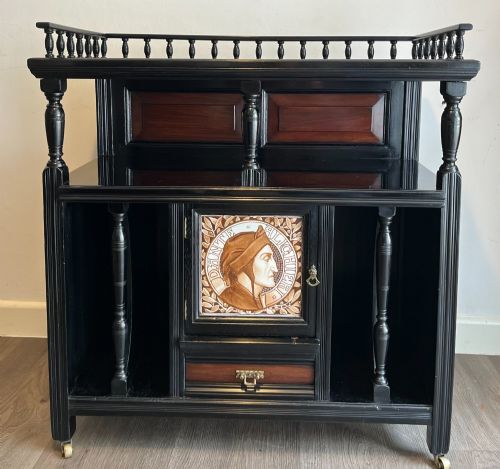
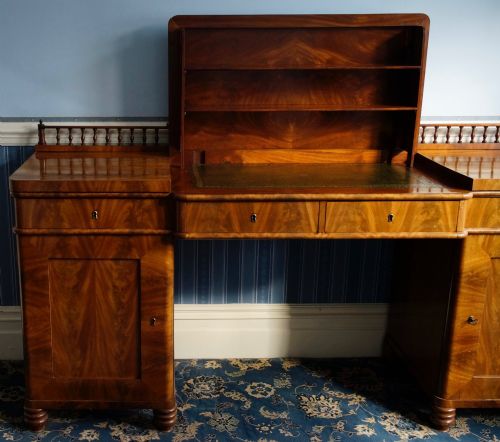
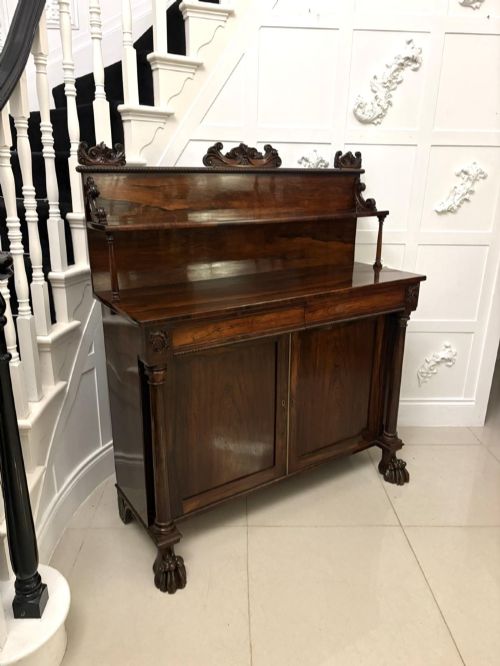
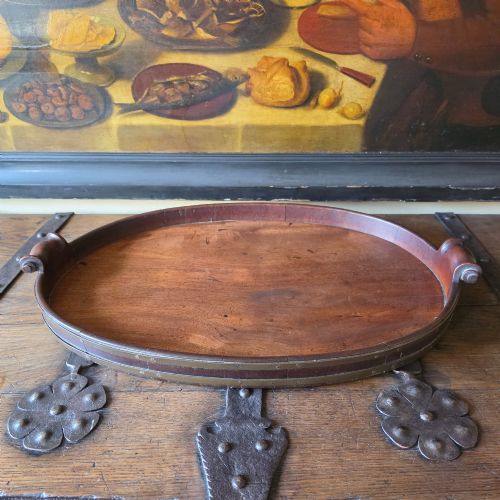

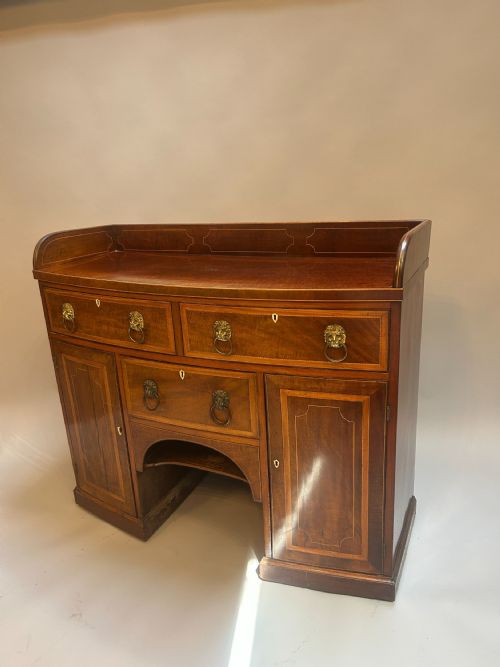


Mahogany Sideboard with Gallery
Mahogany sideboard with gallery pieces combine deep timber tones with useful back rails, offering both display space and practical storage.
Mahogany Sideboard with Gallery
A mahogany sideboard with gallery brings together robust timber construction and a protective rear rail or shelf structure. These items function primarily as serving surfaces, dining room storage units, or sophisticated hall furniture.
The selections on this page span several distinct periods, including Georgian, Regency, Victorian, and Edwardian eras. Formats range from traditional serving tables and chiffoniers to dedicated sideboards fitted with brass rails or timber upstands.
Makers and cabinetmakers from the late eighteenth century through to the early twentieth century produced these designs. Buyers frequently encounter versions with tiered shelf backs, writing drawers, or brass gallery rails designed to keep items secure.
How they were made
Cabinetmakers constructed these pieces primarily using solid mahogany and flame mahogany veneer over secondary timbers. Workshops frequently applied satinwood and boxwood inlay for decorative contrast along drawer fronts and borders.
Makers integrated brass elements, specifically gallery rails and upstanding rods, to secure objects placed on the surface. Joinery techniques included hand-cut dovetails for drawers and secure tenon joints for the structural frames.
Some gallery rails include tiny brass finials that look remarkably like miniature chess pieces standing guard over the dinner service.
What varies in quality
The grade of mahogany timber dictates much of the visual impact, with figured flame veneers showing far greater depth than plain boards. Superior examples display careful grain matching across the front elevation and drawer faces.
The refinement of the gallery structure also separates standard output from finer workshops. Cast or turned brass rails that integrate smoothly into the top surface demonstrate superior craftsmanship compared to later additions or simpler timber upstands.
The Mahogany Sideboard with Gallery Glossary
- Gallery
- A raised rail, shelf, or upstand running along the back or sides of a surface. This feature prevents items from sliding off and provides additional display tiers.
- Chiffonier
- A compact sideboard or low cabinet popular during the nineteenth century. These items frequently feature enclosed lower cupboards beneath an upper shelf tier.
- Flame mahogany
- A veneer cut from the fork of the mahogany tree where the branch meets the trunk. This method produces a distinctive, flickering flame pattern across the wood.
- Serving table
- A long table designed for dining rooms to hold food and service items. Many examples incorporate shallow drawers and low gallery rails.
Mahogany Sideboard with Gallery: Frequently Asked Questions
What is a gallery on a sideboard?
A gallery is an upstanding rail, shelf, or brass rod fitted to the rear edge of the top surface. It prevents dishes or decorative objects from sliding off.
These structures also provide an extra tier for display or small storage, appearing in various heights across different periods.
How do I date a mahogany sideboard?
Dating relies on observing the prevailing style, timber selection, and construction methods. Georgian and Regency pieces show lighter proportions and refined inlay work.
Victorian and Edwardian items tend toward heavier timber frames and distinct cabinet configurations, often incorporating factory-produced brass hardware.
Where were sideboards used?
These pieces sat principally in dining rooms to assist with serving meals and storing silverware, linen, or glassware. Some smaller formats also appeared in grand halls or reception rooms.
They served as both functional storage units and prominent display surfaces for fine dining wares.
How do I care for mahogany?
Maintain the timber by keeping the surface away from direct heat sources and strong sunlight, which can fade the finish. Regular dusting with a soft, dry cloth preserves the polished surface.
Avoid using silicone-based polishes or excessive moisture, applying traditional wax sparingly when the wood appears dry.