





Nineteenth Century Server Table
A nineteenth century server table brings formal dining and entertaining utility from the Regency and Victorian eras directly into a modern room.
Nineteenth Century Server Table
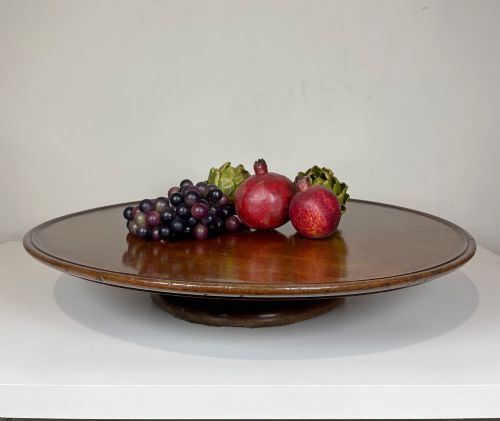
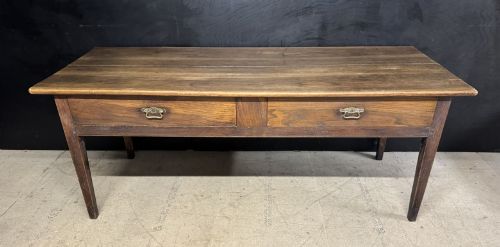
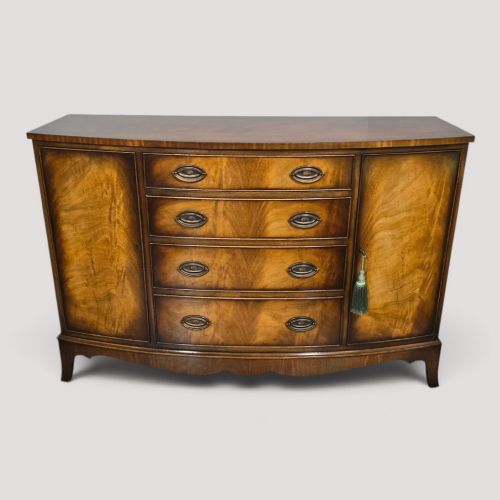
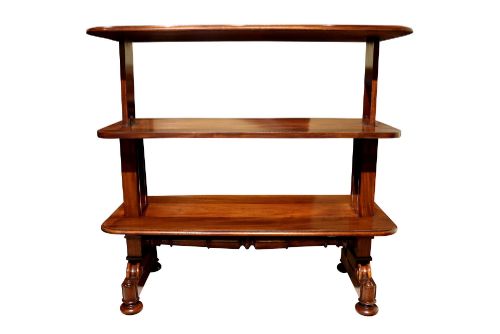
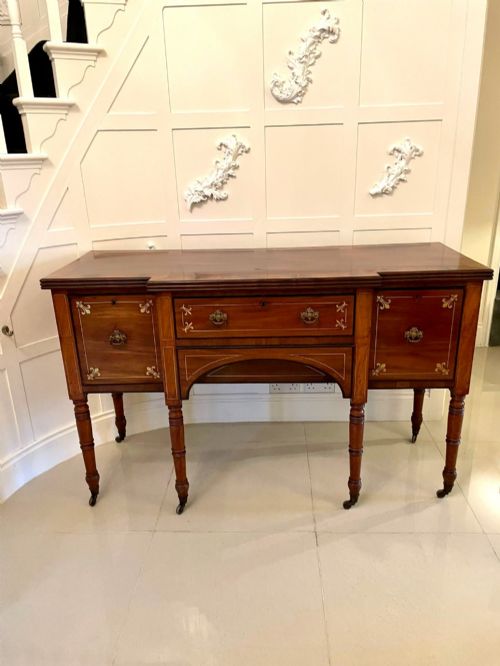
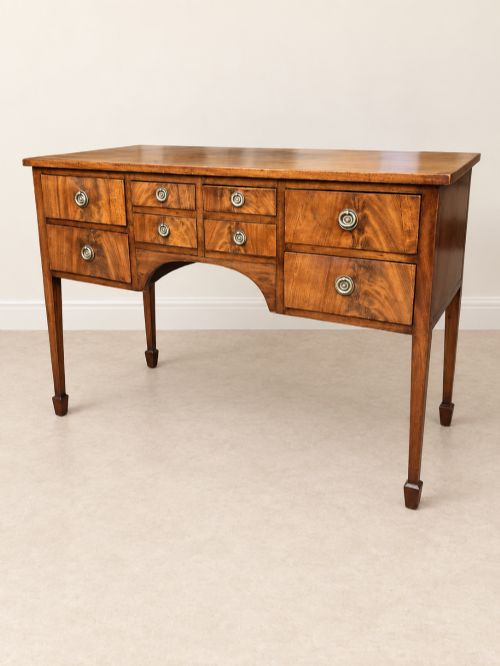
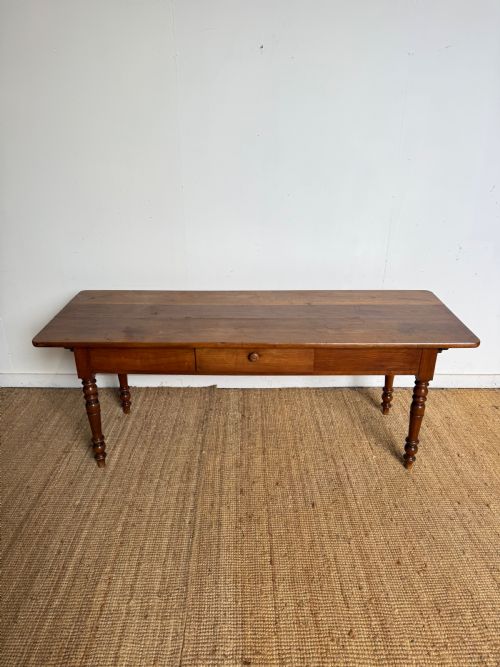
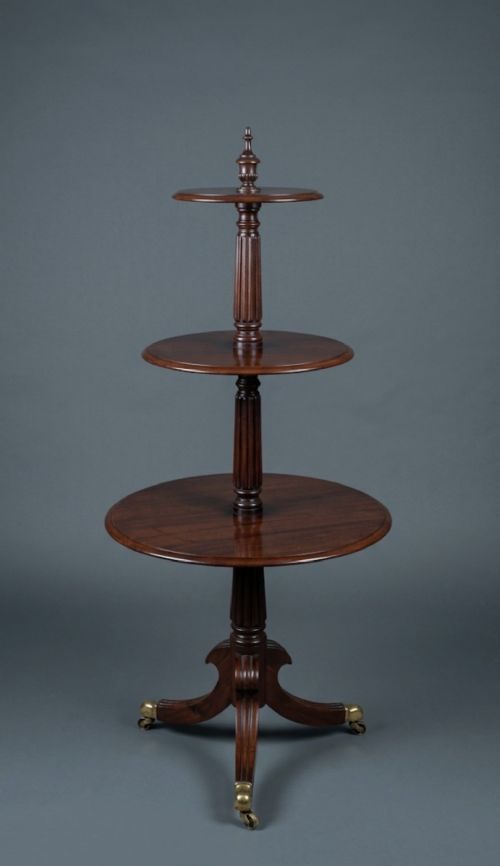
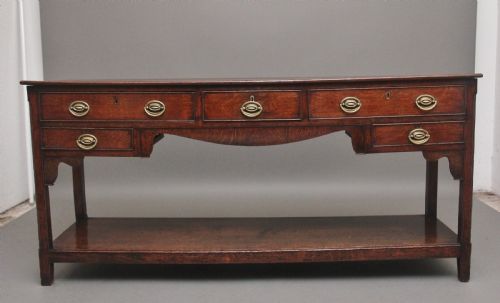
When you search for a nineteenth century server table, you encounter a varied group of dining and serving furniture spanning the Regency, Victorian, and William IV periods. These forms encompass serving tables, sideboards, pedestal buffets, console tables, and tiered dumb waiters designed for food and drink service.
Mahogany remains the dominant timber seen across these pieces, alongside walnut, oak, cherrywood, padauk, and lacquered hardwood. Stylistic influences stretch from traditional English Regency and Victorian designs to French Empire, Italian Neoclassical, Aesthetic Movement, and Anglo-Indian aesthetics.
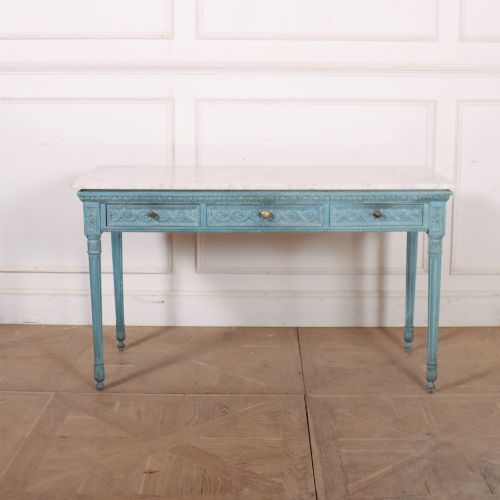
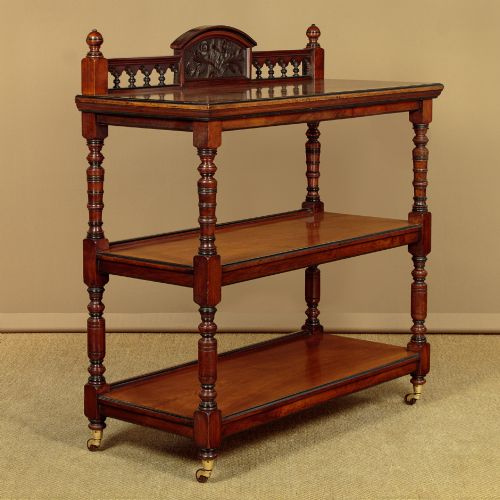
The objects serve multiple functions, acting variously as dining room sideboards, wall console tables, or multi-tiered dumb waiters for holding dishes. You will find items featuring brass inlay, marble tops, carved details, and metamorphic or rise-and-fall mechanisms.
Materials and construction methods
Cabinetmakers utilised dense hardwoods like mahogany, walnut, and oak as the structural foundation for these serving tables and sideboards. Selected pieces incorporate decorative veneers such as burr elm and burr walnut to create figured grain patterns across drawer fronts and doors.
Detailing often involved brass inlay, ebony stringing, and hand carving executed directly into the timber. Marble tops appear on specific console and server variations, whilst other surfaces display hand-painted finishes or lacquered treatments.
Nineteenth Century Server Table Retail Price Guide 2026
Typical asking prices for nineteenth century server table among the pieces listed under this phrase on Sellingantiques today, from the lower quarter to the upper quarter. They describe what is for sale here now, not the wider market.
Dumb waiters were expected to hold the conversation when human servants left the room.
Distinctions in construction and design
Quality separates pieces through the selection of timber and the precision of secondary elements like brass inlay and hand-carved ornamentation. Finer examples display well-figured mahogany or burr walnut veneers combined with substantial structural integrity in pedestals and legs.
The presence of specialised mechanical elements, such as rise-and-fall tiers on dumb waiters or metamorphic buffet designs, distinguishes more ambitious workshop production from standard utility furniture.
The Woodworkers Ltd Kilkenny
The Nineteenth Century Server Table Glossary
- Buffet
- A sideboard or low cupboard used for the display and service of food and drink. These frequently feature tiers or pedestal configurations.
- Dumb waiter
- A tiered serving stand fitted with revolving or fixed shelves, used during meals to hold dishes without requiring servants.
- Console table
- A table designed to be fixed against a wall, often supported by brackets or console legs rather than standard four-legged framing.
- Breakfront
- A piece of furniture where the central section projects forward from the flanking cabinets or pedestals.
- Pedestal sideboard
- A heavy sideboard featuring central drawers flanked by enclosed pedestals or cupboards, common in Regency and Victorian dining rooms.
Nineteenth Century Server Table: Frequently Asked Questions
What is a nineteenth century server table used for?
These tables and buffets function as auxiliary surfaces in dining rooms for holding dishes, glassware, and serving platters during meals. They also serve as hallway or drawing-room console tables.
In period settings, tiered versions like dumb waiters held courses close to the dining table, whilst sideboard variations stored cutlery and tableware in their pedestals.
How do I identify a Regency server from a Victorian one?
Regency pieces often display classical proportions with brass inlay, ebony stringing, and restrained mahogany or rosewood surfaces. They reflect an aesthetic influenced by ancient Roman and Greek design.
Victorian and William IV examples tend to be heavier in scale, featuring deeper carved oak, burr walnut, or elaborate pedestal bases with more pronounced ornamentation.
Where should I place a server table in my home?
A server table fits naturally against a dining room wall to support dinner parties or display decorative items. Console variants suit narrow entrance halls or living rooms.
Ensure you measure the depth and width of the piece, as pedestal sideboards and breakfront servers require sufficient clearance to open drawers and cabinet doors.
What does a rise and fall dumb waiter do?
A rise and fall dumb waiter incorporates a mechanical mechanism that allows the tiers or shelves to adjust in height. This engineering permitted the servant to raise or lower surfaces for access during a meal.
Such pieces represent more complex workshop construction and are typically found on mid-nineteenth-century examples.