


Nineteenth Century Seating
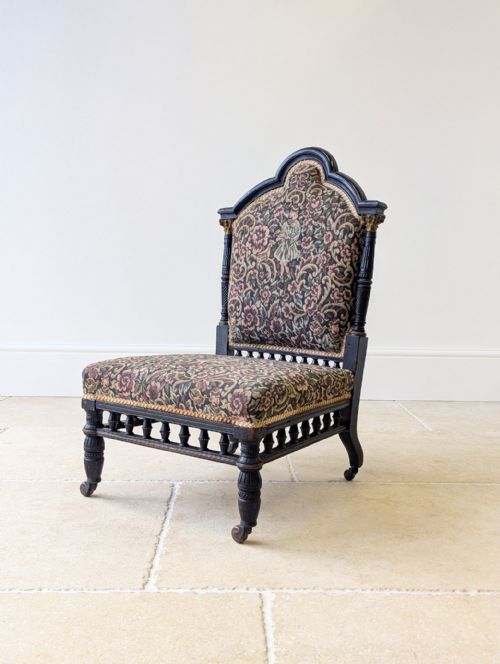
Nineteenth century seating brings together formal dining chairs, low salon seats, and upholstered library pieces shaped by Regency and Victorian hands.
Nineteenth Century Seating
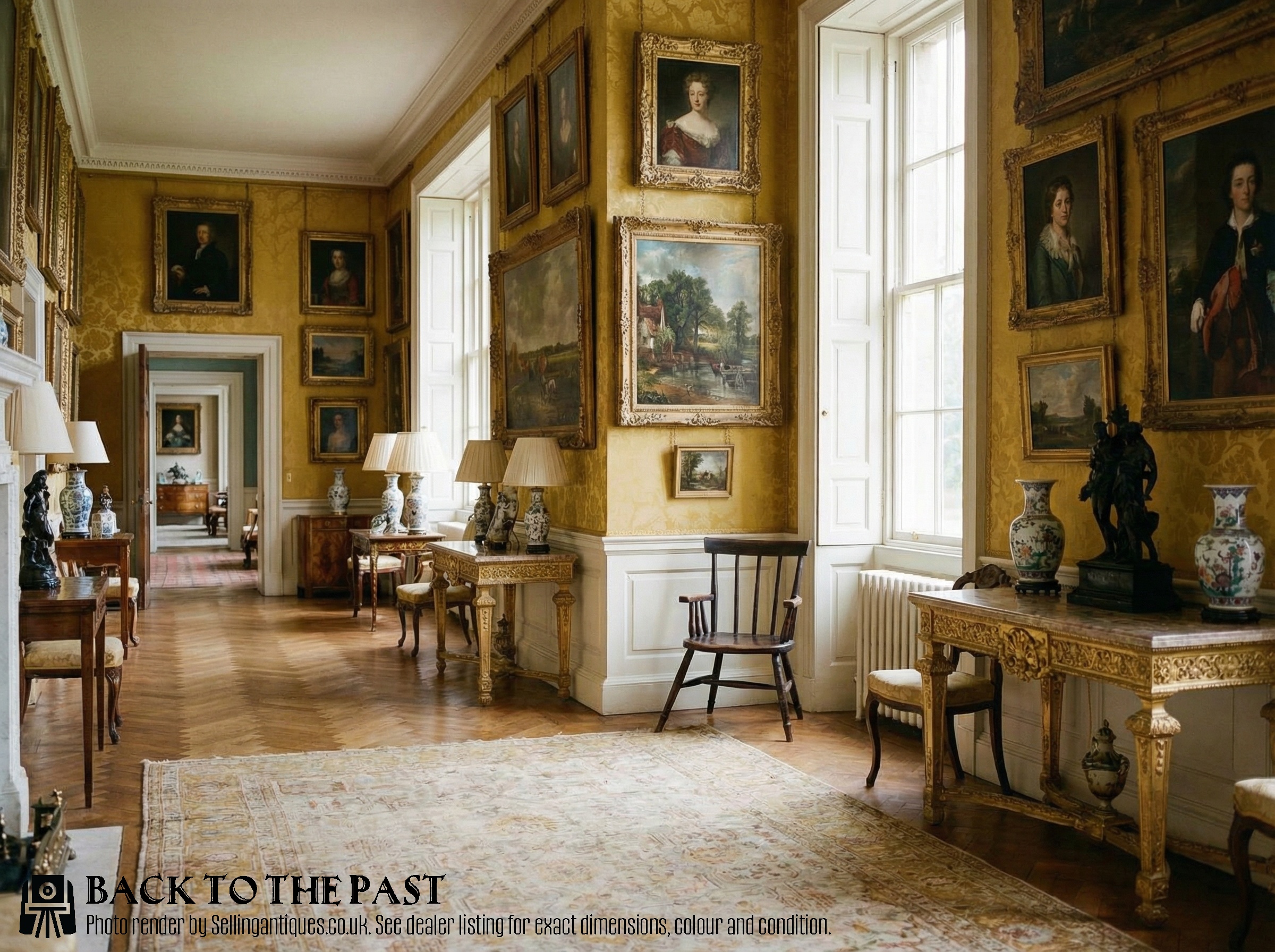
Nineteenth century seating encompasses a broad spectrum of domestic and formal furniture designed across the Georgian, Regency, and Victorian periods. Buyers exploring this category encounter everything from sets of mahogany dining chairs to low nursing chairs and deep upholstered sofas.
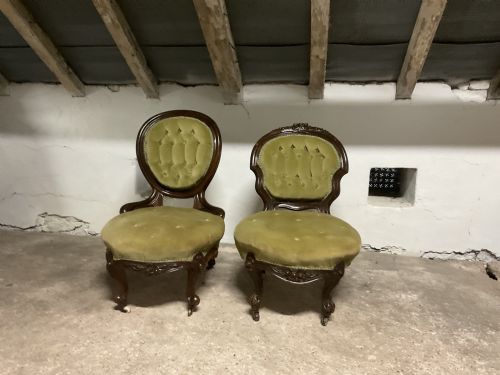
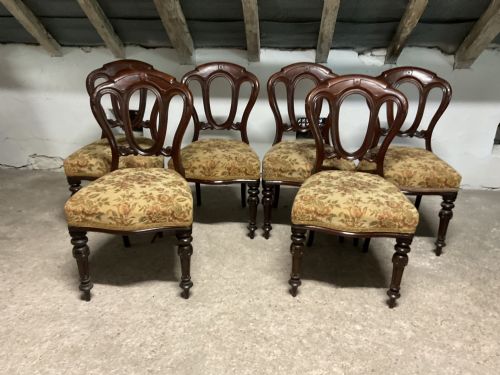
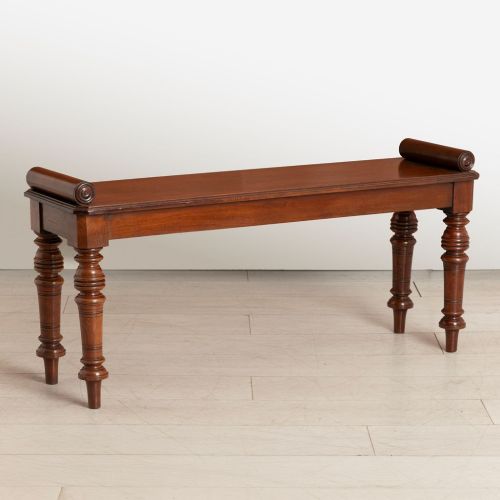
The most common forms on this page include dining chairs in sets of four, six, or ten, alongside individual armchairs, window seats, and benches. Woods like mahogany and walnut dominate, frequently paired with original fabric, velvet, or hessian upholstery.
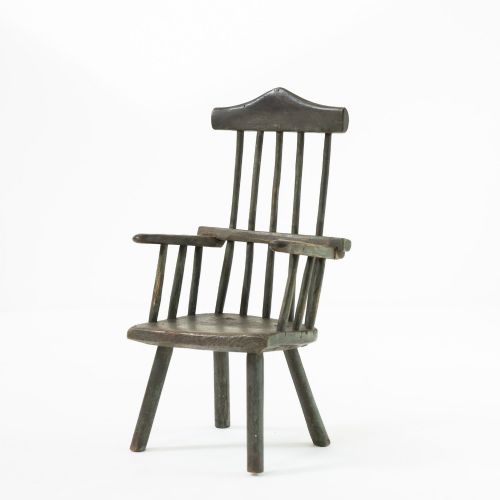
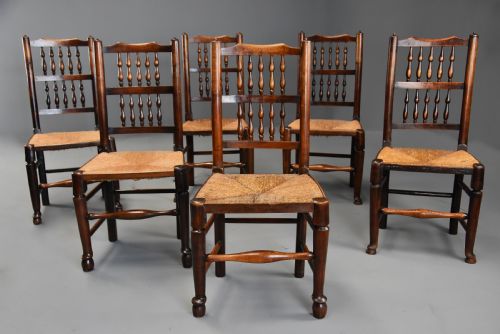
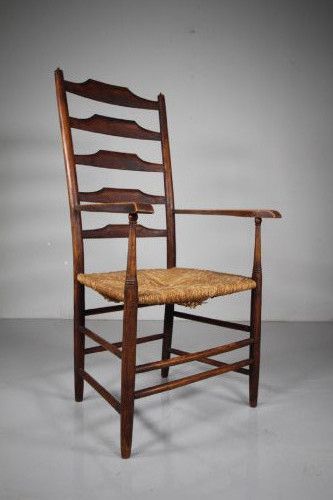
Regional variations span English country vernacular pieces in ash and elm alongside more polished neoclassical and Arts and Crafts creations. Makers and designers of note, including Howard and Sons and Philip Clissett, appear in specific workshops and attribution records.
Materials and Construction
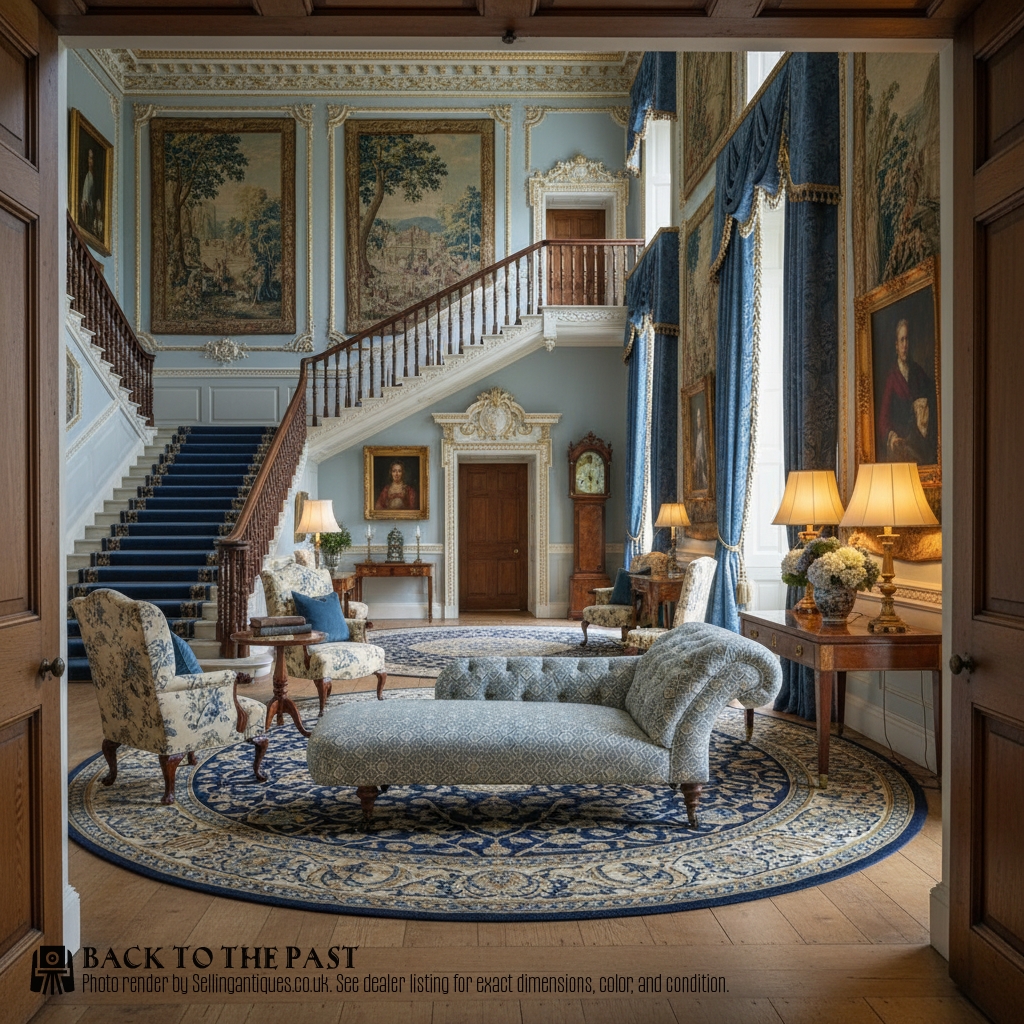
Cabinet makers relied primarily on dense hardwoods such as mahogany, walnut, rosewood, and ash, often turning or carving structural members by hand. Joinery utilised traditional mortise and tenon methods to ensure long-term stability under daily use.
Upholstered items incorporated supportive webbing, horsehair stuffing, and springs tied into place before being covered in textiles like velvet, hessian, or printed cotton. Decorative accents included brass inlay, giltwood carving, ebonised finishes, and turned spindle backs.
Nineteenth Century Seating Retail Price Guide 2026
Typical asking prices for nineteenth century seating among the pieces listed under this phrase on Sellingantiques today, from the lower quarter to the upper quarter. They describe what is for sale here now, not the wider market.
Evaluating Quality
The distinction between ordinary and exceptional pieces rests upon the crispness of carved detail, the selection of figured timber veneers, and the integrity of the original frame construction. Pieces retaining their structural rigidity without excessive timber shrinkage or replaced primary members stand apart in desirability.
Refinement in proportion and the survival of untouched surfaces, such as patinated ash and elm or original gilt bronze and brass mounts, elevate an item. Maker attribution or firm stamps further distinguish works produced by prominent workshops from standard commercial output.
Etienne-Henri Dumaige·William Morris·Rossetti·Philip Clissett·Howard and Sons·Miles and Edwards·E W Godwin·Charles Nosotti
The Nineteenth Century Seating Glossary
- Regency
- A British design style spanning the early nineteenth century, characterised by neoclassical motifs, sabre legs, and classical restraint. It draws direct inspiration from ancient Greek, Roman, and Egyptian forms.
- Bar Back
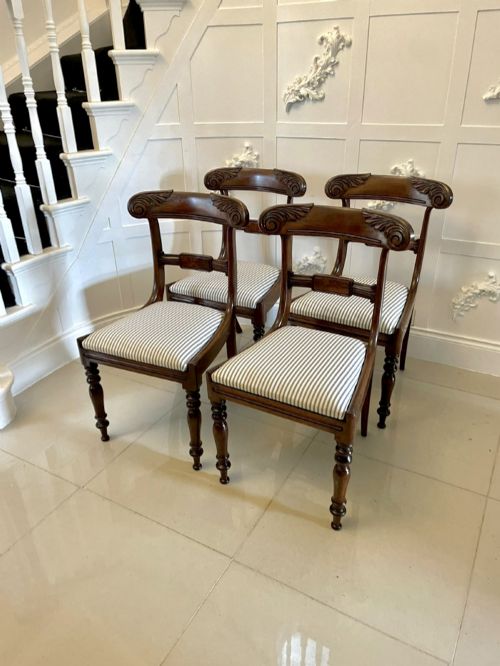
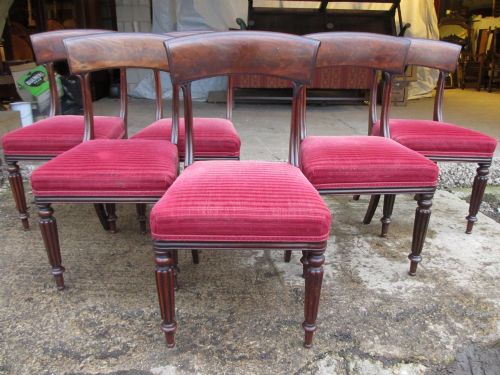
- A dining chair style featuring a horizontal top rail shaped like the crossbar of a piece of harness, popular during the William IV period. This design often incorporates carved central splats.
- Prie Dieu
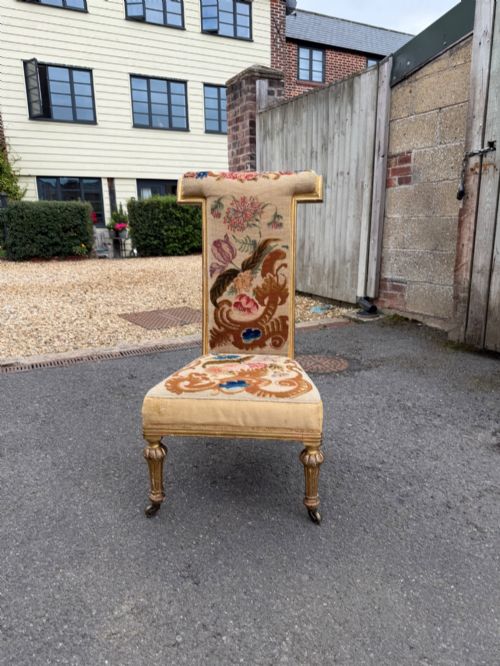
- A devotional prayer chair featuring a low seat and an upper shelf designed to support the arms while kneeling. These pieces are frequently encountered in Victorian domestic interiors.
- Curule
- An ancient Roman stool design featuring intersecting curved legs forming an X-shape. Nineteenth century revivals utilised this classical form for window seats and footstools.
- Cane Seat
- A seating surface woven from peeled rattan or cane strips, providing a flexible and light panel. It appears frequently on Regency side and dining chairs.
Nineteenth Century Seating: Frequently Asked Questions
How do I identify a Regency dining chair?
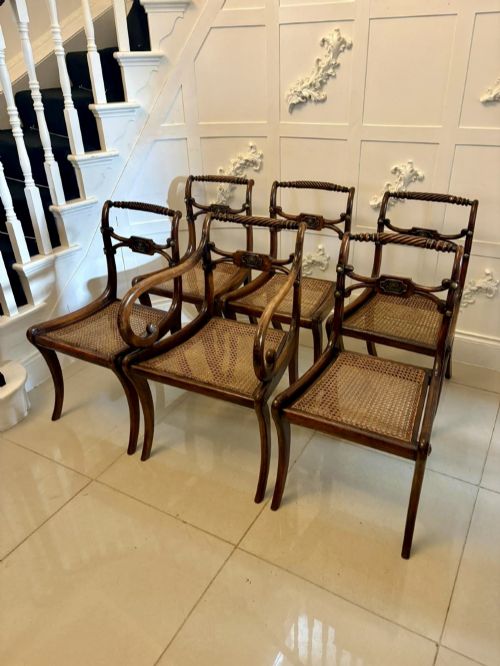
Regency dining chairs typically exhibit clean classical lines, sabre legs, and dark mahogany timber. Look for restrained carved details and brass inlay that reflect early nineteenth century neoclassical tastes.
Many sets retain original proportions with lower back rails designed to tuck neatly beneath standard dining tables of the period.
What is a nursing chair?
A nursing chair is a low-seated upholstered armchair designed originally for comfort and ease of infant care during the Victorian era. The shorter legs allowed mothers to tend to children while seated close to the hearth.
These chairs often feature sprung seats and padded backs upholstered in velvet, tapestry, or patterned fabric.
Are these chairs suitable for daily use?
Most nineteenth century seating remains sturdy enough for regular domestic use provided the frames are structurally sound. Solid hardwood construction and traditional joinery allow these chairs to withstand everyday sitting.
Upholstered pieces may require professional webbing or cushion reinforcement if the internal stuffing has settled over the decades.
What defines Arts and Crafts seating?
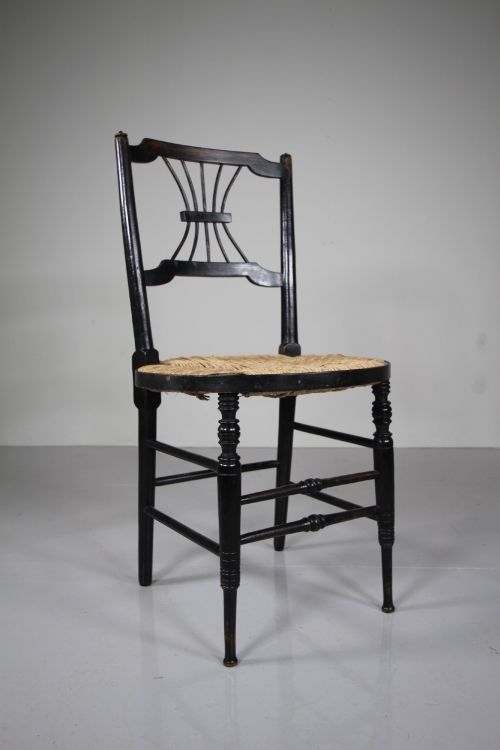
Arts and Crafts seating emphasises honest construction, visible joinery, and functional simplicity over excessive surface ornament. Designers like William Morris and Philip Clissett championed rush seats and straightforward ladder or spindle backs.
These pieces celebrate the natural grain of woods such as oak, ash, and elm without heavy varnishes or gilding.