




Nineteenth Century Porcelain Statue
A nineteenth century porcelain statue brings cabinet-scale sculpture into the room, cast in biscuit or glazed ceramic and painted with enamels.
Nineteenth Century Porcelain Statue
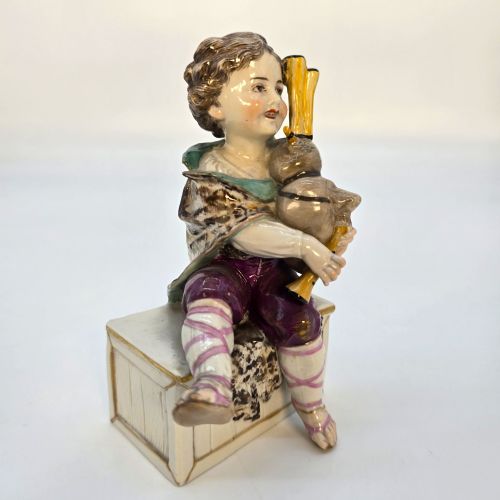
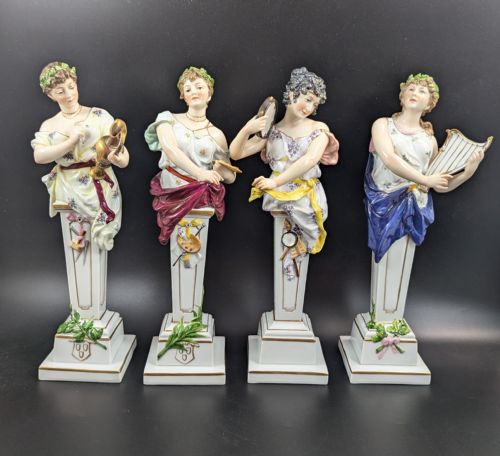
When you search for a nineteenth century porcelain statue, you encounter cabinet figures, portrait busts and decorative statuettes produced across Europe and Japan. These pieces range from unglazed parian and biscuit figures to polychrome enamel examples shaped by Victorian, Rococo Revival and Neoclassical tastes.
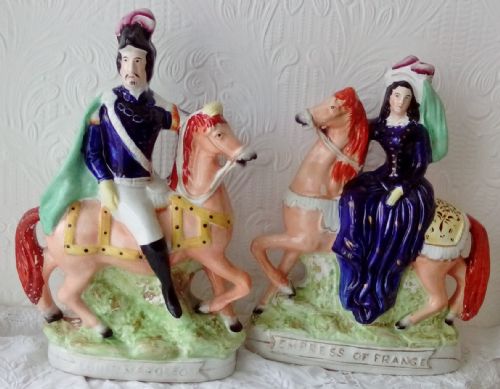
The versions most commonly met on this page span the Victorian era, utilising materials such as hard-paste porcelain, earthenware and parian ceramic. They depict classical women, romantic musicians, royalty and historical personages produced by factories in England, France, Germany and Japan.
Materials and Technique
Makers formed these figures by slip-casting or pressing clay into multi-part moulds before firing the ceramic at high temperatures. Glazed pieces received hand-painted enamel colours and gilt highlights, whilst biscuit and parian porcelain remained unglazed to mimic carved marble.
Factories applied metallic finishes and gold leaf to enhance robes and bases, while specialised bodies like parian porcelain achieved a matte, fine-grained texture through a distinct proportion of feldspar.
Listings include French, German, English and Japanese ceramic figures spanning the nineteenth century.
Variations in Quality
The distinction between ordinary and superior pieces rests on the crispness of the moulding and the delicacy of the hand-finishing. Subtle facial expressions, cleanly separated fingers and precise enamel work separate master modeller outputs from routine factory output.
Modelling depth in drapery and hair defines the better works, where details remain sharp rather than smoothed over by thick glazes or worn mould seams.
Volkstedt Rudolstadt Factory·Letu and Mauger Paris·Royal Worcester·Volkstedt Richard Eckert·Vion et Baury·Samson Paris·Achille Mollica·Ernst Wahliss·Royal Dux·Sevres
The Nineteenth Century Porcelain Statue Glossary
- Biscuit Porcelain
- Un-glazed porcelain fired once to produce a matte, white surface resembling marble.
- Parian Porcelain
- A fine-grained unglazed ceramic developed in the nineteenth century to imitate carved marble statuary.
- Enamel
- Opaque vitreous colours applied over glaze and fired at a lower temperature to fix the pigments.
- Quill Holder
- A utilitarian desk accessory incorporating a figure, designed to support writing implements beside an inkwell.
- Figurine
- A small, three-dimensional sculpted representation of a human or animal form.
Nineteenth Century Porcelain Statue: Frequently Asked Questions
How do I clean nineteenth century porcelain?
Dust these figures gently with a soft, dry brush to prevent dirt accumulation in crevices and delicate modelling.
Avoid using water, chemical cleaners or abrasive cloths on painted or unglazed biscuit surfaces, as moisture damages old pigments and porous ceramic bodies.
Were these statues made for display?
These figures were created as mantelpiece ornaments, cabinet displays and decorative centrepieces for middle-class and aristocratic Victorian parlours.
Many celebrated historical rulers, allegorical figures or literary characters to signal the owner's cultural interests and social standing.
What is parian porcelain?
Parian is a dense, fine-grained unglazed ceramic developed in the nineteenth century to imitate white marble sculpture.
Named after Parian marble from the Greek island of Paros, it became popular for portrait busts and classical figures due to its smooth matte finish.
How are English and continental figures different?
English figures often utilise earthenware or Staffordshire pottery bodies with rustic glazes, depicting popular royalty and literary subjects.
Continental factories in France and Germany tended to use fine porcelain and biscuit bodies, focusing on classical mythology, allegories and elaborate Rococo Revival styling.