

Nineteenth Century Mahogany Drawers
Nineteenth century mahogany drawers offer solid construction and rich timber figure, bringing practical storage and distinct period character to any room.
Nineteenth Century Mahogany Drawers
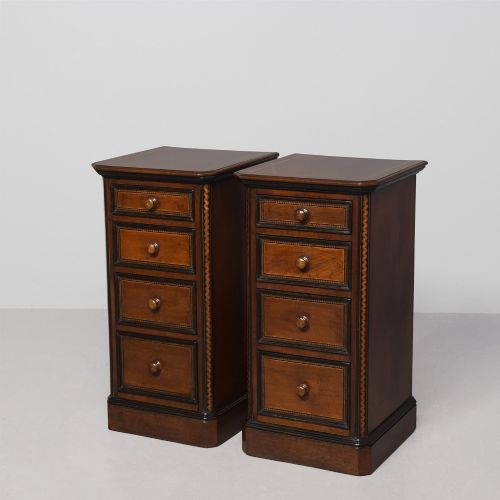
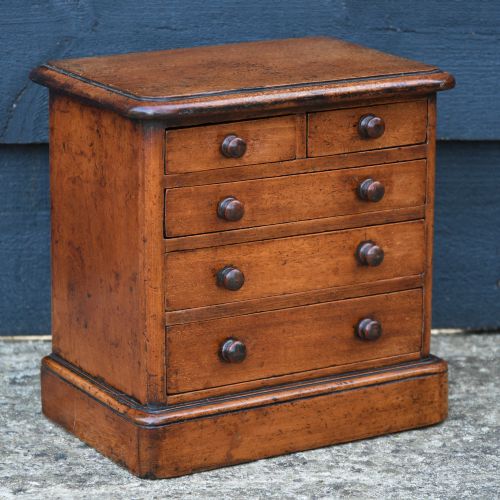
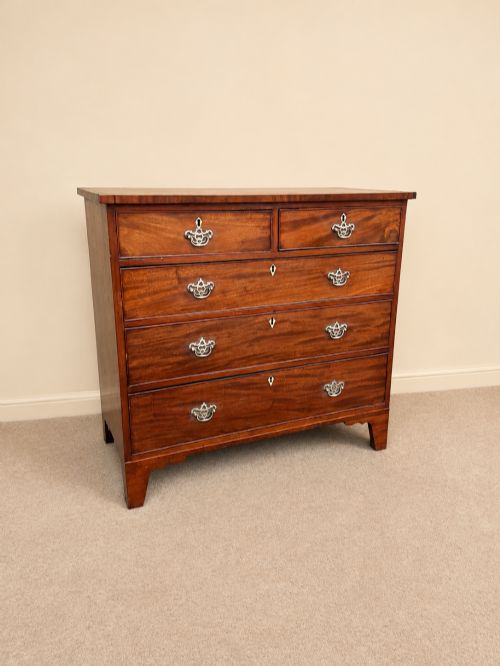
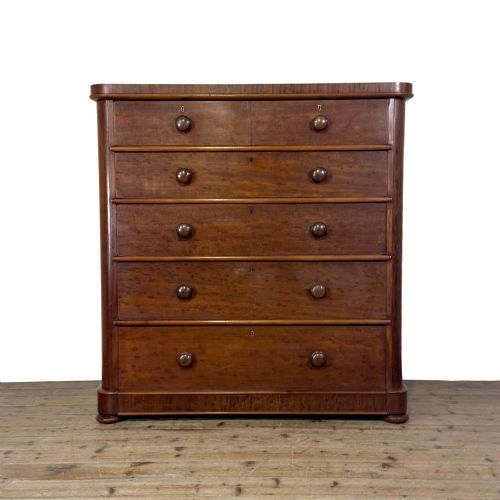
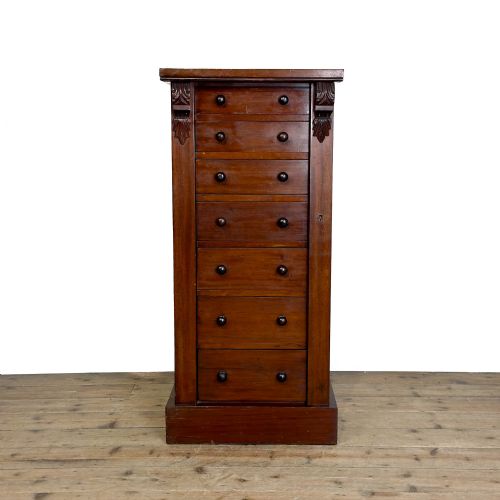
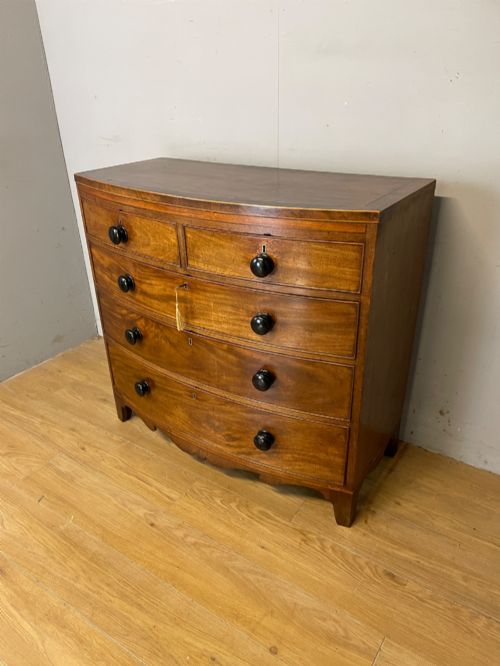
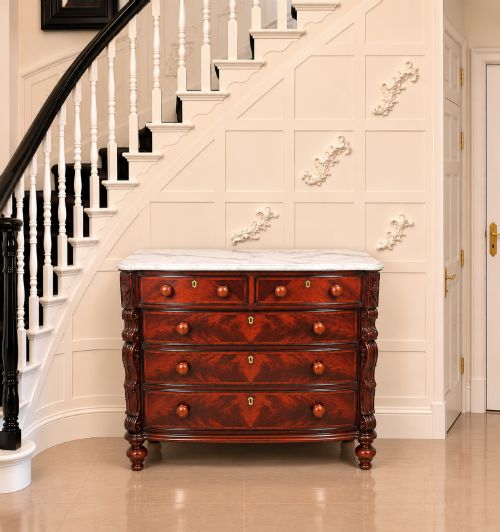
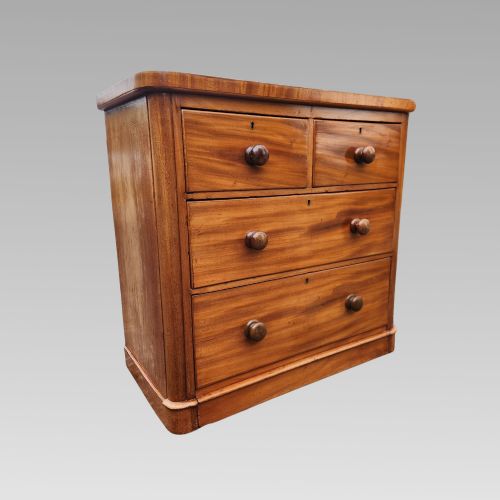
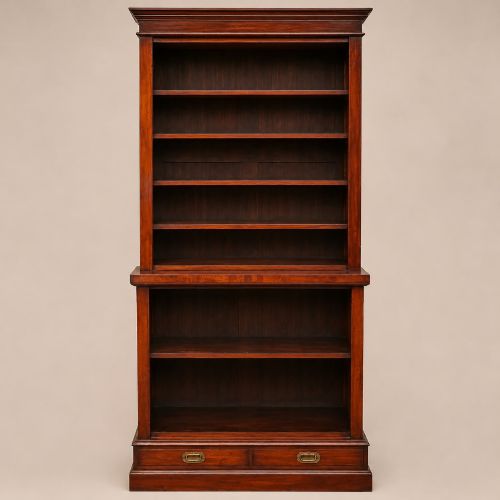
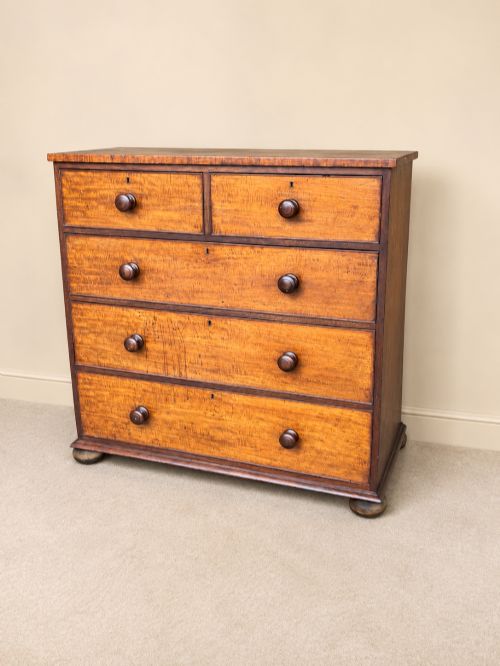
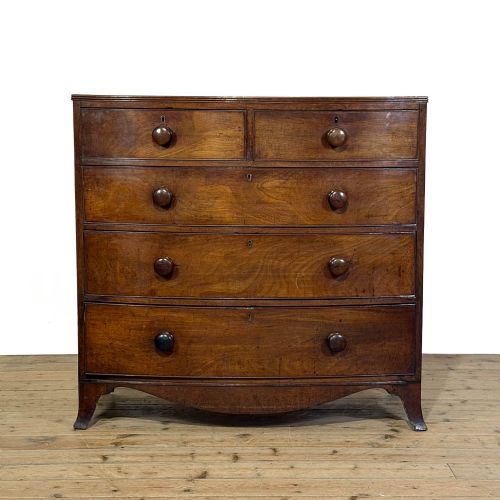
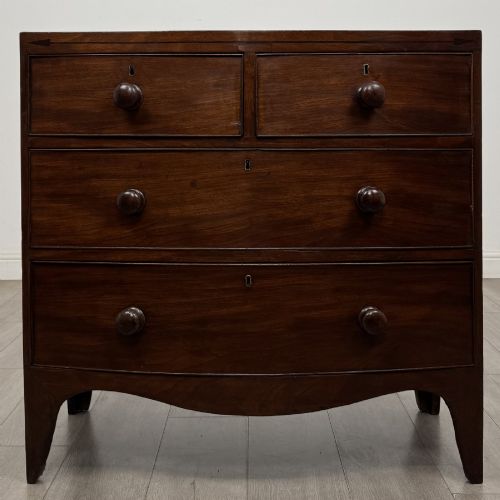
Nineteenth century mahogany drawers primarily comprise chest of drawers forms, often featuring bow fronts or tall configurations like chest on chests and Wellington chests. These pieces emerge across Georgian, Regency, and Victorian periods, showing both standard upright formats and compact miniature sizes.
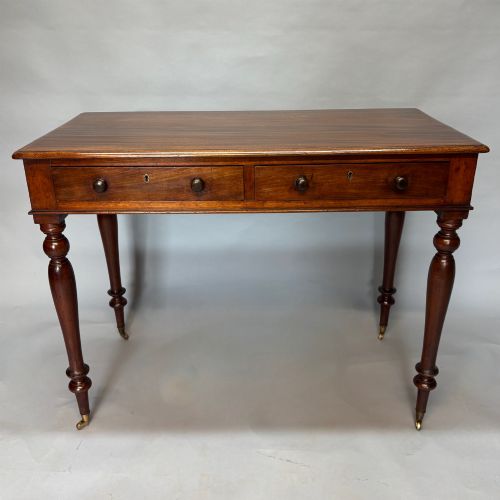
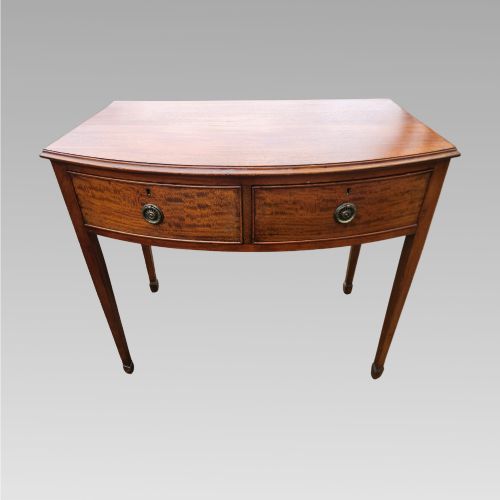
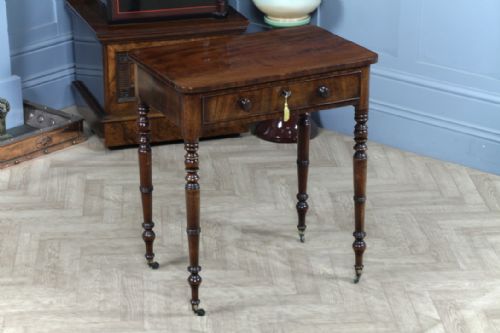
Buyers also encounter writing tables, pedestal desks, and bedside cabinets incorporating drawers alongside the main chest forms. The selection spans straightforward domestic pieces and refined examples with brass details, cross-banding, or marble tops.
Materials and Construction
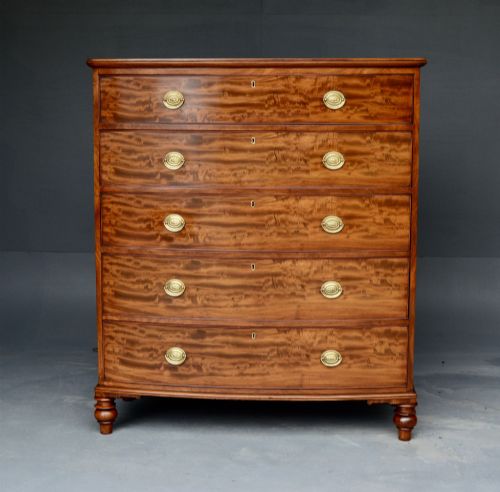
Makers utilised solid mahogany and flame mahogany veneer over secondary timbers, often applying wood inlay and cross-banding to create surface contrast. Drawer construction typically incorporates hand-cut joints designed for daily domestic use.
Metal hardware plays a functional and decorative role, featuring brass cup handles, ring pulls, and occasionally inlaid brass lines. Additional details incorporate leather inserts for writing surfaces and bone or glass elements where appropriate.
Nineteenth Century Mahogany Drawers Retail Price Guide 2026
Typical asking prices for nineteenth century mahogany drawers among the pieces listed under this phrase on Sellingantiques today, from the lower quarter to the upper quarter. They describe what is for sale here now, not the wider market.
The inventory spans Victorian, Georgian, and Regency periods, highlighting mahogany, flame mahogany veneer, brass, and leather.
Evaluating Quality
Quality separates through timber selection, particularly the depth of flame mahogany veneer and the precision of wood inlay across the drawer fronts. Finer pieces display careful grain matching and consistent colour throughout the visible carcass.
Construction refinement marks the distinction between standard utility items and masterwork pieces. The crispness of carved details, the integration of brass hardware, and the smooth operation of graduated drawers define the upper tier of surviving examples.
Gillows
The Nineteenth Century Mahogany Drawers Glossary
- Bow front
- A convex curved cabinet or drawer front that projects outward at the centre. This style became particularly popular during the Regency and Victorian periods.
- Flame mahogany
- A veneer cut from the fork of the mahogany tree where the branch meets the trunk. It creates a distinctive, swirling flame-like figure.
- Wellington chest
- A tall, narrow chest of drawers secured by a hinged locking side stile that fastens with a key. It typically holds seven graduated drawers.
- Cross-banding
- A decorative border of veneer laid around the perimeter of a drawer front or tabletop so that the grain runs at right angles to the main panel.
Nineteenth Century Mahogany Drawers: Frequently Asked Questions
What is a Wellington chest?
A Wellington chest is a tall, slender set of drawers characterised by a locking wooden bar on the right side that secures all the drawers at once. This locking mechanism protected valuable papers and personal items in nineteenth-century homes.
These pieces typically contain seven drawers and take up minimal floor space while offering substantial vertical storage. Their narrow footprint made them popular in bedrooms and studies.
Were miniature chests used by children?
Miniature chests were rarely toys for children, functioning instead as apprentice pieces or salesman samples. Trainees built these small-scale items to prove their mastery of dovetailing and veneering techniques.
They also allowed travelling merchants to display furniture designs to prospective buyers without hauling full-sized wardrobes or chests. Today, collectors value them for their exact detailing.
Where should I place a pedestal desk?
A pedestal desk works best freestanding in the middle of a study or placed against a wall where the finished back can be seen. Freestanding versions allow access to drawers and cabinets from multiple angles.
These desks provide substantial surface area and integrated stationery storage, making them suited for home offices. Their mahogany construction pairs well with traditional and contemporary interiors.