
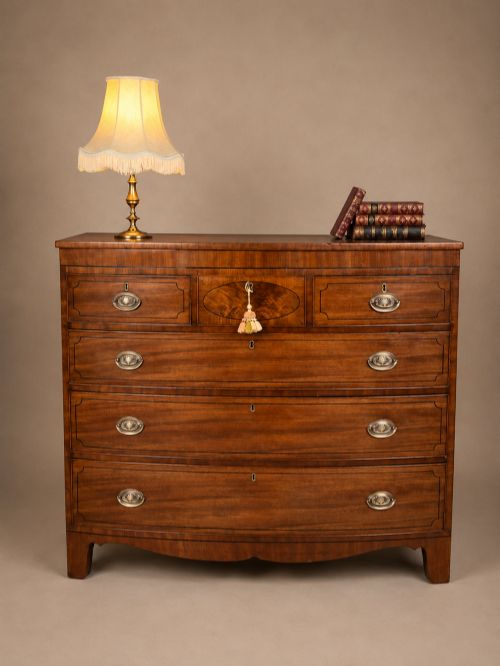
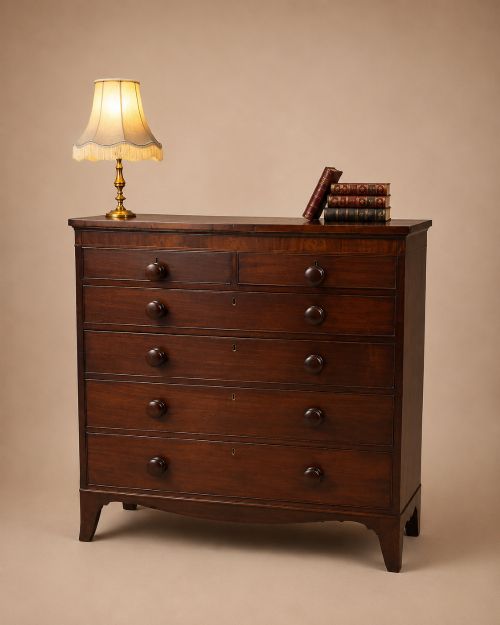
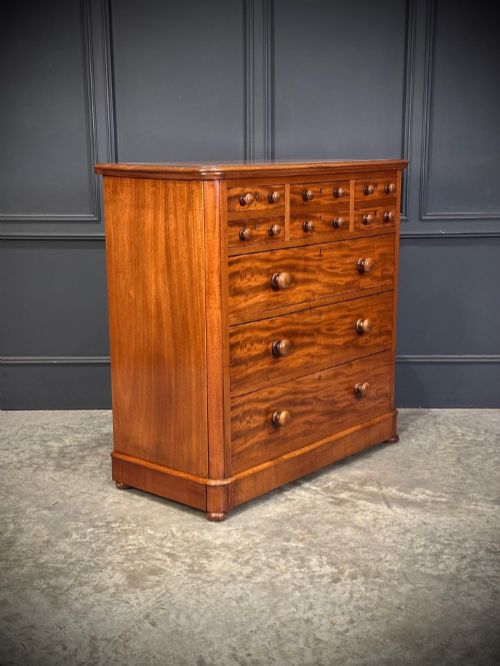
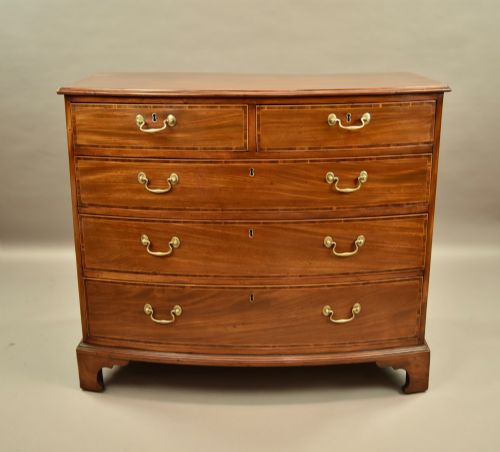
Nineteenth Century Mahogany Commode
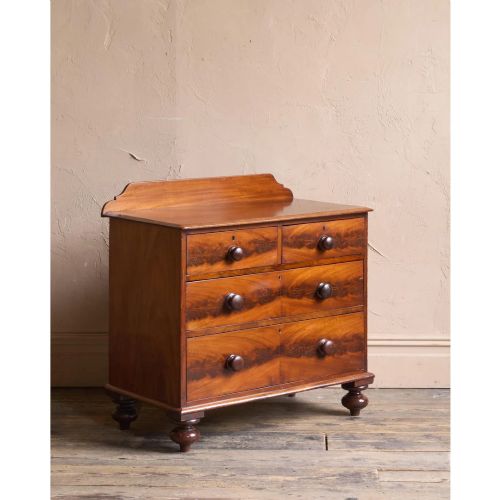
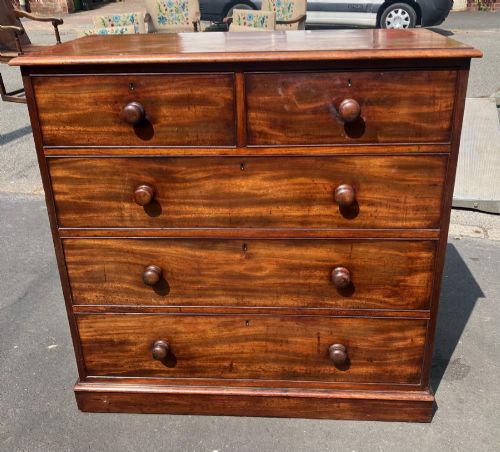
Nineteenth century mahogany commode search results present robust chests of drawers and storage pieces offering generous proportions and rich timber figuring.
Nineteenth Century Mahogany Commode
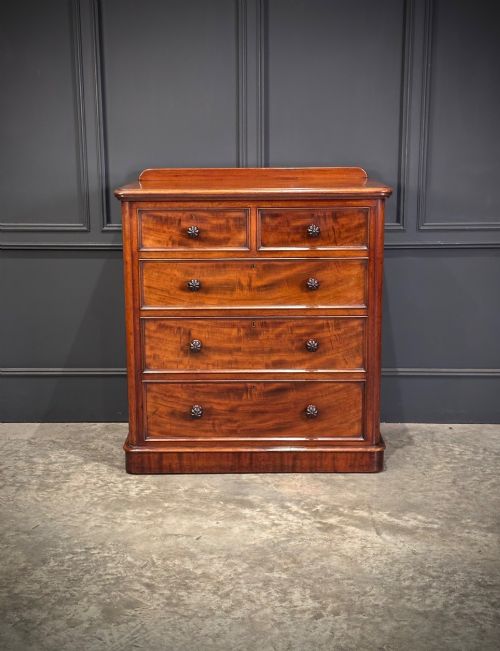
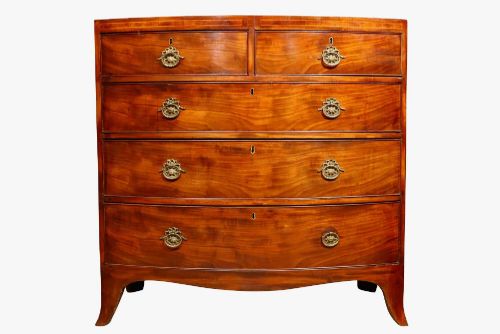
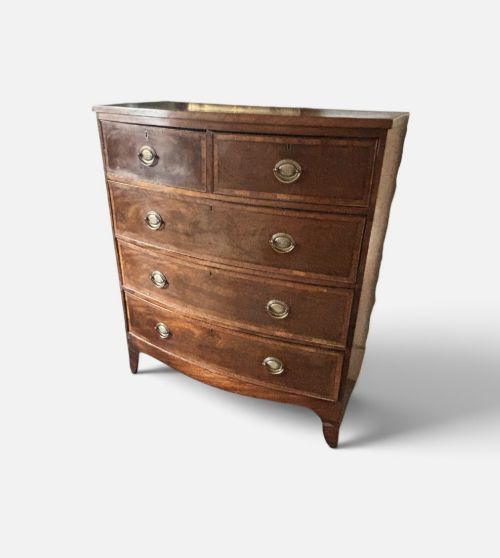
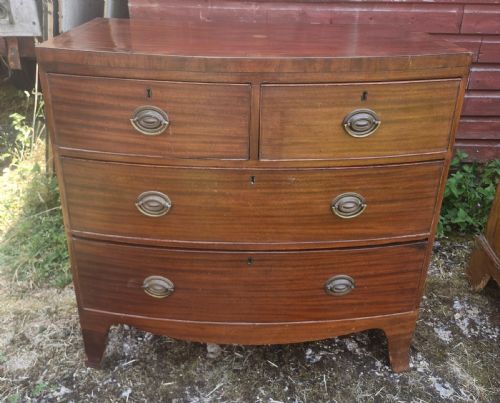
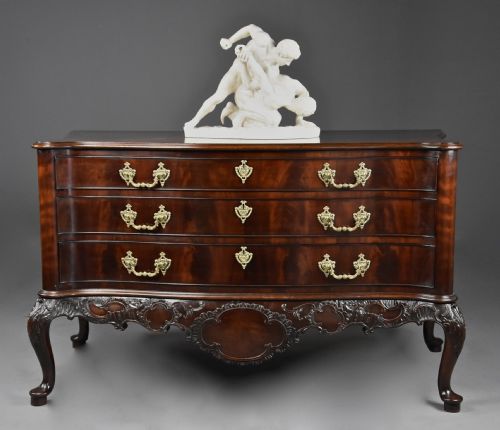
A nineteenth century mahogany commode search brings up a variety of storage furniture, most frequently encountered as bow front chests of drawers from the Regency and Victorian eras. These functional pieces range from smaller four-height examples to large proportions with serpentine fronts.
Makers and cabinet makers of the period produced these storage units using substantial timbers, incorporating secondary woods like pine for internal construction. Forms extend beyond standard chests to include specialised items such as bedsteps and cabinets.
Stylistic influences across these listings span Georgian, George IV, Sheraton style, and French Empire, demonstrating how cabinet makers adapted classical designs for domestic interiors. Biedermeier and Victorian iterations emphasise clean lines or robust proportions.
How They Were Made
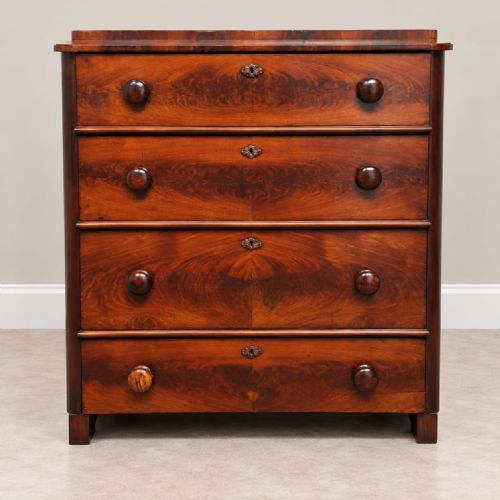
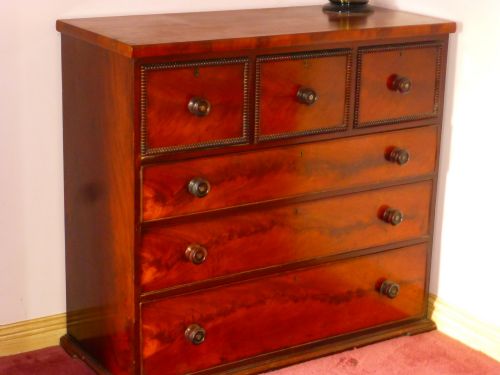
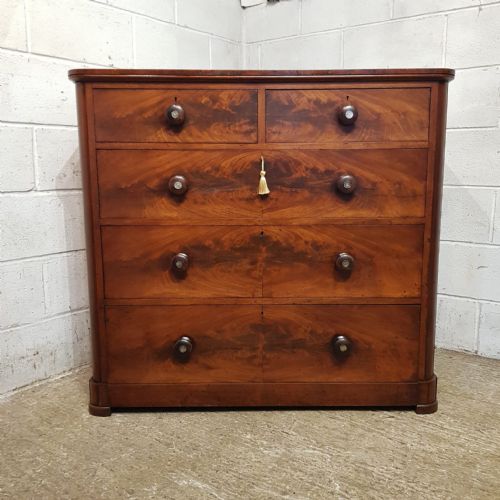
Construction relies heavily on solid mahogany and flame mahogany veneer applied to primary surfaces, backed by structural secondary woods such as oak and pine. Timber selection prioritises striking grain patterns, particularly on drawer fronts.
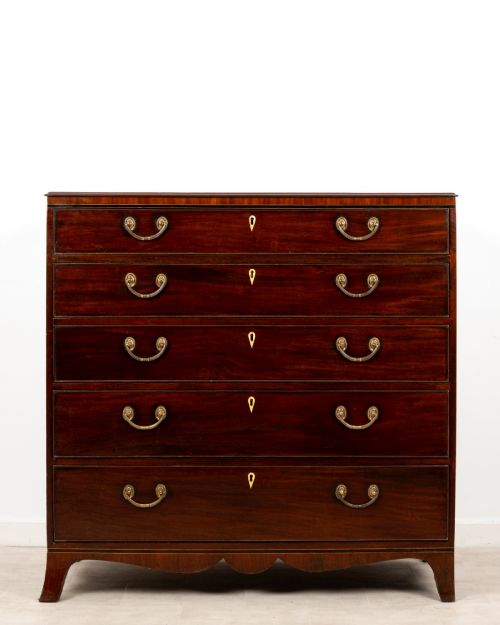
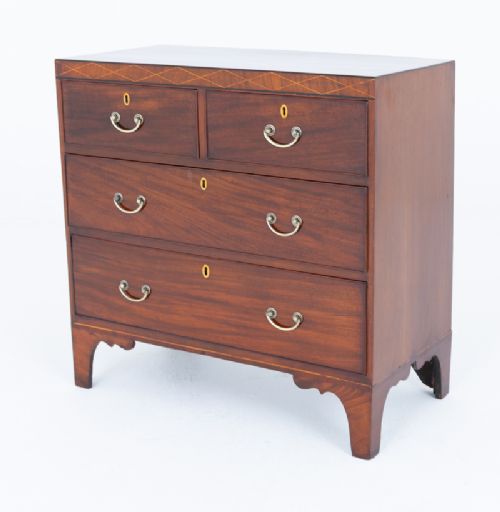
Detailing often incorporates brass hardware for handles and escutcheons, alongside decorative accents like satinwood crossbanding. Secondary linings in oak appear on regional pieces, while pine serves as a common carcass material.
Some nineteenth century storage units included concealed compartments designed to keep secret love letters safe from prying eyes.
What Varies in Quality
The degree of refinement in timber selection divides standard utility items from exceptional examples, particularly where symmetrical flame mahogany veneers cover the entire drawer layout. Figured grain matching across multiple tiers requires advanced cabinet making skill.
Proportion and execution of stylistic details, such as serpentine curves, crossbanding, and edge mouldings, separate simpler regional output from ambitious workshop production. Original brass fittings and secondary wood integrity contribute further to the standing of an individual piece.
The Nineteenth Century Mahogany Commode Glossary
- Bow front
- A convex curved cabinet front popular during the Regency and Victorian periods. This curvature softens the rectilinear appearance of standard chests.
- Flame mahogany
- A veneer cut from the fork of the mahogany tree where branches meet the trunk. It creates a distinctive, flickering flame pattern across drawer fronts.
- Crossbanding
- A strip of veneer applied perpendicularly to the main grain direction of a surface. It frames panels and drawer fronts with a contrasting timber border.
- Serpentine
- A front configuration featuring a concave centre flanked by convex curves, or the reverse. This undulating form demands high proficiency in shaping solid timber and veneers.
Nineteenth Century Mahogany Commode: Frequently Asked Questions
What is a nineteenth century mahogany commode?
A nineteenth century mahogany commode generally refers to a chest of drawers or storage cabinet produced during the eighteen hundreds. These pieces utilise dense tropical hardwood and often feature decorative veneers.
Craftsmen built them for domestic bedchambers and parlours to store clothing and personal belongings. Their robust construction has allowed them to survive into modern interiors.
How do I identify a Regency period piece?
Regency pieces often display classical proportions, subtle brass mounts, and occasionally satinwood crossbanding. The lines lean toward architectural clarity inspired by ancient Greek and Roman design.
Cabinet makers working in this era focused on clean facades and prominent grain patterns. Bow front shapes are particularly prevalent among these listings.
Where were these pieces used?
Original placement was primarily in private bedrooms, dressing rooms, and formal hallways of substantial homes. They provided necessary storage before fitted wardrobes became standard domestic architecture.
Today, buyers place them in living rooms, hallways, and bedchambers as functional surface space and storage. Their enduring utility matches their decorative presence.
What distinguishes Victorian examples?
Victorian chests tend to exhibit heavier proportions and darker, highly figured flame mahogany veneers. Drawer configurations frequently include four or five stacked tiers with substantial wooden framing.
These pieces reflect the industrial expansion and domestic confidence of the later nineteenth century. Their scale accommodates contemporary storage needs effectively.