

Traditional Mahogany Bedroom Furniture
Traditional mahogany bedroom furniture brings warmth and architectural presence to a sleeping space through rich timber and enduring forms.
Traditional Mahogany Bedroom Furniture
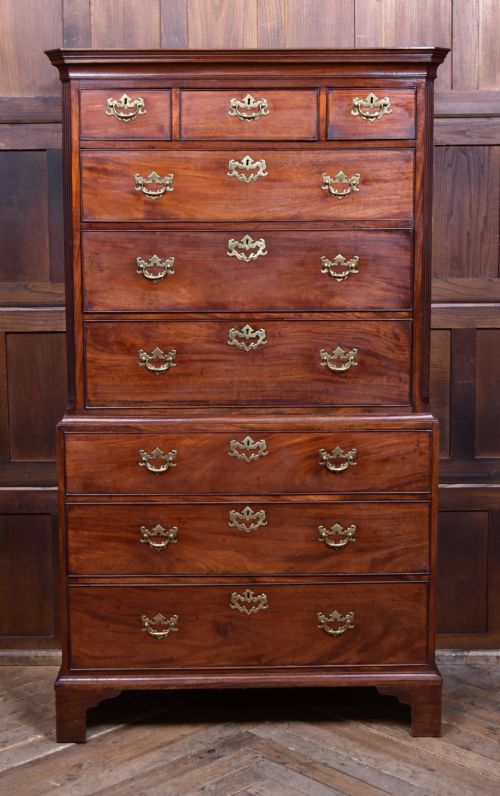
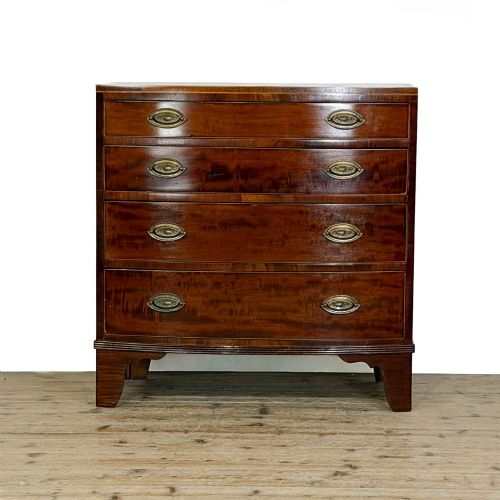
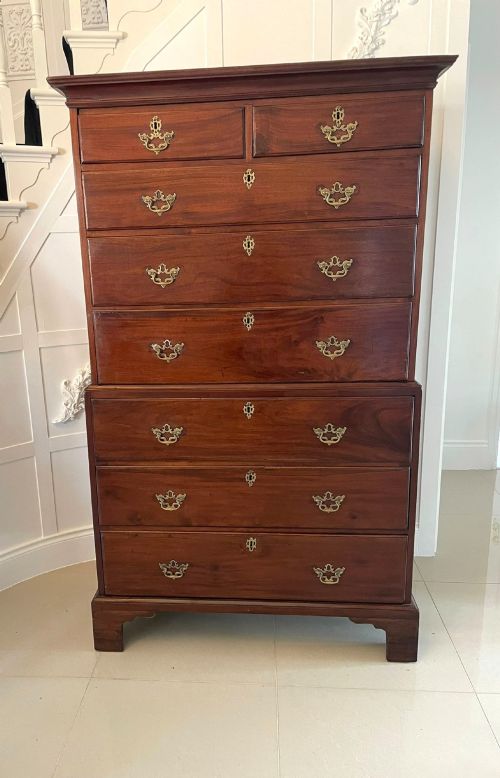
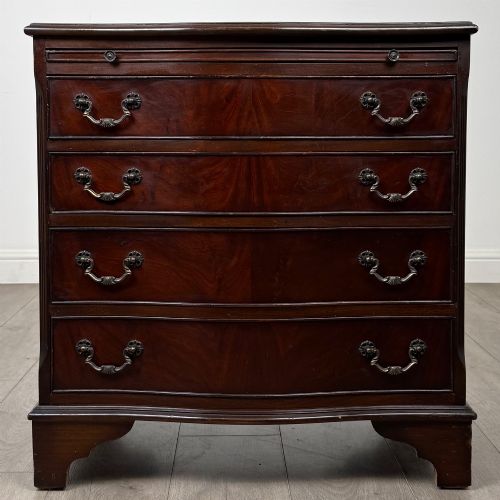
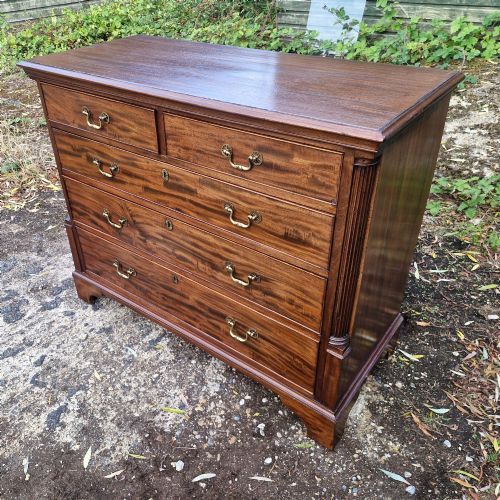
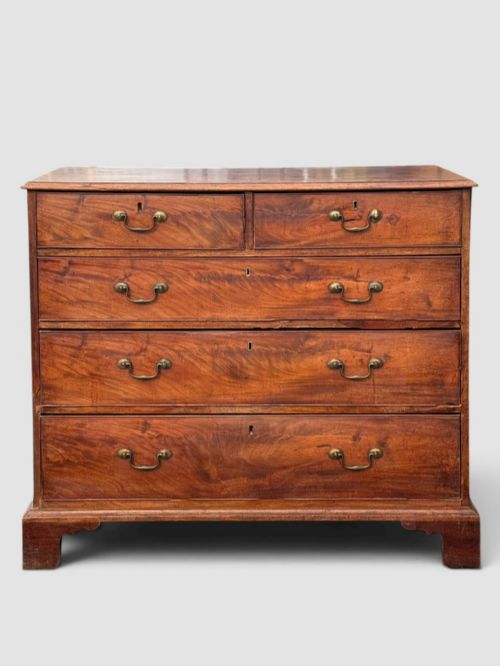
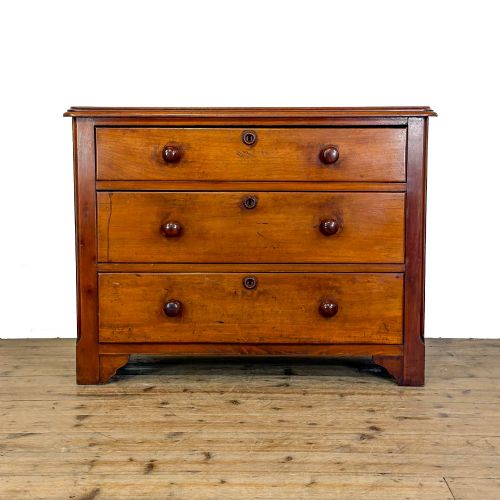
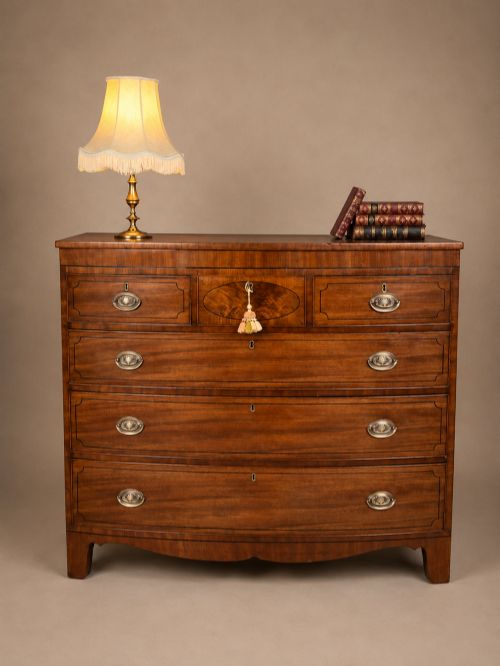
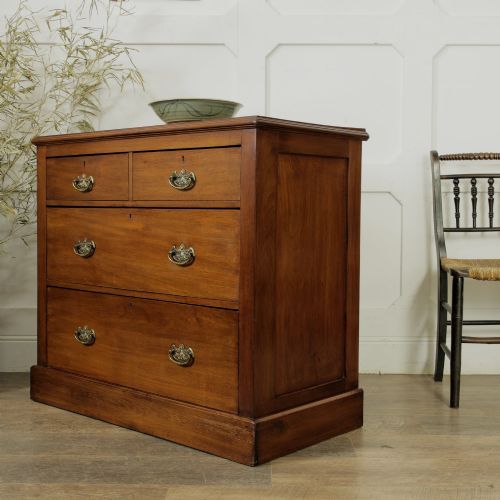
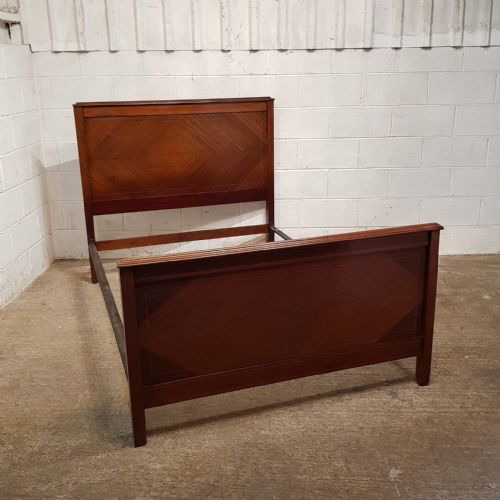
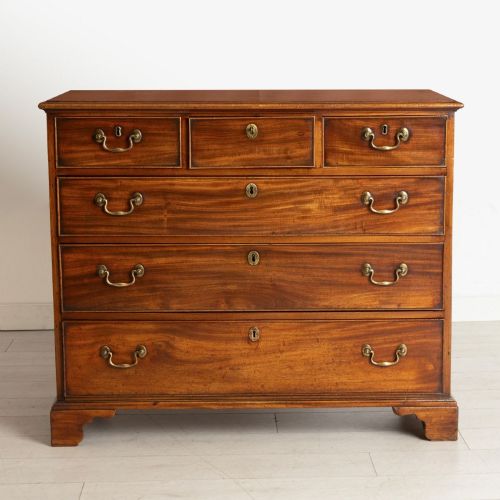
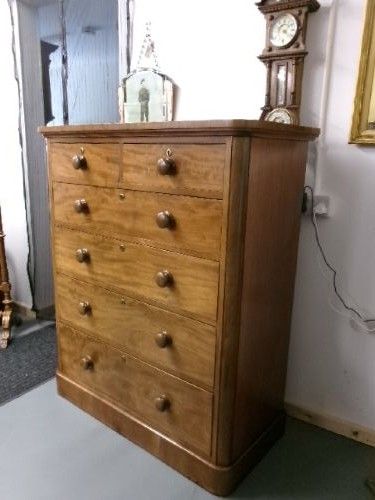
Traditional mahogany bedroom furniture primarily comprises practical storage pieces and bedsteads originating from the eighteenth, nineteenth, and early twentieth centuries. Chests of drawers dominate the selection, appearing in bow-front, serpentine, and tallboy configurations alongside bedside tables and wardrobes.
Buyers encounter numerous examples from the Georgian and Victorian eras, alongside Edwardian interpretations and later twentieth-century revival pieces. These items served domestic sleeping quarters with robust construction designed for daily utility and formal elegance.
The assortment spans diverse regional British cabinet-making traditions, incorporating forms such as Wellington chests, washstands, and four-poster beds. Each piece reflects the changing domestic requirements and stylistic preferences of its respective period.
Materials and Construction
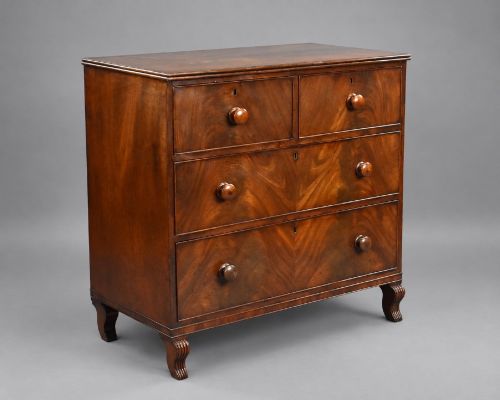
Cabinet-makers relied on solid mahogany and flame mahogany veneers applied over secondary woods like oak, pine, and general timber. Flame mahogany veneer utilised swirling grain patterns across drawer fronts to create decorative impact on otherwise restrained facades.
Structural integrity relied on traditional joinery methods, supplemented by functional brass hardware including drop handles and escutcheons. Secondary woods appeared in internal drawer linings and carcass backs, while occasional fabric and painted surface treatments altered the exposed finishes.
Judging Quality
Quality rests upon the selection of timber veneers, the crispness of moulded details, and the integrity of the internal carcass construction. Superior examples exhibit matched grain patterns across multiple drawer tiers and precise dovetail joints within the drawers.
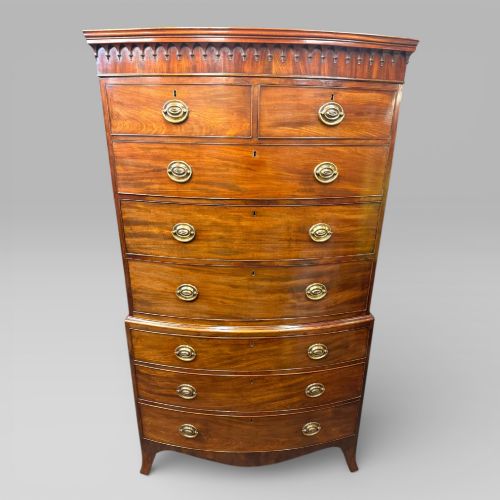
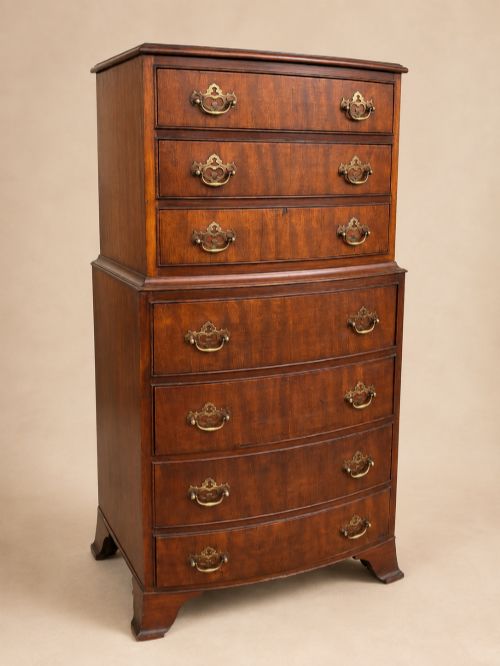
The sophistication of the silhouette - such as a tightly curved bow-front or well-proportioned chest on chest - distinguishes finer workshops from standard commercial production. Original brass fittings and undisturbed surface patination further elevate the standing of a piece.
The Traditional Mahogany Bedroom Furniture Glossary
- Flame mahogany
- A veneer cut from the fork of the mahogany tree where the branch meets the trunk, producing a distinctive, fiery grain pattern. This timber was prized for principal display surfaces on high-status case furniture.
- Bow-front
- A convex, curved front elevation popular on chests of drawers and bedside tables during the Georgian and Victorian periods. This shape softens the corners of case pieces while maintaining internal storage capacity.
- Chest on chest
- A tall storage unit comprising a smaller chest of drawers stacked directly upon a wider base chest, also known as a tallboy. This form maximises vertical storage space within domestic chambers.
- Wellington chest
- A tall, narrow chest of drawers secured by a locking hinged side pilaster that fastens over the drawer edges. It originated in the nineteenth century for secure storage.
- Serpentine
- A front contour that curves outward at the centre and inward towards the sides, or vice versa, requiring considerable skill from the cabinet-maker. It appears on sophisticated eighteenth and nineteenth-century case pieces.
- Four-poster bed
- A large bed frame featuring four vertical columns supporting an upper tester or canopy framework. These monumental sleeping pieces utilised substantial mahogany timbers and sometimes incorporated fabric draperies.
Traditional Mahogany Bedroom Furniture: Frequently Asked Questions
What periods do these pieces date from?
The selection spans items created during the Georgian, Victorian, and Edwardian eras, alongside later twentieth-century revivals.
Dates range from the eighteenth century through to the early decades of the twentieth century.
Are these items made of solid mahogany?
Many pieces combine solid mahogany framing with flame mahogany veneers applied to drawer fronts and primary surfaces.
Secondary timbers such as oak and pine frequently appear in structural elements and internal drawer linings.
What is a chest on chest?
A chest on chest consists of a narrower chest of drawers mounted on top of a wider base chest.
This tall configuration provided substantial vertical storage for clothing in traditional bedrooms.
How should I care for mahogany furniture?
Protect the timber by keeping pieces away from direct heat sources and strong sunlight that can dry the wood.
Regular dusting with a soft cloth maintains the natural lustre of the polished surface.