

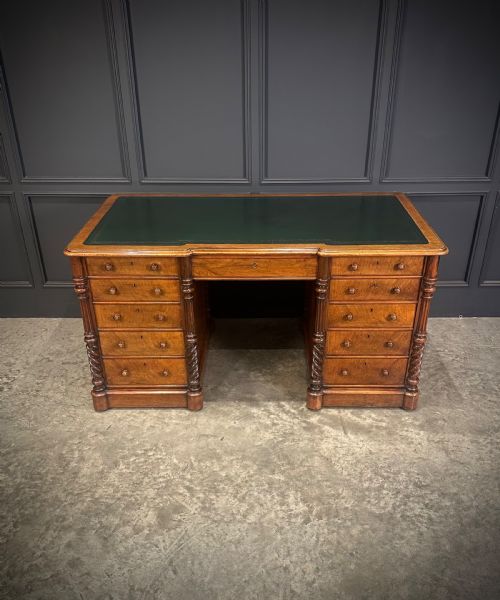


Nineteenth Century Library Desk
A nineteenth century library desk brings practical workspace and refined timber to a room, offering large writing surfaces and ample drawer space.
Nineteenth Century Library Desk
A nineteenth century library desk encompasses substantial partners desks, pedestal writing tables, and drum tables originating from the Regency and Victorian periods. Buyers encounter mahogany and oak writing tables alongside rosewood and walnut pedestal examples designed for study rooms and libraries.
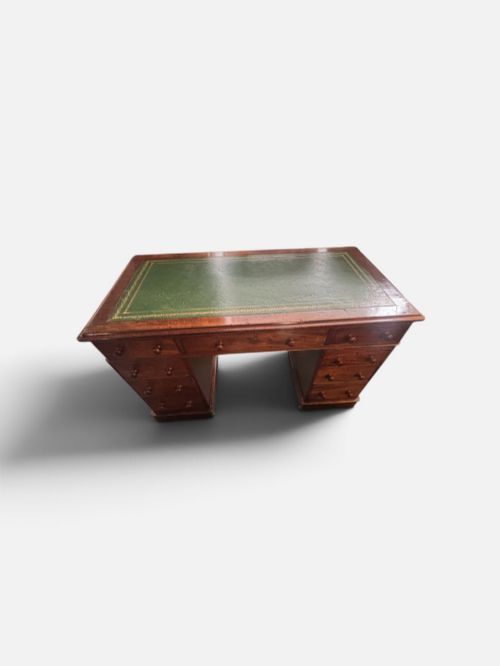
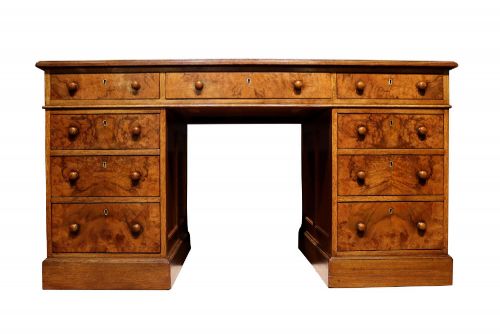
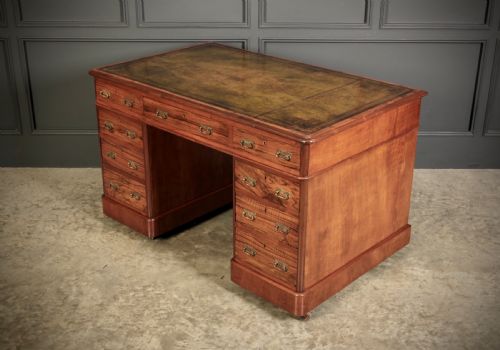
The most common formats on this page are double-sided partners desks and kneehole writing desks with inset leather surfaces. These pieces reflect the functional demands of nineteenth-century studies, providing deep drawers and freestanding proportions.
Materials and Construction
Cabinet makers utilised dense hardwoods such as mahogany, oak, walnut, and rosewood, often pairing them with secondary timbers for internal drawer construction. Many surfaces feature inset tooled leather writing panels bordered by subtle blind tooling.
Joinery techniques relied on robust dovetailing for drawer boxes and solid framing for large pedestals and freestanding tables. Brass hardware, including handles and castors, accompanied decorative veneers like burr walnut and flame mahogany.
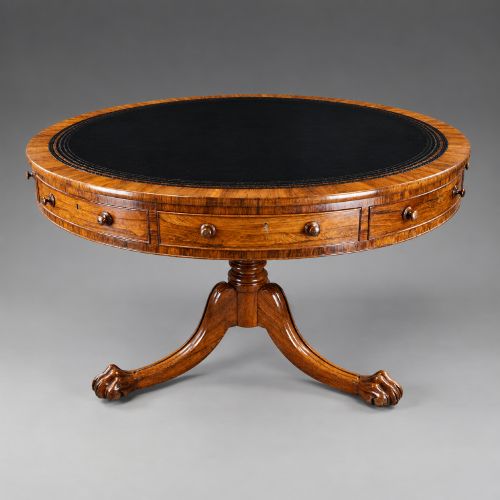
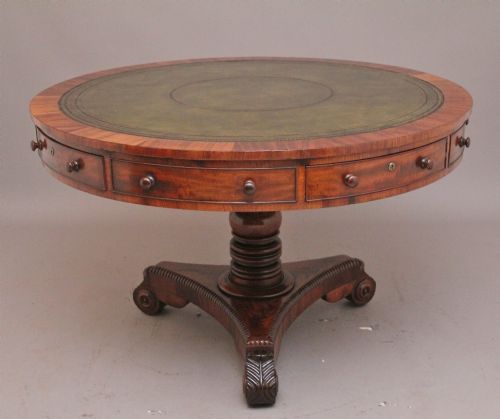
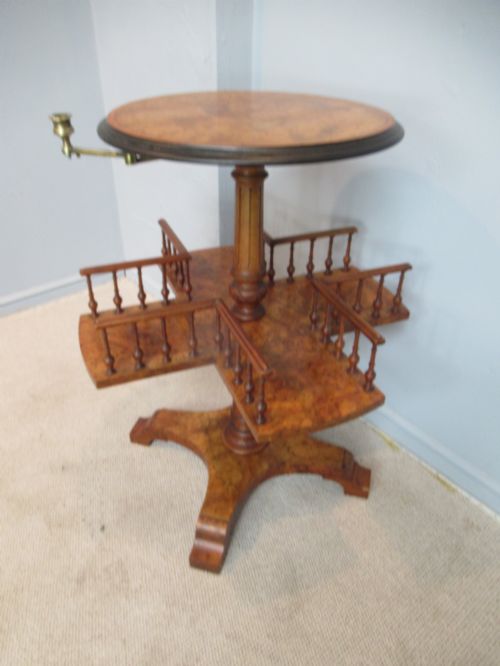
Drum tables keep secrets well, hiding stationery behind clever rows of dummy drawers that spin around the central pillar.
Judging Quality
Quality rests in the selection of figured timber veneers, such as flame mahogany or burr walnut, matched symmetrically across large surfaces and drawer fronts. Superior pieces exhibit refined cabinetwork details like finely cut dovetails and substantial brass fittings.
François Linke·Edwards & Roberts·C. Hindley & Sons·Gillow & Co·J Shoolbred
The Nineteenth Century Library Desk Glossary
- Partners desk
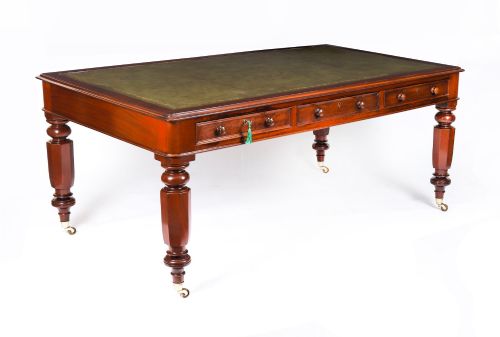
- A large double-sided writing table designed for two people to work opposite each other, featuring banks of drawers on both sides.
- Pedestal desk
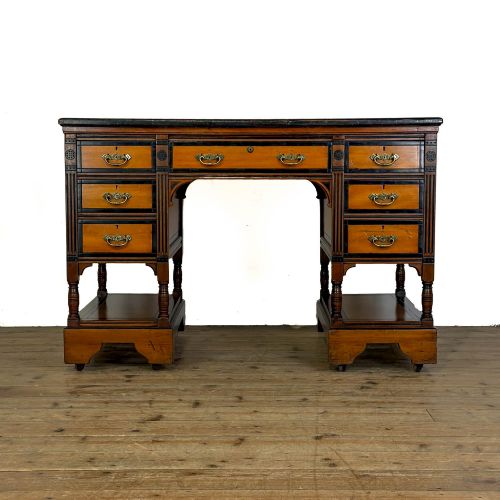
- A heavy writing desk supported by two pedestals or columns of drawers flanking a central kneehole space.
- Drum table
- A circular library table with a revolving or stationary top surrounded by an apron containing alternating real and dummy drawers.
- Bureau plat
- A freestanding French writing table featuring a rectangular top inset with leather and standing on slender cabriole legs.
- Sofa table
- A rectangular occasional table with drop leaves on either side, traditionally placed in front of a sofa during the Regency period.
Nineteenth Century Library Desk: Frequently Asked Questions
What is a partners desk?
A partners desk is a large double-sided writing table built with matching drawer configurations on both sides. This allows two people to sit opposite each other while working in a shared library or study.
Cabinet makers constructed these substantial pieces from dense timbers like mahogany and oak, often incorporating inset leather writing surfaces and numerous drawers.
How do I identify a Victorian desk?
Victorian desks generally date from the nineteenth century and often employ dark hardwoods like mahogany, walnut, and oak. They frequently feature pedestal bases, brass drawer pulls, and inset leather tops.
Stylistic influences during this era ranged from heavy traditional forms to revival designs incorporating elaborate burr veneers and carved details.
Where should I place a library desk?
Library desks with finished backs, such as partners desks and freestanding tables, look best positioned in the centre of a room. This allows access to drawers and writing surfaces from multiple angles.
Pedestal desks with unfinished backs traditionally stand against a wall or within a study alcove, anchoring the layout of the room.