



Nineteenth Century Earthenware Dish
A nineteenth century earthenware dish brings tactile depth and rich transfer-printed or hand-painted narratives straight to a table or wall.
Nineteenth Century Earthenware Dish
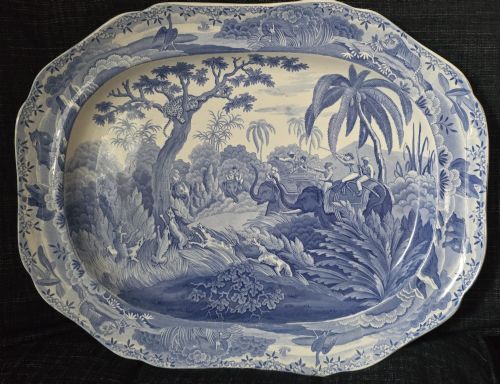
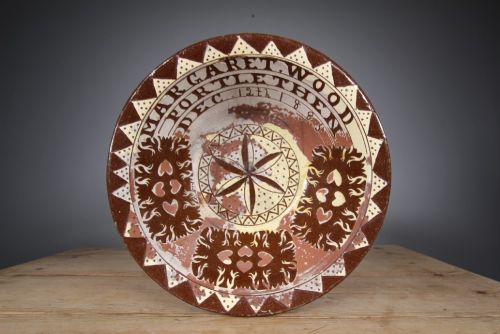
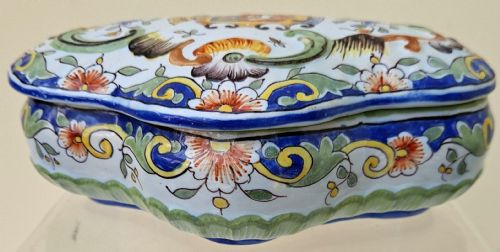
A nineteenth century earthenware dish encompasses a diverse array of utilitarian and decorative ceramics, ranging from large serving platters to smaller trinket dishes and deep bowls. The selection includes transfer-printed English views, vibrant French faience, and robust regional slipware.
Buyers encounter objects spanning from the Georgian and Regency eras through the Victorian period, reflecting varied domestic uses across England, France, Italy, and Germany. Forms shift fluidly between flat plates, footed comports, vegetable tureens, and broad chargers.
Regional potteries contribute distinct vernacular styles, such as British spongeware and Staffordshire slipware, alongside refined ironstone and tin-glazed earthenware. Each piece captures the distinct functional and aesthetic priorities of its nineteenth-century maker.
How they were made
Potters shaped native clays into these vessels before applying lead glaze, tin glaze, or enamel to seal the porous earthenware body and provide a smooth surface for decoration. Many items received intricate blue and white transfer printing, a technique that transferred detailed engraved imagery onto the ceramic body.
Other pieces relied on hand-painted pigments, slip trailing, or polychrome enamel decoration, particularly within French faience and Italian maiolica traditions. Firing in traditional kilns fixed these glazes and pigments, yielding the characteristic gloss and varied surface textures found across the period.
Materials documented across the inventory include earthenware, pearlware, ironstone, and tin-glazed ceramic surfaces.
What varies in quality
The sophistication of the painted or printed design largely dictates quality, distinguishing hurried commercial output from ambitious artistic compositions like pictorial chargers and detailed historical scenes. Crispness in transfer-printed patterns and precision in hand-painted brushwork show the maker's technical capability.
The consistency and application of the glaze also matter, with smooth, even lead or tin glazes elevating the visual appeal of the underlying earthenware body. Potter reputation and the complexity of the vessel form, such as footed comports or moulded tureens, further set superior examples apart.
Seaton Pottery·Mann & Co·C.J. Mason·Spode·William Adams·Thomas Lakin·J. & R. Clews·John Rogers & Son
The Nineteenth Century Earthenware Dish Glossary
- Earthenware
- Porous pottery fired at relatively low temperatures, requiring a glaze to become impermeable to liquids. It forms the structural body for the vast majority of nineteenth-century plates, dishes, and chargers on this page.
- Transfer printing
- A decoration technique where an engraved copper plate transfers a printed design onto paper, which is then applied to the ceramic surface before firing. This method enabled mass production of detailed blue and white landscapes.
- Slipware
- Pottery decorated with slip, a liquid clay mixture, applied to the unfired body by trailing or dipping. It produces tactile, raised patterns frequently associated with vernacular and regional pottery traditions.
- Maiolica
- Tin-glazed earthenware originating from Italy, typically painted with bright colours over an opaque white glaze. The listings feature large chargers that showcase complex historical and classical scenes.
- Comport
- A raised serving dish or pedestal bowl used for presenting fruit or sweetmeats at the table. These elevated ceramic forms combine utility with ornamental presence.
Nineteenth Century Earthenware Dish: Frequently Asked Questions
What is a nineteenth century earthenware dish used for?
These dishes served practical roles in nineteenth-century households for serving food, holding sauces, or presenting fruit at the dining table.
Today, collectors use them primarily as decorative wall hangings, cabinet display pieces, or occasional table accents rather than for daily dining.
How do I identify a transfer-printed dish?
Transfer-printed pieces feature single-colour, highly detailed pictorial scenes, most commonly in blue, transferred mechanically onto the ceramic body.
Close inspection with a magnifier often reveals the fine dotted stippling or thin lines characteristic of copperplate engraving beneath the glaze.
Are these dishes safe for food use?
Many nineteenth-century earthenware pieces contain lead-based glazes and have developed microscopic surface cracks over decades of use.
It is generally advisable to treat them as decorative antiques rather than functional tableware for modern dining.
How do I tell Georgian pieces from Victorian ones?
Georgian and Regency examples often lean towards neoclassical motifs, refined shapes, and specific blue and white transfer patterns depicting classical ruins or exotic scenes.
Victorian pieces frequently embrace bolder folk art styles, diverse regional pottery traditions, or heavier ironstone and majolica construction.