


Nineteenth Century Double Bedstead
A nineteenth century double bedstead brings warmth and weight to a bedroom, offering solid construction in timber and metal.
Nineteenth Century Double Bedstead
A nineteenth century double bedstead forms a substantial centrepiece for a bedroom, originating primarily from the Victorian period alongside French and Empire stylistic influences. These frames accommodate sleepers with generous proportions while anchoring a room with period character.
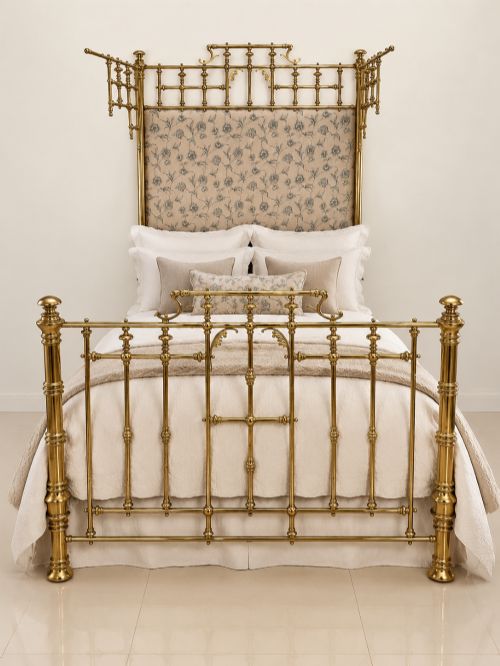
The most common examples on this page are Victorian designs built from brass, iron, or timber such as burr walnut and rosewood. They arrive in various formats including half tester, high button back upholstered forms, and classic metal frames.
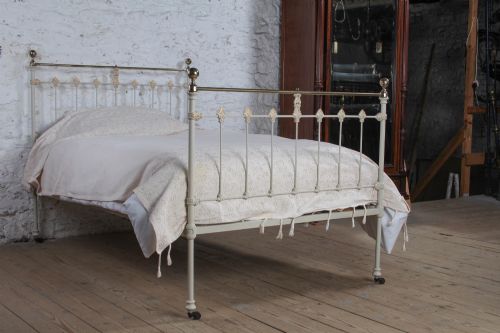
Many items incorporate iron side rails or combination frames of brass and iron, reflecting industrial production methods of the era. Buyers encounter French and Empire influences alongside straightforward British Victorian domestic styles.
How they were made
Maker construction relies heavily on cast iron and solid brass components, frequently combined within a single frame for structural strength and decorative contrast. Metalwork techniques of the period produced robust joints and detailed castings.
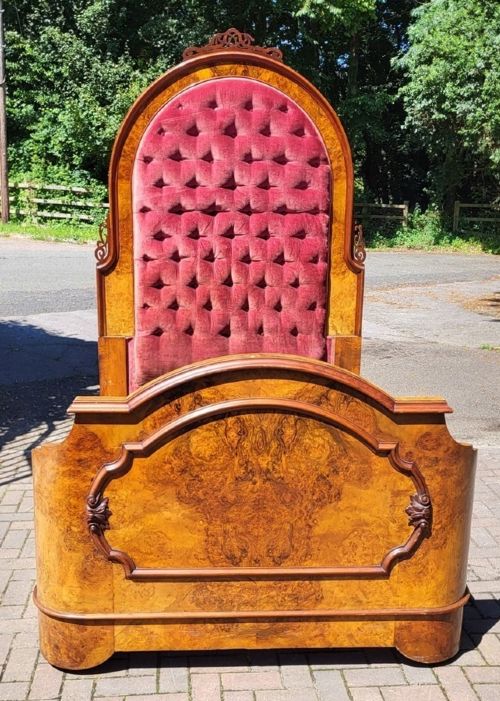
Timber frames utilise rich hardwoods including burr walnut, rosewood, and Hungarian ash, often paired with fabric upholstery like the high button back variants. Woodworkers employed traditional joinery to support the heavier domestic mattress loads of the era.
Some nineteenth century beds feature high button-backed upholstery, ensuring the Victorian sleeper sat up to read in absolute padded comfort.
What varies in quality
Quality rests upon the purity and weight of the materials, distinguishing solid brass and exhibition grade timber from simpler iron combinations. Exhibition quality pieces show finer casting details and superior timber selection.
Artistic execution dictates the upper tiers of the range, seen in ormolu details on Empire style frames or intricate Art Nouveau brass motifs. The integration of decorative elements with robust side rails separates standard utility pieces from high status examples.
The Nineteenth Century Double Bedstead Glossary
- Half tester
- A bed canopy that extends only partway down the length of the bedstead, supported by two posts at the head end. This form provides a decorative focal point without enclosing the entire sleeping space.
- Ormolu
- Gilded bronze or brass applied as ornamental mounts to furniture and bedframes. This technique adds metallic highlights and sculptural detail, particularly visible on Empire style pieces.
- Burr walnut
- A highly figured wood veneer taken from the burl growths of walnut trees. It provides intricate grain patterns prized for decorative impact on Victorian furniture panels.
- Art Nouveau
- A decorative style prevalent around the turn of the twentieth century, characterised by flowing, organic lines and plant motifs. In metal bedframes, this appears as whiplash curves in brass casting.
Nineteenth Century Double Bedstead: Frequently Asked Questions
Will a nineteenth century double bedstead fit modern mattresses?
Many nineteenth century double bedstead frames were built to historical sizing standards that differ slightly from contemporary mattress dimensions. Buyers should check the internal width and length between the side rails before purchasing.
Adjustment or custom mattress sourcing is occasionally required to ensure a proper fit within antique side irons. Consulting the specific measurements listed for each bedstead prevents sizing discrepancies.
How do I care for brass and iron bedframes?
Metal bedframes require gentle dusting and occasional cleaning with appropriate metal care products to maintain their finish. Avoid abrasive pads that can scratch vintage brass coatings or compromise lacquered surfaces.
Iron frames benefit from keeping dry to prevent oxidation, particularly around structural joints and decorative fixings. Regular checks of bolts and side rails ensure the frame remains stable during daily use.
How do I identify a Victorian bedstead?
Victorian bedstead identification relies on observing characteristic materials such as cast iron, brass, and dark timbers like rosewood and walnut. Stylistic cues include button-backed upholstery, classic iron castings, and regional British proportions.
Construction details like hand-cut threads on bolts and heavy side rails further indicate nineteenth-century manufacture. Comparing the form against known Victorian design periods helps confirm the era.
How do I assemble an antique bed frame?
Antique bed frames typically utilise metal side rails that slot into tapered sockets on the headboard and footboard posts. Securing these connections often requires a spanner to tighten vintage bolts safely without stripping threads.
Placing the frame on an even floor before tightening ensures the structure squares correctly and prevents twisting of the side rails. Assistance is recommended due to the heavy weight of solid brass and cast iron components.