


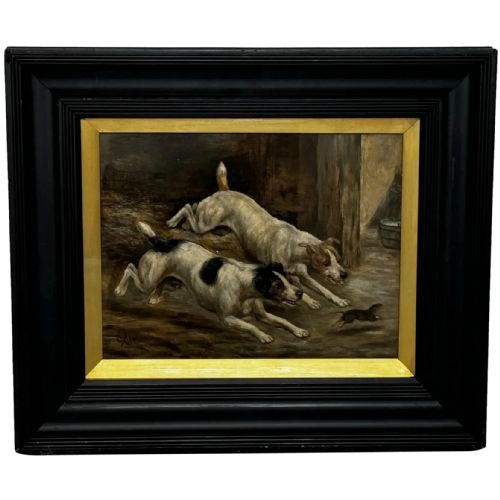


Nineteenth Century Dog Portrait
A nineteenth century dog portrait captures canine character through the direct observation of Victorian and provincial artists.
Nineteenth Century Dog Portrait
A nineteenth century dog portrait brings domestic pets, hunting hounds, and working dogs onto canvas, panel, and paper. These works capture the distinct personality of individual animals, ranging from prized bloodhounds to beloved spaniels.
Most examples on this page date from the Victorian era and the broader nineteenth century, reflecting a period when pet ownership became central to domestic life. The selection includes formal oil paintings, charcoal drawings, and framed silhouettes.
Originating from British and French schools, these pieces demonstrate how artists recorded both high-status sporting dogs and humble farm terriers. Buyers find works attributed to named artists alongside provincial studies of children and their pets.
Materials and Techniques
Artists painted primarily in oil on canvas or panel, building up rich textures for coats and fur. Draughtsmen also utilised charcoal and watercolour on paper to render softer outlines.
Frames play an integral role in presentation, with period giltwood, gilt, and maple wood surrounds enclosing the artwork. Glass protects works on paper, such as charcoal drawings and silhouette pictures.
Listings feature works spanning the nineteenth century, utilising oil on canvas, paper, wood, glass, and giltwood within Victorian and French romantic styles.
Factors of Quality
Quality rests upon the artist's ability to render canine anatomy convincingly while conveying a distinct temperament. Stronger pieces avoid stiff representation, capturing instead the alert posture or relaxed repose of the animal.
The handling of surrounding details, such as barn interiors or courtyard settings, contributes to the overall success of the composition. Original framing in period giltwood or maple further enhances the integrity of the piece.
William Barraud·Sir Edwin Landseer·Jules Chardigny
The Nineteenth Century Dog Portrait Glossary
- Oil on Canvas
- Pigment suspended in drying oil applied to a woven fabric support. This medium allowed artists to achieve deep tones and varied textures.
- Oil on Panel
- Paint applied to a rigid wooden board rather than fabric. Panels offer a smooth, stable surface often found in smaller nineteenth-century works.
- Charcoal Painting
- A monochrome artwork created using compressed carbonized wood on paper. This technique captures tonal depth and expressive lines quickly.
- Giltwood
- Wood carved and coated with gold leaf or metallic powder. It provides the decorative, reflective border typical of nineteenth-century frames.
- Silhouette
- A solid dark image profile cut from paper or painted against a light background. These intimate portraits frequently recorded children and their pets.
Nineteenth Century Dog Portrait: Frequently Asked Questions
What breeds appear most frequently in these portraits?
Paintings from this period feature a wide variety of animals, ranging from sporting hounds like bloodhounds and Grand Griffon Vendéens to domestic pets such as King Charles spaniels, pugs, and terriers.
Artists also depicted working dogs in action, such as terriers ratting in barns, reflecting the practical roles dogs played alongside their companionship.
How can I tell the difference between British and French school paintings?
British works often emphasise the individual character and status of specific pets, frequently linking them to country estates or sporting pursuits. French school paintings tend to incorporate more dramatic lighting and romantic landscape elements.
Brushwork and framing styles also offer clues to origin, though provincial artists across Europe shared many common techniques during the nineteenth century.
Where were these portraits displayed originally?
Owners hung these artworks in drawing rooms, studies, and hallways to celebrate prized hunting dogs or cherished family pets. Provincial and domestic scenes were equally suited to comfortable middle-class parlours.
Today, these pieces function well in similar domestic settings, bringing historical character and warmth to contemporary living spaces.
How should I care for a nineteenth century dog portrait?
Protect oil paintings and works on paper from direct sunlight to prevent fading of pigments and degradation of canvas or paper supports. Stable room temperatures and low humidity protect both the artwork and its original frame.
Dust canvas surfaces gently with a soft brush, and avoid using liquid cleaners on exposed paint or antique giltwood frames.