


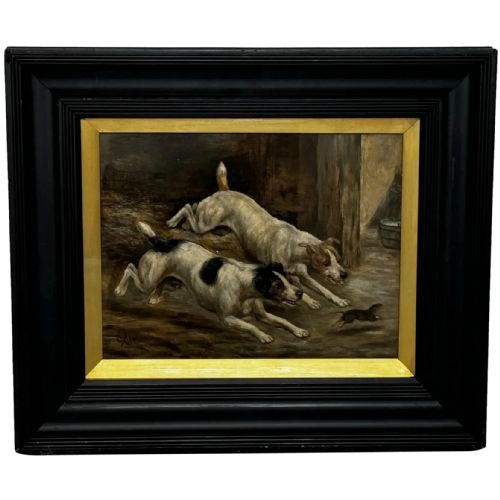


Barn Scene Oil Painting
These barn scene oil painting works capture rural life on canvas, bringing rustic charm and historical farming scenes directly into your room.
Barn Scene Oil Painting
A barn scene oil painting depicts rural buildings, livestock, farmyard animals and agricultural workers, drawing on British Impressionism, Victorian genre painting and Georgian traditions. The most common works you will encounter span the Victorian period and the nineteenth century, capturing rural architecture alongside horses, sheep, cattle and dogs.
Compositions range from quiet pastoral landscapes to busy farmyard settings featuring terriers ratting, shepherds and milking time. These pieces reflect historical British and European countryside life, utilising canvas and panel supports framed in wood and giltwood.
Assessing quality and execution
Quality rests in the handling of light, anatomical precision of animals such as horses, cattle and terriers, and the atmospheric depth of the rural background. Superior works demonstrate confident brushwork and balanced composition, whereas weaker pieces lack perspective and anatomical conviction.
The preservation of the paint surface and the integrity of the canvas or panel influence the standing of a piece. Original giltwood frames matching the period also contribute to the overall standard of the artwork.
Listings feature oil paint applied to canvas and wood panels, framed in gesso and giltwood across the Victorian and Georgian periods.
James Kyd·Percival Glenfern·Julius Caesar Ibbetson·Thomas Sidney Cooper·Robert Russell MacNee·John Percy Cooke·Ernest Higgins Rigg·Herbert Royle·George Armfield·Owen Bowen·Anthonij Anton Mauve·Edward Armfield·Thomas Blinks·H Barnett
The Barn Scene Oil Painting Glossary
- Canvas
- A heavy woven fabric stretched across a wooden frame to serve as a support for oil painting. It provides the foundational texture visible beneath many historical artworks.
- Gesso
- A plaster-like mixture applied to wood frames to create a smooth surface before gilding. This material forms the decorative base of ornate antique picture frames.
- Giltwood
- Wood carved and covered with a thin layer of gold leaf or gold paint. It frequently forms the ornate framing associated with nineteenth-century paintings.
- Genre painting
- Artwork that depicts aspects of everyday life by portraying ordinary people engaged in common activities. Farmyard scenes and animal ratting form popular subjects within this tradition.
Barn Scene Oil Painting: Frequently Asked Questions
What subjects appear in these paintings?
These works feature rural buildings, farmyards, and agricultural settings populated by livestock, horses, and working dogs. Common motifs include milking time, sheltering animals, and terrier dogs ratting near barns.
Artists also recorded shepherds, farm workers, and quiet countryside landscapes surrounding the primary agricultural structures. The focus remains consistently on traditional rural life across Britain and Europe.
How can I tell the period of a painting?
Dating relies on stylistic clues, clothing worn by figures, framing materials, and recorded signatures or dates. Victorian works often show detailed realism in animal subjects and narrative farmyard interactions.
Earlier Georgian pieces present softer, more romanticised rural vistas, while later nineteenth and early twentieth-century examples incorporate impressionistic brushwork. Examining the canvas preparation and stretcher bars also helps determine age.
What are gesso and giltwood frames?
Gesso is a white mixture applied to wooden frames to prepare the surface for gilding with gold leaf. Giltwood refers to the resulting golden carved wooden frame surrounding the painting.
Many period oil paintings retain their original frames, which show appropriate wear and aged patination. These frames form an integral part of the overall decorative object.
Are these paintings signed by the artist?
Many examples bear artist signatures, monograms, or historical attribution notes on the canvas or reverse. Some pieces are documented works by known painters of the Victorian and impressionist periods.
Unsigned works frequently emerge from followers of prominent artists or studio traditions of the nineteenth century. Documentation in historical records often helps attribute these pieces.