




Nineteenth Century Dog Painting
These nineteenth century dog painting pieces capture canine character across oil on canvas, paper, and panel, offering an enduring connection to historical hounds and sporting life.
Nineteenth Century Dog Painting
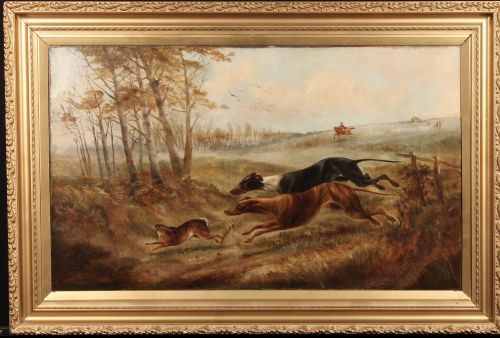
A nineteenth century dog painting typically presents individual portraits of cherished pets or lively scenes of sporting dogs engaged in coursing and hunting. These works emerge from Victorian, Georgian, and French schools, reflecting diverse domestic and rural settings.
Buyers encounter oil on canvas and oil on panel formats most frequently on this page, alongside charcoal drawings and framed silhouettes. The subjects range from named favourites like Lord Methuen’s dogs and the mastiff Odin to unnamed terriers and spaniels.
The pieces span periods from around 1800 through the Victorian era into the early twentieth century. Provincial English school portraits sit alongside works after notable animaliers, providing varied interpretations of canine companionship.
Materials and Methods
Artists painted primarily in oil on canvas, oil on panel, or applied watercolour and charcoal to paper. Giltwood and plain wood frames enclose many of these artworks, paired with glass for protection.
Pigments were worked with fine brushes to render fur textures, expressive eyes, and atmospheric backgrounds in courtyard or landscape settings. Some pieces utilise detailed charcoal drawing techniques after established compositions.
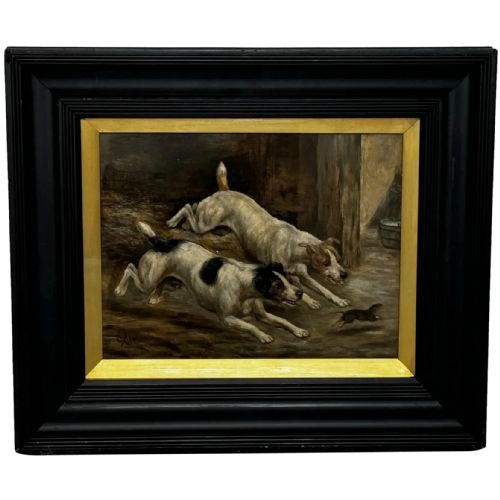
A terrier caught mid-rat hunt in a Victorian barn brings centuries of energetic mischief directly to the wall.
Gradations of Quality
Quality rests in the anatomical accuracy of the animals, the expressiveness of their gaze, and the handling of light across fur and fabric. Superior works capture distinct canine personality rather than generic animal forms.
The skill of the brushwork in background landscapes and domestic interiors further separates accomplished academic or provincial school paintings from simpler decorative efforts.
George Armfield·William Barraud·Sir Edwin Landseer·Jules Chardigny·Delacroix
The Nineteenth Century Dog Painting Glossary
- Oil on Canvas
- Pigment mixed with drying oil applied to a stretched woven fabric support. This traditional medium allowed artists to build rich layers of colour and texture.
- Victorian Sporting Art
- Paintings and drawings depicting bloodsports, hunting dogs, and rural pursuits popular during the nineteenth century. These works document period breeds and field traditions.
- Oil on Panel
- Paint applied to a rigid wooden board rather than fabric. Panels offer a smooth, stable surface often found in smaller scale nineteenth century works.
- French School
- A collective term for artists trained within the French academic tradition, producing works characterised by specific attention to romanticism and realism in animal subjects.
- Silhouette
- A solid dark profile portrait, typically cut from paper or painted, framed in wood such as maple. These depictions frequently include children and domestic pets from the early nineteenth century.
Nineteenth Century Dog Painting: Frequently Asked Questions
What subjects do these paintings show?
The artworks depict named canine subjects, working hounds engaged in hare coursing, and family pets alongside children. Portraits range from grand mastiffs and spaniels to terriers caught in action.
Scenes extend from rural barns and open landscapes to intimate architectural courtyards and domestic interiors.
How do I date a nineteenth century dog painting?
Dating relies on the costume of accompanying human figures, the style of the framing materials like giltwood or maple, and documented artist signatures. Period markers often appear directly in the listed creation years or stylistic attributes.
Comparative analysis with known works by artists from the Victorian, Georgian, or French Romantic periods provides further chronological context.
Where should I hang these artworks?
These framed pieces suit traditional studies, living rooms, or hallways where their historical character complements period interiors. Position them away from direct sunlight to protect oil pigments and paper works from fading.
Pairing oil paintings with complementary gilt frames enhances their visual presence on panelled or neutral walls.
How do I care for antique oil paintings?
Maintain a stable room temperature and avoid humid environments that can affect canvas tension and wood panels. Dust gently with a soft, dry brush without applying pressure to the painted surface.
Keep glass-fronted charcoal drawings and silhouettes sealed against moisture and airborne pollutants.