


Antique Greyhound Art
Antique greyhound art captures the speed and elegance of these hounds through Victorian oils and Art Deco bronzes.
Antique Greyhound Art
Antique greyhound art encompasses sculptures, oil paintings, watercolours, and framed prints celebrating the form of the hound and its history in coursing and racing. When searching for antique greyhound art, buyers encounter representations ranging from nineteenth century sporting scenes to sleek twentieth century sculptures.
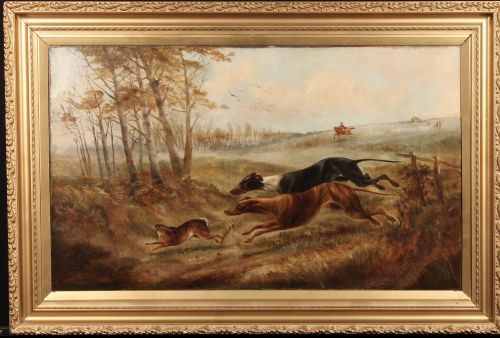
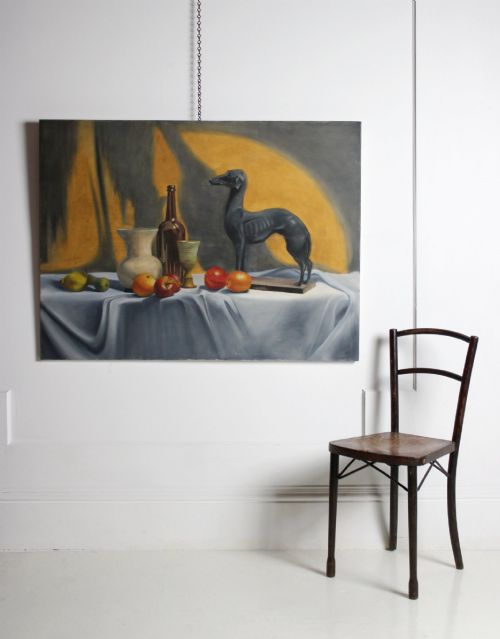
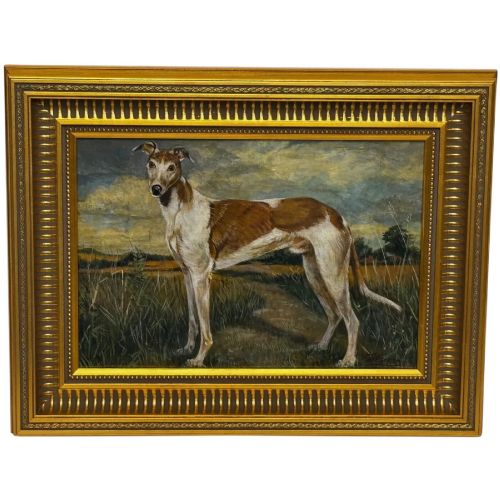
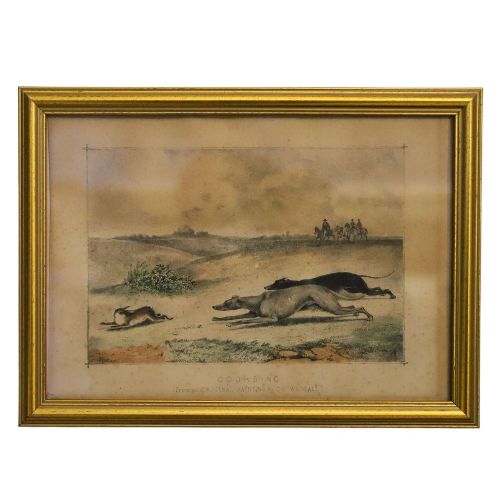
The pieces on this page span the Victorian period, Edwardian era, and the nineteen-twenties and nineteen-thirties. Formats include oil paintings of racing champions, framed lithographs of hare coursing, and silvered bronze or metal figures.
Victorian works frequently depict dogs in landscape settings or as prized racing champions, while later twentieth century interpretations lean towards stylised Art Deco figures and car mascots. Buyers typically find sculptures and paintings that reflect the aesthetic tastes of their respective decades.
How they were made
Makers utilised traditional artistic mediums such as oil on canvas, watercolour, and gouache for flat works, capturing muscular detail with fine brushwork. Paper pieces often took the form of nineteenth century lithographs produced for framing.
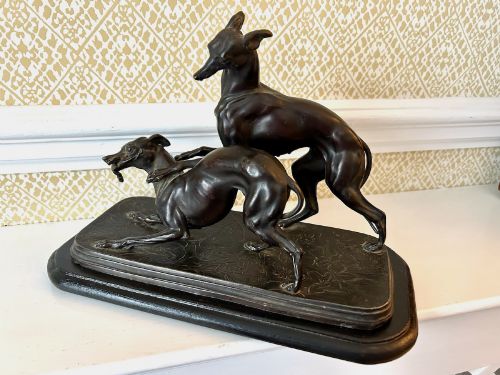
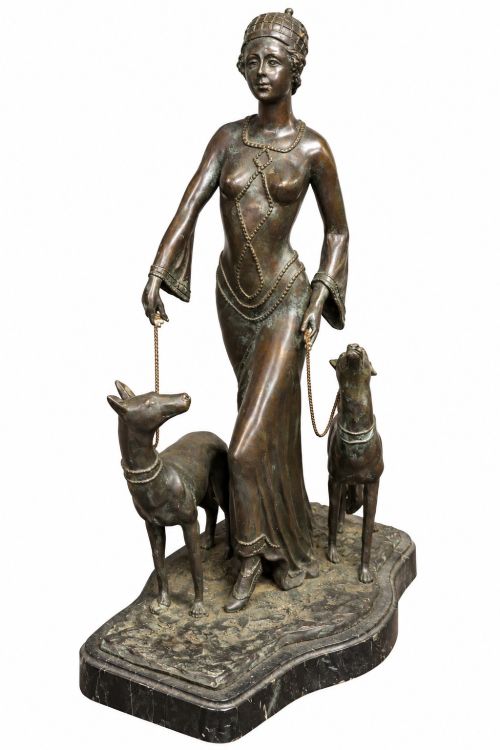
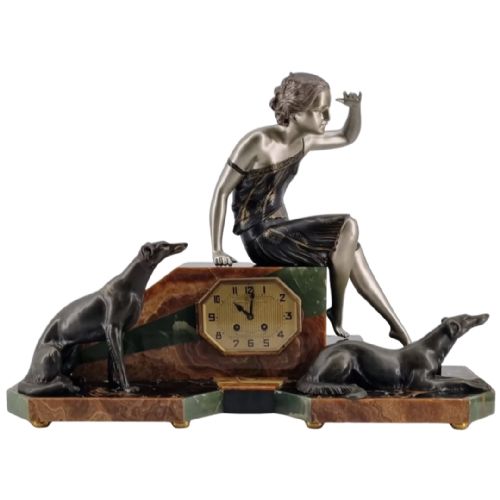
Three-dimensional representations relied on bronze, silvered bronze, porcelain, and wood. Sculptors employed casting techniques to shape metal into dynamic postures of running or leaping dogs, whilst porcelain pieces like those from Rosenthal utilised ceramic moulding and glazing.
Materials documented across the pieces include canvas, paper, wood, glass, marble, and bronze.
What varies in quality
Quality in these works rests upon the anatomical accuracy and the dynamism captured by the artist or sculptor. Superior pieces convey the tension and lean musculature of the hound convincingly, whereas lesser examples lack anatomical precision.
In painted works, the handling of light and background detail separates proficient academic or sporting art from standard decorative output. In sculptures, the crispness of the casting and the preservation of surface patination dictate the desirability of the object.
George Armfield·C. H. Weigall·Alexander Harwood·Rosenthal·Karl Hagenaur·Geo Maxim·Louis Lejeune
The Antique Greyhound Art Glossary
- Hare coursing
- The pursuit of hares with greyhounds or lurchers, a common subject in nineteenth century sporting art. Artists recorded these field sports with considerable topographical and canine detail.
- Art Deco
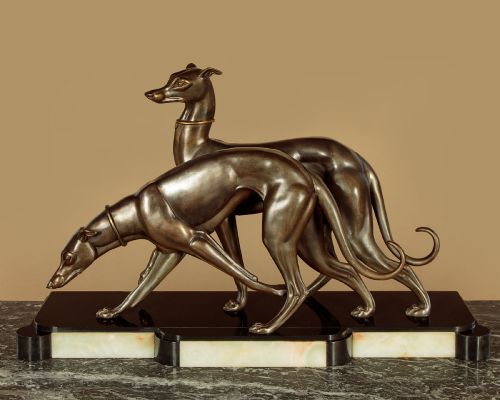
- A design style dominant in the nineteen-twenties and nineteen-thirties characterised by streamlined forms and geometric symmetry. Sculptures from this period favour stylised, dynamic silhouettes of running hounds.
- Lithograph
- A print made from a flat stone or metal plate on which an image is applied with a greasy substance. This technique allowed for the reproduction of detailed sporting scenes on paper.
- Patina
- The surface appearance acquired by bronze or metal over time through handling and oxidation. Collectors look for untouched patination that reflects the true age of a metal sculpture.
Antique Greyhound Art: Frequently Asked Questions
How do I identify a Victorian greyhound painting?
Victorian works generally depict hounds in traditional rural landscapes, often associated with hare coursing or formal portraits of named champions. The palette tends towards earthy tones typical of nineteenth century sporting art.
Brushwork in these oils is traditional and detailed, focusing on the texture of the coat and the natural surroundings rather than stylised abstraction.
What materials were used for Art Deco sculptures?
Art Deco greyhound sculptures frequently utilise bronze, silvered bronze, and cast metal. These materials allowed artists to render the sleek, aerodynamic lines favoured in the interwar period.
Some pieces also appear in porcelain or mixed media, reflecting the diverse manufacturing capabilities of European foundries and potteries during the nineteen-twenties and thirties.
Are all greyhound pieces related to racing?
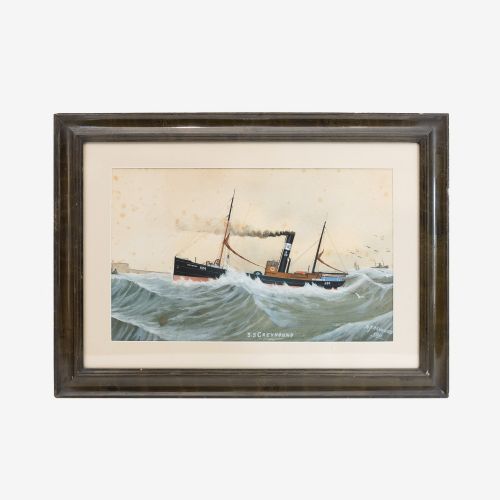
Not all pieces depict formal racing or coursing; some function as pure decorative art or maritime portraits. For instance, works record subjects like the S.S. Greyhound alongside sporting depictions.
Buyers should examine the context of the artwork, whether a canvas, watercolour, or bronze, to understand the specific role of the hound in the imagery.
How should I display antique bronzes?
Bronzes and metal figures require stable indoor placement away from direct heat sources to protect their surface patination. Placing them on secure flat surfaces allows the dynamic forms of the hounds to be appreciated from multiple angles.
Regular dusting with a soft dry cloth is sufficient for maintenance, avoiding abrasive cleaners that might strip the original finish.