
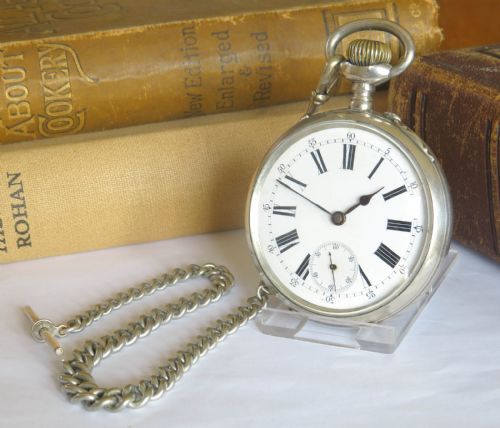
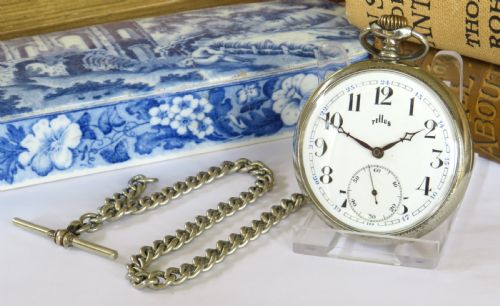
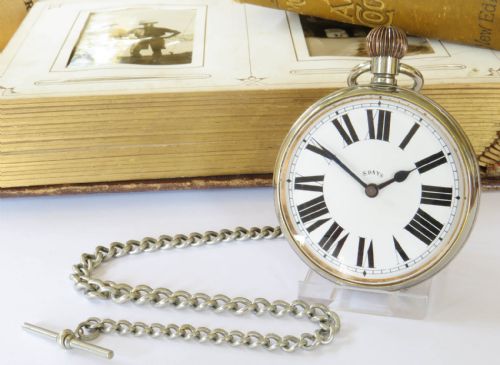


Nickel Pocket Watch
A nickel pocket watch is a utilitarian timekeeper built for daily service, offering robust metal housings and reliable movements.
What these timekeepers are
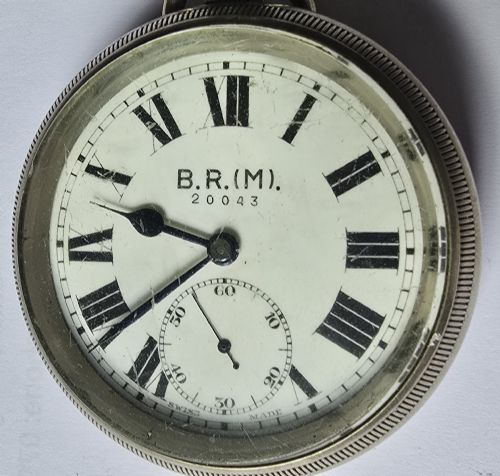
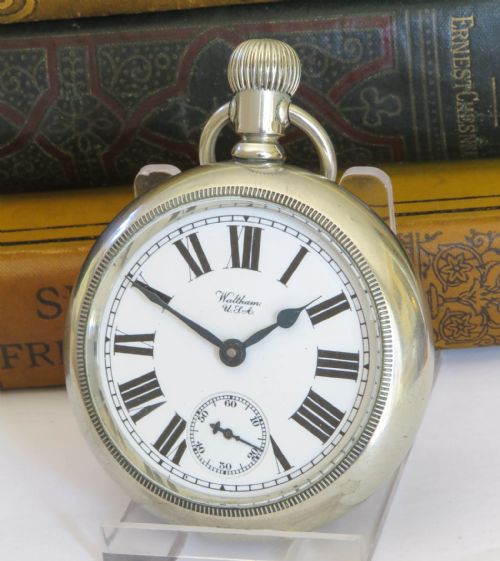
A nickel pocket watch represents the everyday working instrument of the late Victorian and Edwardian eras, superseded only by the wristwatch. When you browse for a nickel pocket watch, you encounter robust pocket-worn pieces designed for practicality rather than precious display.
The examples gathered here span from around nineteen hundred through to the nineteen thirties, encompassing standard pocket formats alongside larger goliath designs. Railway connections appear frequently among these pieces, reflecting the specific demand for dependable timekeeping in transport networks.
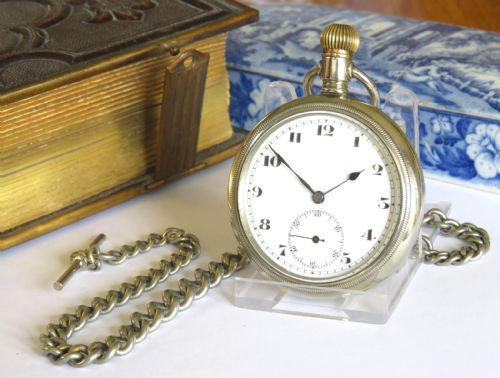
Makers ranging from Waltham and Waterbury to Havila and Douard populate the records, accompanied by retailer names such as The Northern Goldsmiths Company. These timepieces typically arrive paired with chains or alberts, preserving the complete pocket assembly.
How they were made
Cases utilise base metal with nickel plating, offering a bright finish that resisted daily corrosion without the cost of solid silver or gold. Steel components form the internal mechanisms, while glass protects the delicate dials.
Enamel dials feature painted numerals and minute tracks, fused to metal plates under high heat to create a hard, legible surface. Escapements such as the duplex system regulate the release of power from the mainspring.
Retail Price Guide 2026
Typical UK retail prices for nickel pocket watch, calculated from the Sellingantiques database of over a million retail prices indexed since 2003. This retail price guide relies exclusively on Sellingantiques data; no external sources or auction records are used, so the figures do not describe the wider market.
Enamel dials and glass crystals dominate these listings, frequently accompanied by surviving chains and alberts.
What varies in quality
The sophistication of the internal movement dictates the standing of each piece, moving from simple pin-pallet designs up to jewelled lever escapements. Better grade mechanisms maintain greater accuracy and endure decades of winding.
Case finish and dial preservation also separate standard examples from finer specimens. Crisp enamel numerals free from hairline cracks and heavy nickel plating with minimal brass show-through mark the superior end of the range.
Waltham·Havila·Douard·Waterbury USA·The Northern Goldsmiths Company·Sphinx
The Nickel Pocket Watch Glossary
- Nickel
- A silvery-white metal used for plating base metal cases to prevent tarnishing. It provided a durable and affordable alternative to precious metals.
- Enamel
- A glassy substance fused to metal dials at high temperatures. This technique created crisp, permanent markings that resisted fading.
- Duplex escapement
- A mechanical arrangement regulating the transfer of energy in a watch movement. It uses a specialised escape wheel with two sets of teeth.
- Albert
- A short chain attached to a pocket watch, named after Prince Albert. It typically secures the watch to a waistcoat buttonhole.
Frequently Asked Questions
What is an albert chain?
An albert is a short watch chain designed to anchor a pocket watch to a waistcoat or jacket buttonhole. It ensures the watch remains secure during movement and prevents accidental drops.
These chains often incorporate a T-bar at one end that slips through the fabric slot. The other end fastens directly to the bow of the watch case.
Can I wear a pocket watch daily?
Carrying a pocket watch daily remains practical if you have a suitable waistcoat or trouser pocket. The nickel cases are quite resilient against normal wear and tear.
Keep the watch away from modern magnetic fields and moisture. Periodic professional servicing ensures the internal lubricants do not dry out over time.
How do I date a nickel watch?
Dating relies on inspecting serial numbers engraved on the movement plates against manufacturer records. Stylistic clues on the enamel dial and case shape also narrow down the manufacturing decade.
Railroad-approved pieces often feature specific high-grade markings and open-face configurations. Hallmarks or stamps inside the rear cover can further clarify the origin.