



Nested Lamp Tables
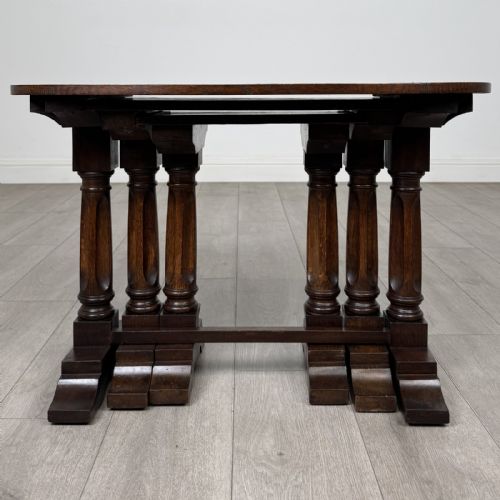
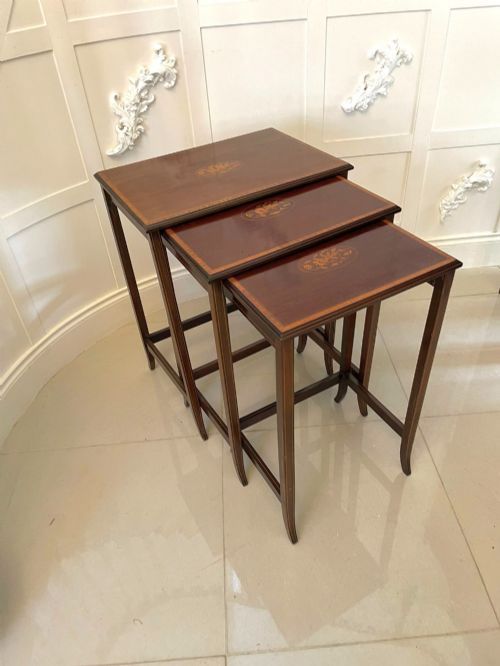
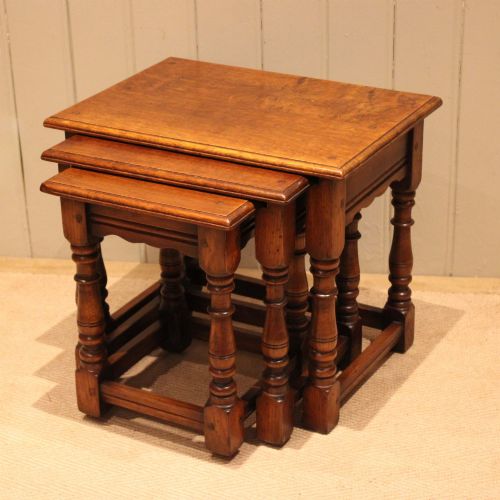
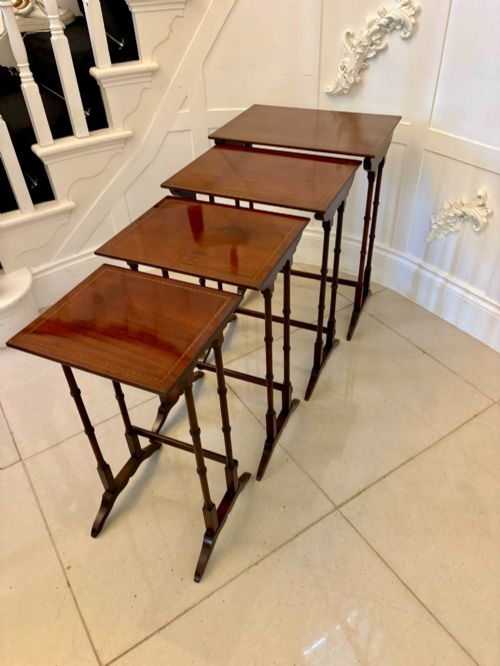
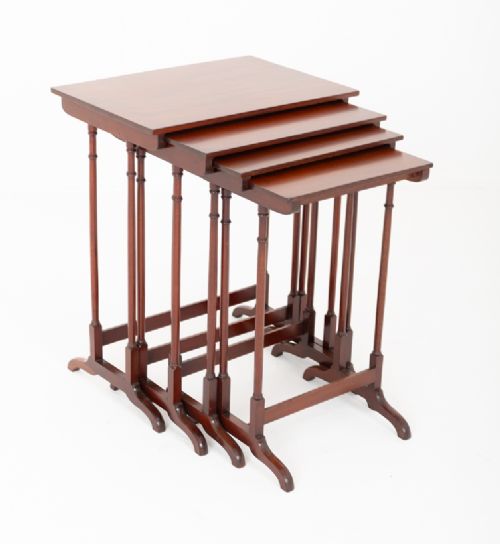
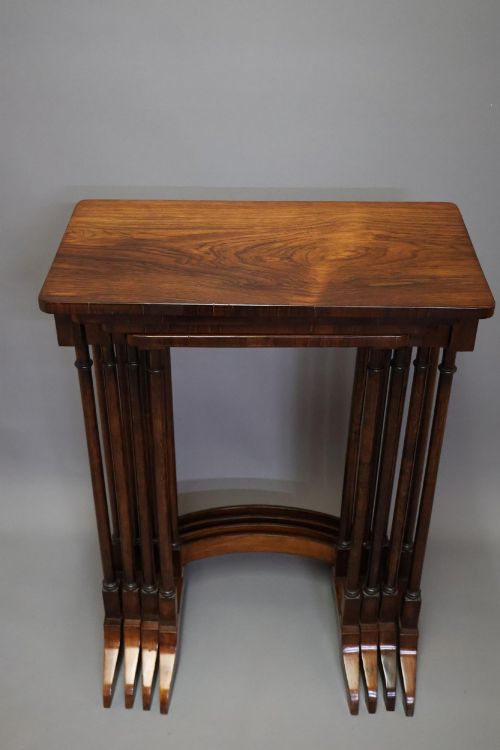
These nested lamp tables stack neatly together when floor space matters and separate easily whenever extra surfaces are required.
Nested Lamp Tables
When searching for nested lamp tables, a buyer finds sets of multiple occasional tables designed to fit closely beneath one another. These pieces serve multiple roles as coffee, side, wine, and lamp tables across daily use.
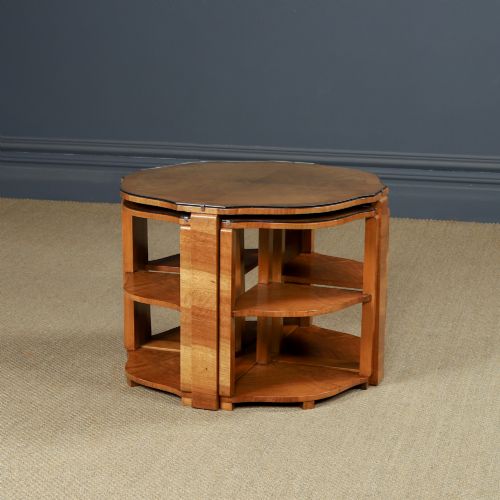
The versions most commonly met on this page span the Edwardian period, the nineteenth century, and the nineteen-thirties. Formats range from traditional quartetto sets of four to round groups of five and simpler arrangements of three.
Originating in various stylistic traditions, these tables include English country furniture, Chinoiserie decoration, Art Deco designs, and revival pieces. Buyers select them for their practical space-saving ability combined with period character.
Materials and Construction
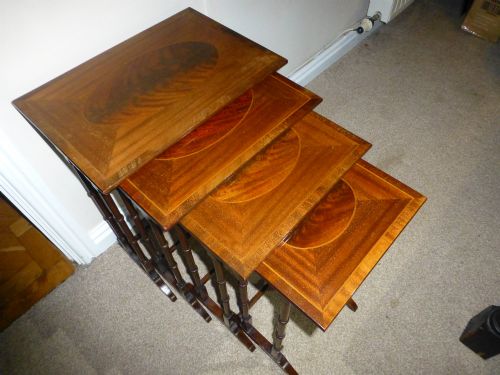
Timber selection defines the construction, with mahogany, walnut, oak, rosewood, and hardwood forming the primary structures. Workshops frequently utilised satinwood inlay to add fine contrasting detail to the timber surfaces.
Specialist techniques appear in specific examples, such as lacquer work on nineteenth-century pieces and gilt painting on Edwardian designs. These surface methods demand careful application to withstand the daily movement of stacking and separating tables.
Listings feature mahogany as the dominant timber, alongside oak, walnut, rosewood, and lacquer.
Judging Quality
Quality rests upon the precision of the fit when the tables slide together beneath the main frame. Superior sets maintain alignment without sticking or wobbling, reflecting careful initial joinery.
The refinement of the timber and decorative elements separates finer examples from standard production. Crisp inlay, well-executed lacquer, and balanced proportions mark the upper end of the range.
E Daligny
The Nested Lamp Tables Glossary
- Quartetto
- A set of four nesting tables designed to slide sequentially one beneath another. This term appears frequently in nineteenth-century and Edwardian listings.
- Chinoiserie
- European decorative style employing imitation Chinese motifs and lacquer techniques. Pieces utilising this style often feature painted decoration on dark backgrounds.
- Satinwood
- A durable exotic timber with a lustrous yellow sheen often used for stringing and inlay. Craftsmen employed it to create sharp visual contrast against darker woods like mahogany.
- Occasional table
- A small movable table intended for specific, intermittent use rather than permanent placement. These items include lamp, wine, and coffee variants within nested sets.
Nested Lamp Tables: Frequently Asked Questions
How do nested lamp tables work?
Nested tables consist of graduating sizes built so each smaller table slides neatly under the one immediately larger than it. This design allows multiple surfaces to occupy the footprint of a single small table.
Users pull out individual tables as needed for drinks, lamps, or books and return them to the stack when floor space is required.
What periods do these tables represent?
The pieces span several distinct eras, including Regency, Victorian, Edwardian, and Art Deco periods. Nineteenth-century examples often feature solid oak or rosewood, while Edwardian versions frequently showcase mahogany and satinwood inlay.
Later nineteen-thirties pieces introduce round formats and alternative wood selections like walnut.
Where should I place them?
These tables suit sitting rooms, studies, and corners where surface area needs to adapt quickly throughout the day. Placed beside a sofa or armchair, the main table holds a lamp while the smaller tiers remain tucked away.
When guests arrive, the nested sections separate across the room to provide individual resting spots for cups and glasses.
How do I identify a quartetto set?
A quartetto set specifically comprises four tables graduated in size to nest together in a precise sequence. Listings often use this term for Edwardian and nineteenth-century mahogany furniture.
Checking the dimensions and numbering helps confirm that all four original members remain together as a complete set.