


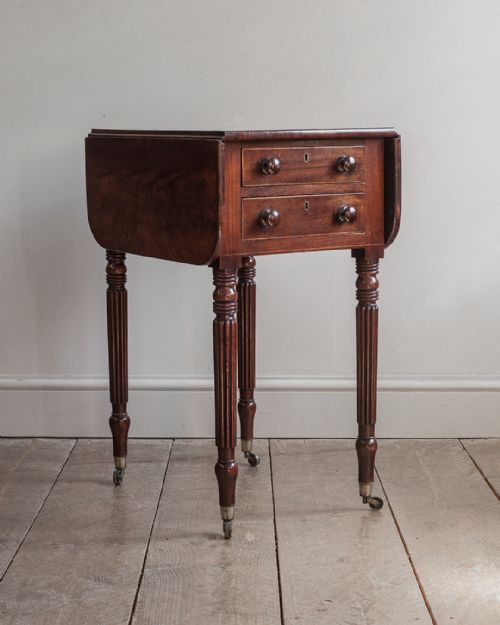


Period Mahogany End Tables
Period mahogany end tables bring rich grain and classical lines to a room, offering practical surfaces through centuries of cabinet-making.
Period Mahogany End Tables
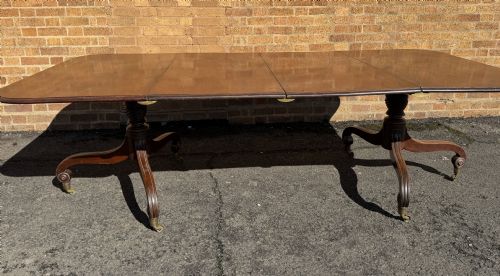
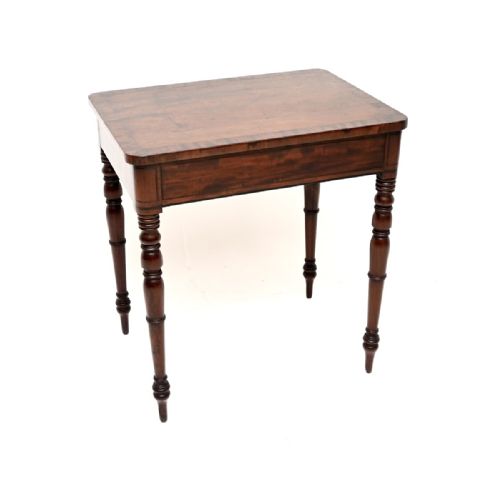
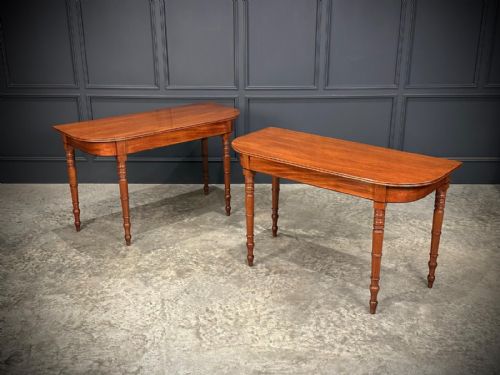
Period mahogany end tables encompass side tables, occasional tables, writing tables, and Pembroke tables originating from Georgian, Regency, and Victorian eras. These pieces serve functional roles beside seating or against walls, utilising rich timber figures to anchor a traditional interior.
The version most commonly met on this page is the Regency or Georgian side table, often featuring simple rectangular tops or drop leaves. Makers shaped these items from dense timber, frequently enhancing them with brass mounts or delicate satinwood inlay.
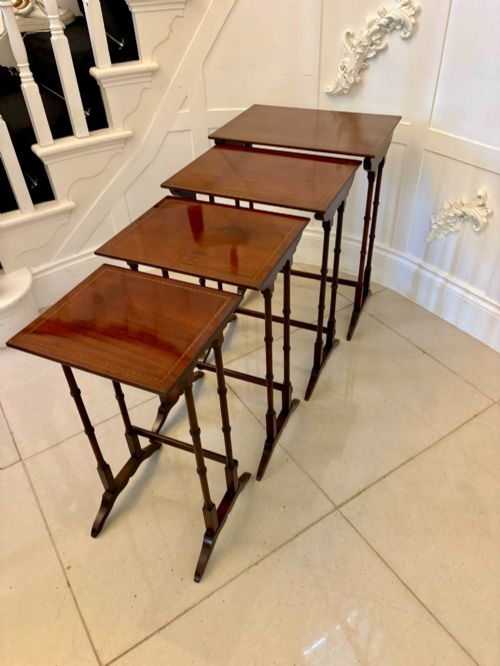
Alongside standard side tables, the selection includes nests of tables, console tables, and specialised writing supports. Each form demonstrates the adaptability of mahogany furniture across the eighteenth and nineteenth centuries.
How they were made
Cabinet-makers relied on solid mahogany and carefully cut veneers applied to secondary woods, achieving deep reddish-brown tones through French polishing and oil finishes. Timber selection dictated the visual weight of the furniture, ranging from straight-grained planks to highly figured flame mahogany.
Decorative detailing involved brass inlays, satinwood banding, and turned or reeded legs that reflected prevailing classical motifs. Joinery techniques such as dovetailing on drawer linings ensured structural longevity without relying on metal fasteners.
Listings feature mahogany, satinwood, and brass across Georgian, Regency, and Victorian periods.
What varies in quality
The refinement of the timber figure and the crispness of carved or inlaid details distinguish finer examples from simpler workshops. Subtle choices in secondary woods and the precision of the joinery reveal the original maker's investment of time.
Proportion and scale dictate the success of a table, with balanced overhangs and slender supports commanding greater appreciation. Original brass hardware and untouched patination further elevate the standing of a piece within its period.
Gillows
The Period Mahogany End Tables Glossary
- Mahogany
- A durable tropical hardwood prized for its deep reddish-brown colour and stability in cabinet-making. It took fine carving and polished to a high lustre.
- Pembroke table
- A small, versatile table with hinged drop leaves on two opposing sides. It often included a single drawer and slender legs.
- Satinwood inlay
- A contrasting light-coloured timber inserted into recesses on the mahogany surface to create geometric or floral patterns. This technique highlighted the borders of tabletops and drawers.
- Regency
- An English design period spanning the early nineteenth century, characterised by classical revival motifs inspired by ancient Greece and Rome. Furniture from this era often featured bold forms and brass accents.
- Quartetto nest
- A graduated set of four tables designed to slide one beneath another when not in use. They became particularly popular during the late Victorian and Edwardian eras.
Period Mahogany End Tables: Frequently Asked Questions
How do I identify a Regency table?
Regency tables typically display classical architectural influences, such as reeded legs, brass paw feet, and bold mahogany grains. Look for lyre supports or brass inlay that reflect the early nineteenth-century aesthetic.
Proportions tend to be architectural and clean, distinguishing them from the more ornate carvings of later Victorian pieces or the simpler lines of earlier Georgian designs.
Where should I place a Pembroke table?
A Pembroke table works well beside a sofa or as a small breakfast table when the leaves are raised. Its drop leaves allow it to sit flat against a wall when space is limited.
The finished back and compact footprint also make it suitable for use as a freestanding lamp table in a corner.
What is satinwood inlay?
Satinwood inlay involves setting thin strips of pale, yellow-toned satinwood into channels cut into the darker mahogany surface. This technique creates sharp visual contrast and defines the edges of tabletops.
Craftsmen used this method during the eighteenth and nineteenth centuries to add decorative refinement without heavy carving.
How do I care for antique mahogany?
Keep antique mahogany out of direct sunlight and away from heat sources to prevent the timber from drying out and the polish from fading. Dust regularly with a soft, dry cloth.
Apply a traditional beeswax polish occasionally to nourish the wood and maintain the natural lustre of the finish without building up residue.
Are nest of tables antique?
Nests of tables gained popularity during the late nineteenth and early Edwardian periods, though earlier examples exist. They were designed for entertaining, allowing guests to pull out a small surface as needed.
Mahogany versions often feature satinwood inlay and slender supports, reflecting the revival of eighteenth-century styles in later manufacturing.