


Neoclassical Style Desk Chair
These neoclassical style desk chair examples offer classical restraint and mahogany frames, built for libraries and studies.
Neoclassical Style Desk Chair
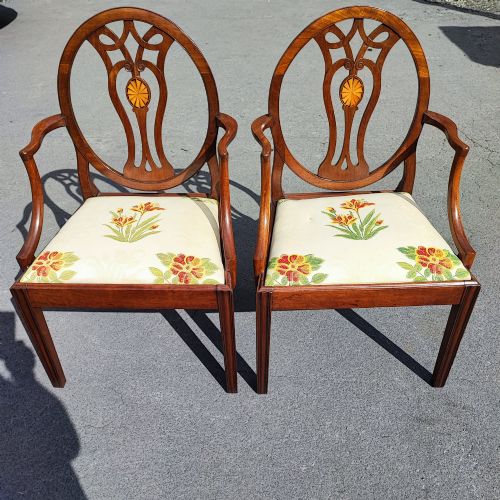
A neoclassical style desk chair brings classical restraint and architectural balance into a study or library. You will encounter forms spanning the eighteenth century through the twentieth century, with nineteenth century revivals appearing frequently alongside Georgian originals.
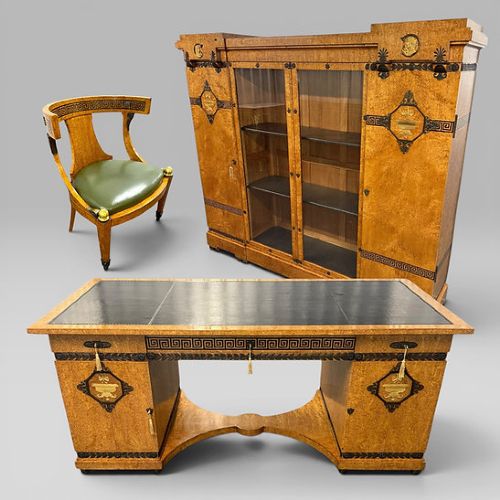
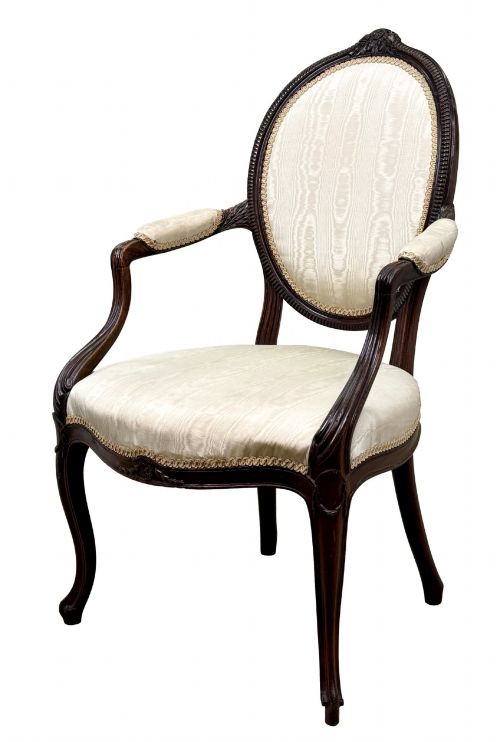
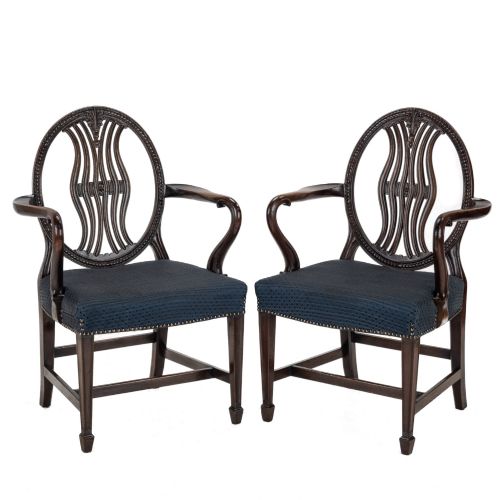
The selection includes desk chairs, office sets, armchairs, and library armchairs. Many examples display influences from Sheraton, Hepplewhite, Louis XVI, and Empire styles.
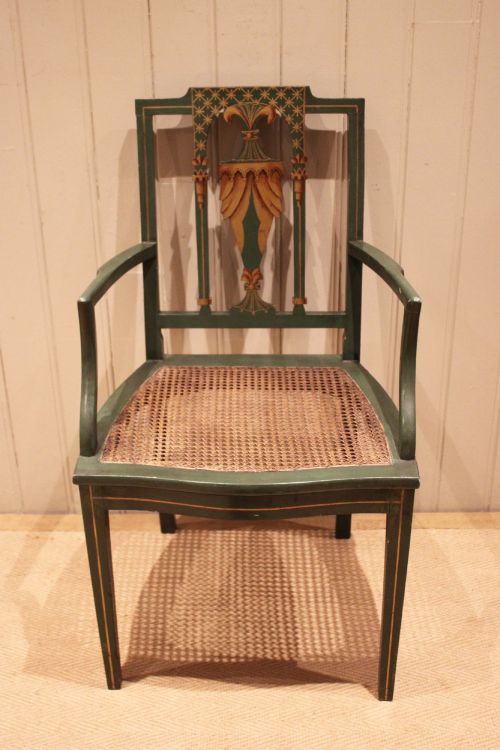
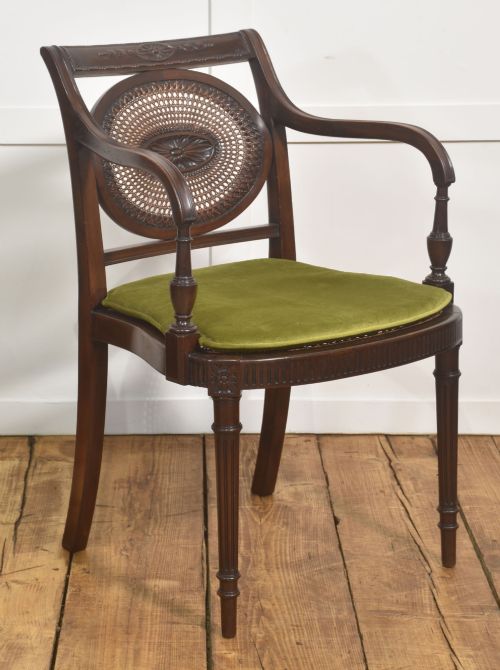
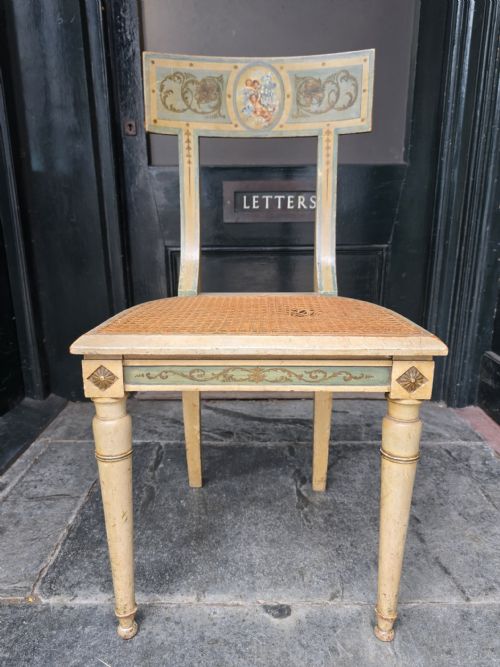
Makers utilised mahogany, walnut, satinwood, and paint to shape these seats. Caning, leather, and fabric provide the seating surfaces across the range.
Materials and Construction
Makers relied heavily on solid and inlaid mahogany, walnut, and satinwood for the primary frames. Brass and ormolu mounts appear on Empire and revival pieces, while paint decorates specific regional and Sheraton examples.
Seating surfaces incorporate woven cane, fitted leather, and traditional fabric upholstery. Carved woodwork, shield backs, and applied inlay define the decorative vocabulary across the periods.
French Empire and Louis XVI revival pieces frequently accompany British Georgian and Sheraton examples.
Assessing Quality and Execution
Quality rests in the crispness of the carved woodwork and the precision of the timber inlay. Superior pieces show careful timber selection, particularly in burr elm or figured mahogany variants.
Structural integrity of the joints and the retention of original brass mounts or painted decoration distinguish better examples. The refinement of the classical motifs, from shield backs to ormolu details, elevates the piece.
Mercier Frères
The Neoclassical Style Desk Chair Glossary
- Sheraton style
- A neoclassical design vocabulary characterised by straight tapered legs, rectilinear forms, and delicate marquetry. It gained popularity during the late eighteenth century and saw robust revivals later.
- Hepplewhite style
- Known for graceful curves and shield-back chair designs incorporating classic urn and drapery motifs. This style heavily influenced British seating from the late eighteenth century onward.
- Fauteuil de bureau
- A French terminology for an upholstered desk chair, often featuring a rounded enveloping back suited for administrative work. These frequently appear in nineteenth century Empire and revival forms.
- Ormolu
- Gilded bronze applied as decorative mounts to furniture frames. It adds metallic contrast to mahogany and walnut surfaces on French neoclassical pieces.
- Curule style
- An ancient Roman X-shaped form adapted for open armchairs. The X-frame provides structural support while referencing classical curule stools.
Neoclassical Style Desk Chair: Frequently Asked Questions
What defines a neoclassical style desk chair?
These chairs draw upon ancient Greek and Roman design principles, featuring symmetrical lines, classical motifs, and restrained ornamentation.
They often incorporate shield backs, tapered legs, and mahogany or satinwood construction.
How do I date a wooden desk chair?
Dating relies on timber choice, construction methods, and stylistic markers tied to periods like the Georgian era or nineteenth century revivals.
Examination of the joinery and secondary woods helps clarify the exact manufacturing period.
Are these chairs suitable for daily office use?
Many historical desk chairs and library armchairs function well in modern studies when paired with appropriate desk heights.
Leather and upholstered variants offer comfortable seating for regular working environments.
What is the difference between Sheraton and Hepplewhite forms?
Sheraton designs typically favour rectilinear geometries, square tapered legs, and flat surfaces adorned with inlay.
Hepplewhite pieces are recognised by their curved lines, heart or shield-shaped backs, and elegant proportions.