


Elm Wood Office Chair
An elm wood office chair brings robust vernacular strength to a workspace, combining deep timber grain with practical nineteenth-century seating comfort.
Elm Wood Office Chair
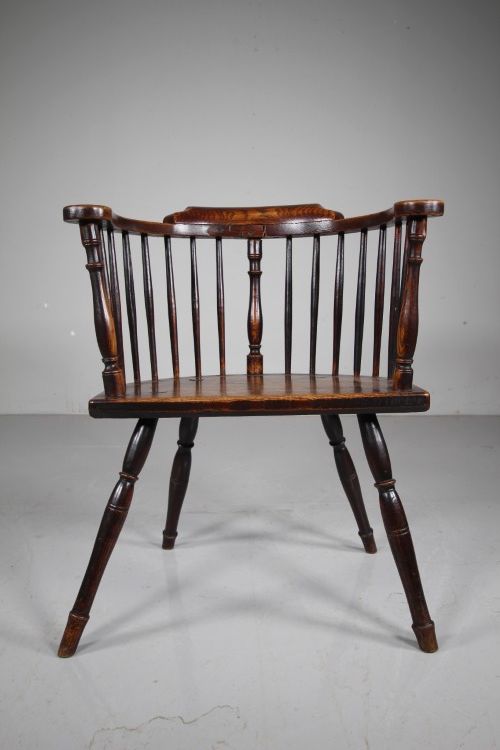
An elm wood office chair encompasses nineteenth-century vernacular seating designed for functional workspaces, studies and offices. Collectors encounter regional variants ranging from Georgian country models to late Victorian desk chairs.
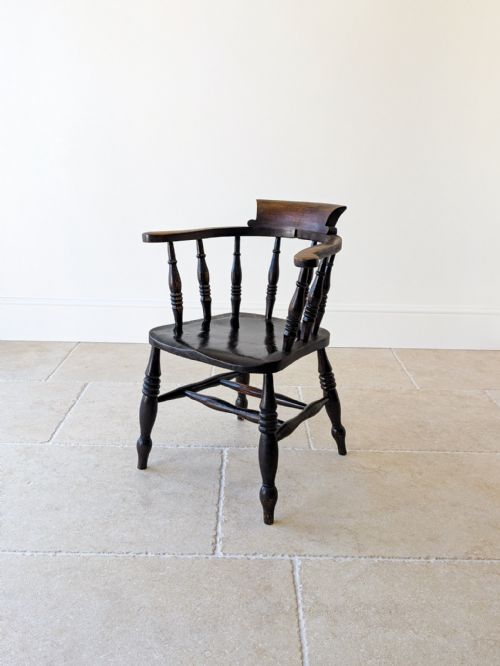
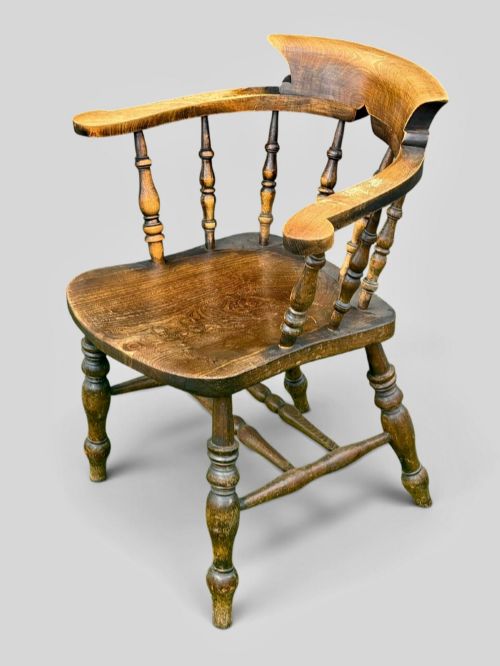
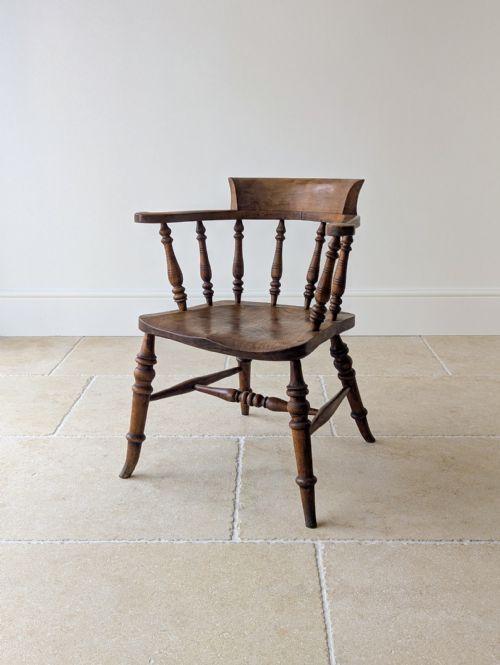
The form most frequently met on this page is the captain's chair or smoker's bow, characterised by a continuous curved arm rail supported by turned spindles. These utilitarian seats often feature saddle-shaped solid timber bases tailored for long hours at a desk.
Materials and construction
Makers utilised resilient native hardwoods, combining solid elm seats with ash, beech, alder or yew for spindles, legs and bow frames. Elm provided the tough, interlocking grain necessary to resist splitting in a heavy-use seat.
Traditional bodging and Windsor chairmaking techniques governed construction, with turned legs and uprights wedged directly into bored seats. Secondary materials such as brass fittings or leather additions appear occasionally on desk variants.
Elm wood was traditionally chosen for waterworks pumps and coffin boards because it refuses to rot when kept permanently wet.
Distinguishing quality
Quality rests in the figuring of the timber and the depth of the seat's sculpting. A deeply dished saddle seat fashioned from burr or richly grained elm elevates a piece far above a plain, flat plank.
Structural integrity and the retention of original turned components dictate standard. Superior examples maintain crisp joinery and balanced proportions without excessive replacement timber in the underframe.
The Elm Wood Office Chair Glossary
- Smoker's bow
- A low-backed Windsor armchair with a continuous bentwood rail forming the arms and upper crest, common in nineteenth-century offices and inns.
- Captain's chair
- A sturdy timber armchair designed for office or shipboard use, featuring a low back and robust spindles suited to frequent movement.
- Saddle seat
- A wooden chair seat shaped with hollows and contours to mimic the comfort of a riding saddle.
- Bodger
- A traditional pole-lathe turner who produced chair legs and spindles in the woods before assembly by urban or rural chairmakers.
- Spindle
- A slender, turned wooden pillar used to support the arm rail or back of a Windsor-style chair.
Elm Wood Office Chair: Frequently Asked Questions
What is an elm wood office chair?
An elm wood office chair is a traditional nineteenth-century seating form built for workspaces, studies, and administrative desks. These sturdy chairs combine regional vernacular woodworking techniques with durable native timbers.
Most examples take the form of captain's chairs, smoker's bows, or Windsor desk chairs. They feature solid wood saddle seats designed for practical daily use.
How do I date an elm wood office chair?
Dating relies on examining construction methods, timber patination, and the turnings of the legs and spindles. Pieces span from the eighteenth-century Georgian country period through the Victorian era.
Earlier pieces show hand-carved details and deeper patination, while late nineteenth-century versions often incorporate standardised factory turnings alongside traditional assembly.
Why use elm for a desk chair seat?
Elm possesses a twisted, interlocking grain that makes the wood exceptionally resistant to splitting under pressure. This toughness allowed makers to carve thin saddle shapes without compromising structural strength.
Additionally, elm offers a rich, expressive grain pattern that develops a deep patination through decades of handling.
How do I care for antique elm furniture?
Keep wooden chairs away from direct heat sources and sudden temperature fluctuations to prevent timber movement or splitting. Maintaining stable room conditions preserves the original finish and structure.
Apply occasional traditional wax polish to nourish the timber and protect the surface from everyday wear.