




Neoclassical Standard Lamp
A neoclassical standard lamp brings classical authority to a corner, combining architectural columns with warm illumination.
Neoclassical Standard Lamp
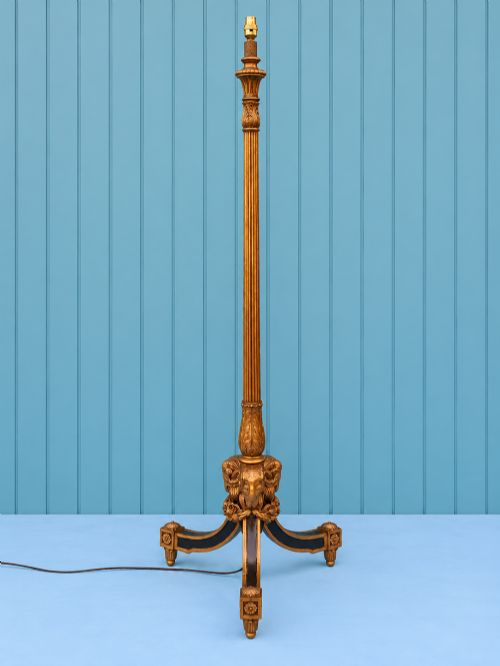
A neoclassical standard lamp takes its design cues from ancient Greek and Roman architecture, translating heavy stone motifs into tall floor-standing lighting. These pieces adopt the vocabulary of columns, fluting, and patinated metals to anchor a room with formal dignity.
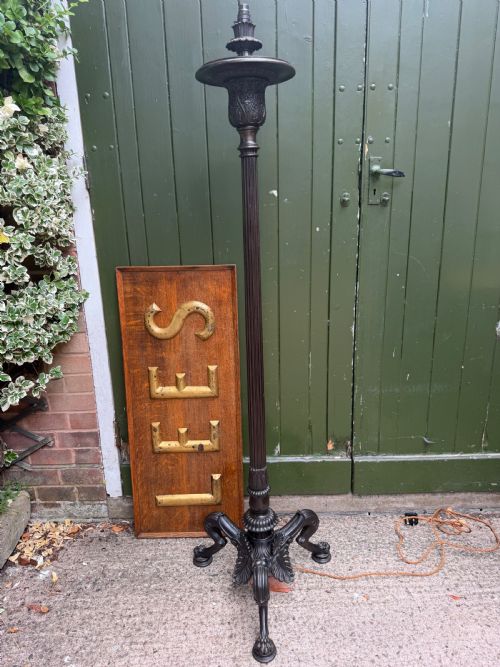
Most examples encountered here date from the nineteenth century up through the nineteen-thirties, spanning Victorian, French, Italian Florentine, and Swedish interpretations. The selection leans heavily towards brass, giltwood, and bronze-patinated cast iron.
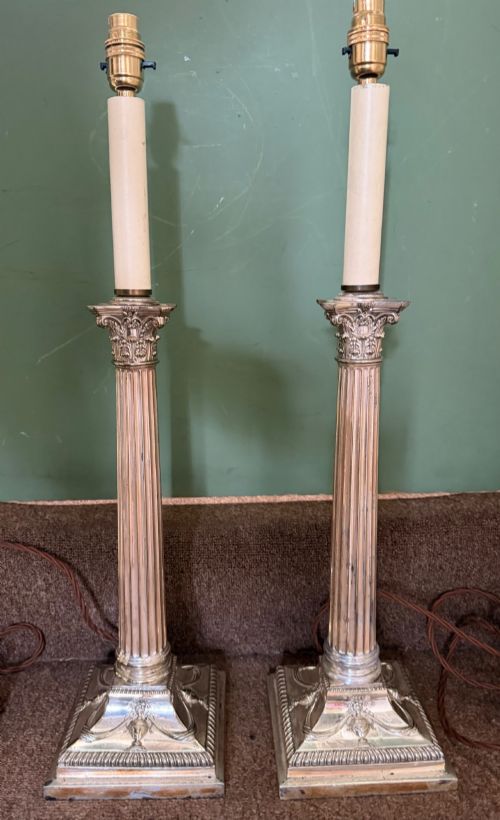
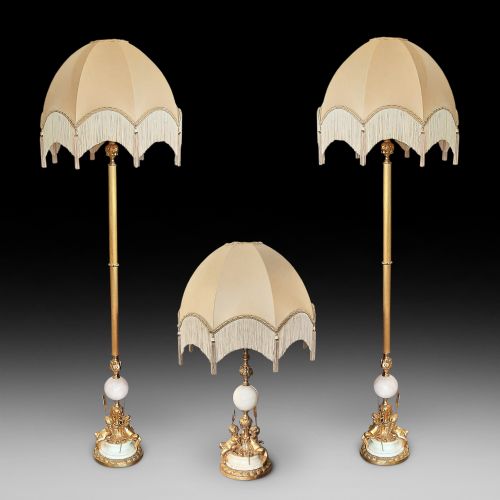
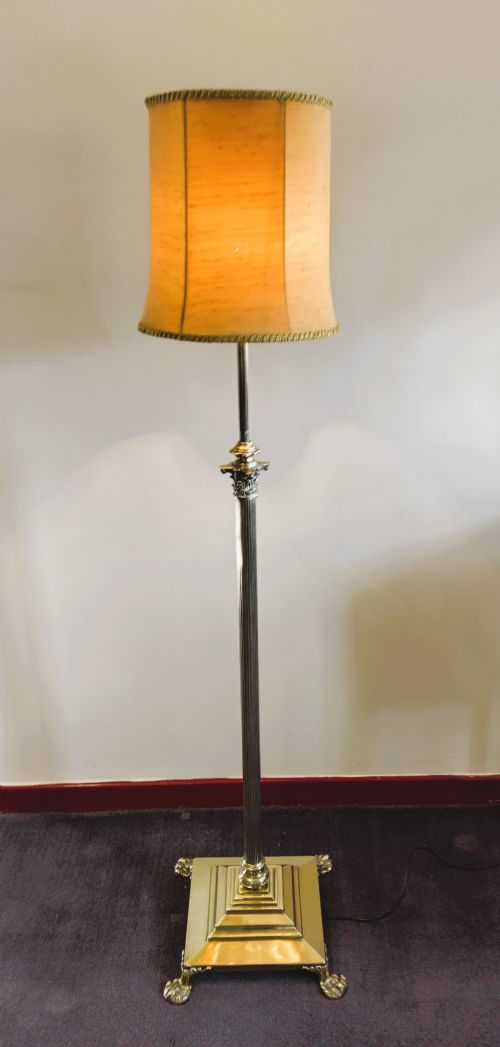
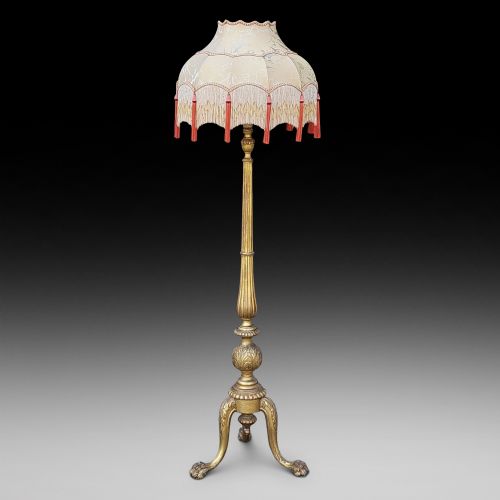
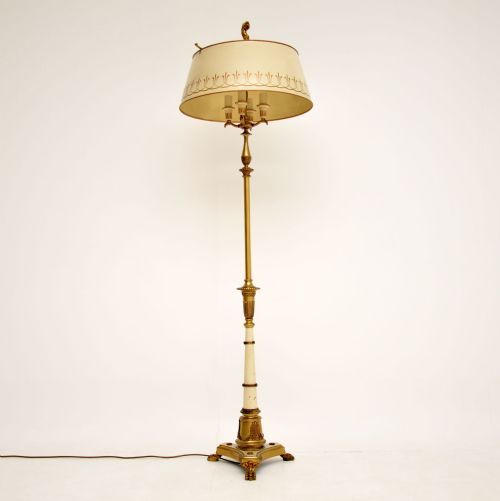
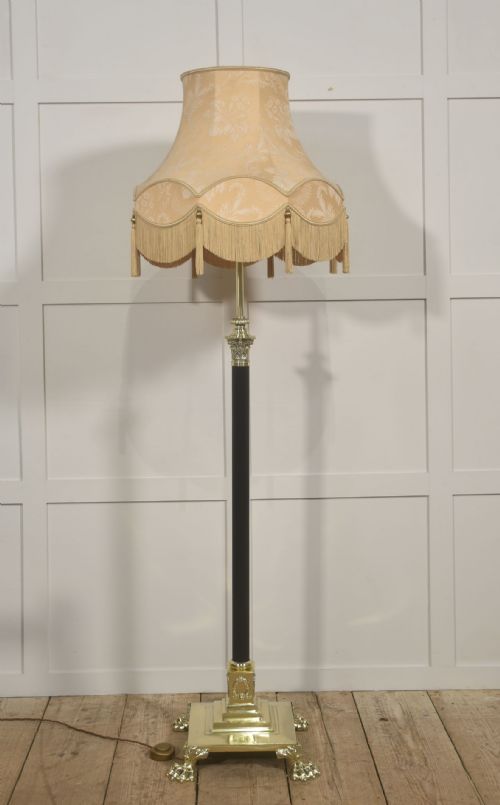
Forms alternate between rigid Corinthian columns, adjustable stems, and painted tole floor lamps. Buyers frequently encounter standard lamps that pair classical metalwork with fabric shades trimmed in passementerie.
How they were made
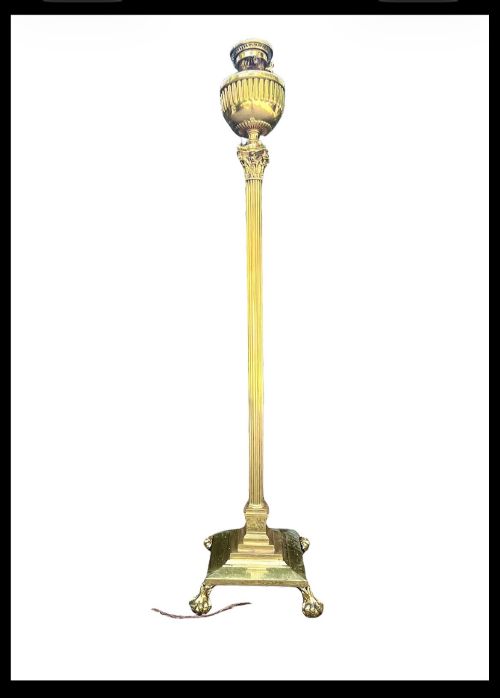
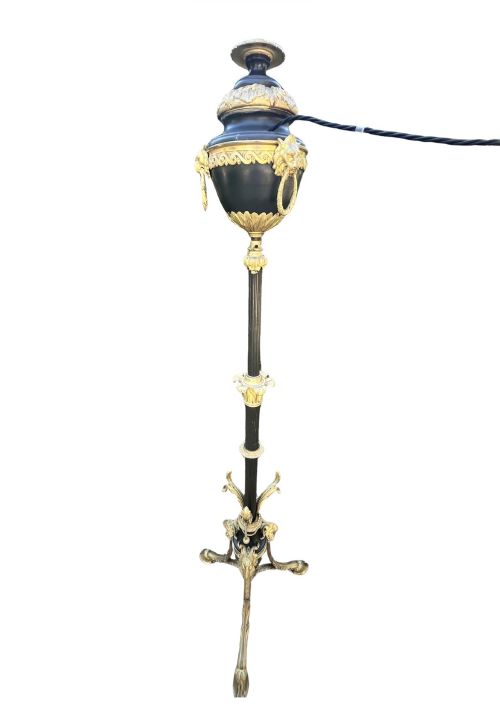
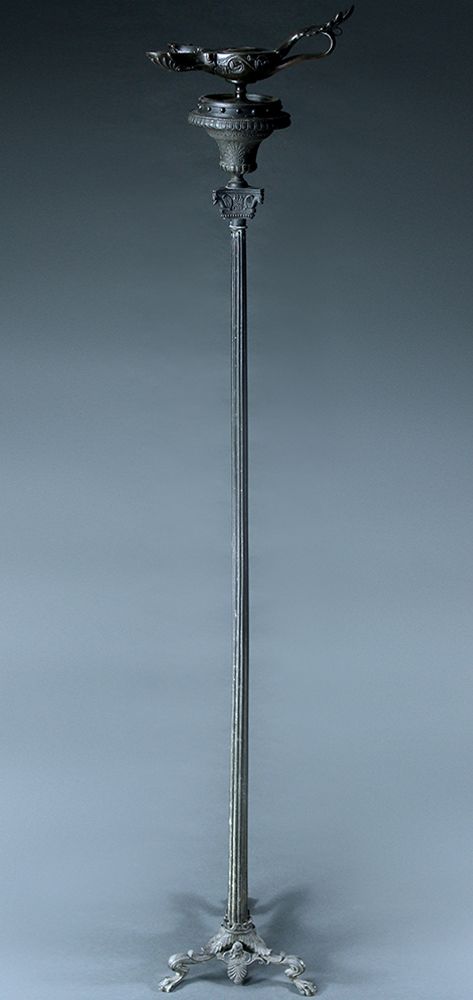
These lamps rely on substantial metal casting and traditional wood-carving techniques to achieve their architectural weight. Cast iron and solid brass form the structural spines of the metal variants, often finished with a dark bronze patina or polished to a bright shine.
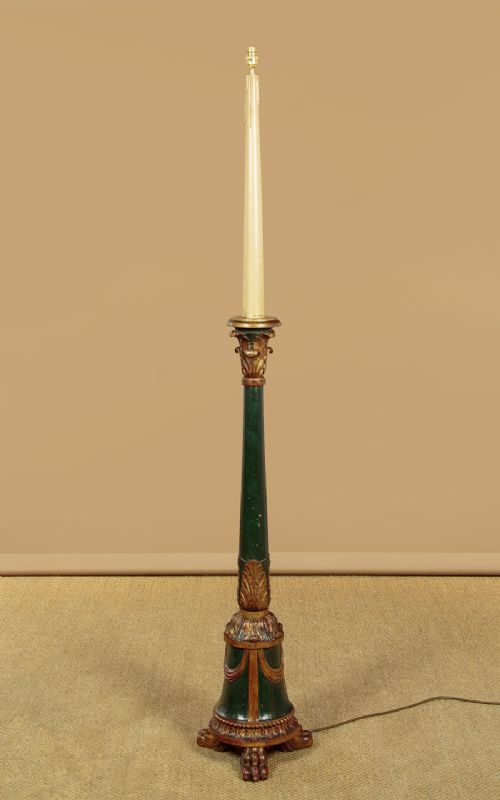
Giltwood and painted surfaces receive meticulous hand-finishing, applying gold leaf or colour over carved timber bases. Adjustable stems incorporate mechanical screw-keys or sliding mechanisms to alter height without compromising stability.
Soft furnishings complete the construction, utilising fabrics mounted on internal frames and edged with decorative passementerie braids. Every material choice serves both structural durability and decorative symmetry.
Neoclassical Standard Lamp Retail Price Guide 2026
Typical asking prices for neoclassical standard lamp among the pieces listed under this phrase on Sellingantiques today, from the lower quarter to the upper quarter. They describe what is for sale here now, not the wider market.
Materials across the selection range from fabric and passementerie to cast iron, bronze patina, and solid brass.
What varies in quality
Quality rests upon the crispness of the casting and the depth of the finish, separating basic production from accomplished craftsmanship. Sharp fluting on a brass column or deep relief work on giltwood indicates a superior hand at the bench.
Weight and balance dictate the integrity of the floor lamp, as heavier metal bases prevent tipping and support extended heights. Refined proportions in the capital and shaft distinguish an ambitious design from a purely utilitarian standard lamp.
The Neoclassical Standard Lamp Glossary
- Corinthian column
- A classical column style featuring an ornate capital decorated with acanthus leaves. This motif appears frequently on nineteenth-century metal lamp shafts.
- Giltwood
- Timber that has been coated with a thin layer of gold leaf. It provides a bright, reflective surface on Italian and English standard lamps.
- Passementerie
- Decorative trims such as tassels, braids, and fringes applied to lamp shades. It adds textural contrast to the textile components of the light.
- Tole
- Painted or lacquered sheet metal, often used on French floor lamps. It offers a smooth coloured surface distinct from polished brass or bronze.
- Patina
- The natural surface alteration acquired by metal or wood over time. A bronze patina gives cast iron a dark, weathered finish.
Neoclassical Standard Lamp: Frequently Asked Questions
What is a neoclassical standard lamp?
A neoclassical standard lamp is a tall floor-standing light fixture designed with motifs drawn from ancient architecture, such as fluted columns and classical capitals.
These pieces use materials like brass, giltwood, and cast iron to bring formal elegance and vertical emphasis to interior spaces.
How do you adjust the height?
Many period examples feature sliding stems or mechanical adjustment keys integrated into the central column.
This allows the overall height of the standard lamp to be modified to suit different ceiling heights and seating arrangements.
Where should I place one?
These lamps work best in corners, beside reading chairs, or flanking large pieces of furniture where their architectural height can be appreciated.
Their substantial presence makes them natural focal points within a room's lighting scheme.
How do I identify a Swedish style?
Swedish neoclassical pieces often feature lighter painted finishes and restrained geometric carving rather than heavy gilded ornamentation.
They reflect a brighter, more pared-down interpretation of classical design popular in the late nineteenth century.