



Neoclassical Floor Light
These neoclassical floor lights bring classical columns, bronze figures and giltwood into the room to illuminate a space with traditional dignity.
Neoclassical Floor Light
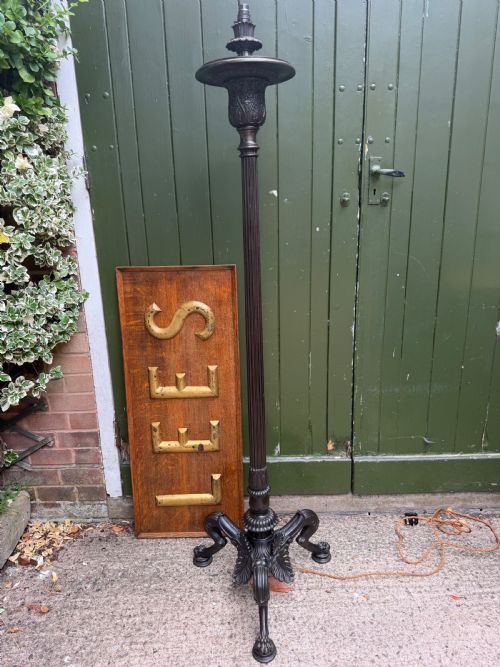
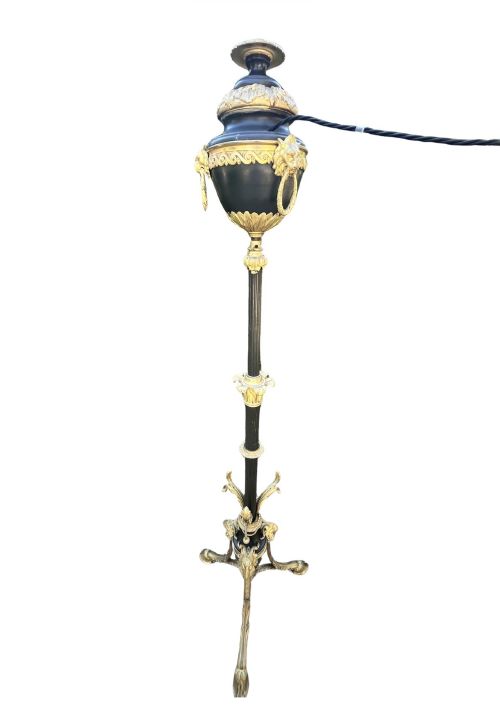
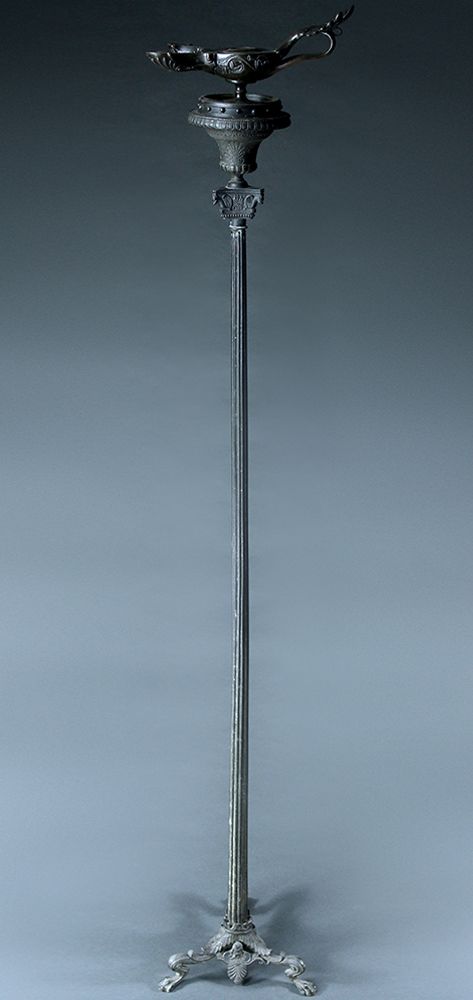
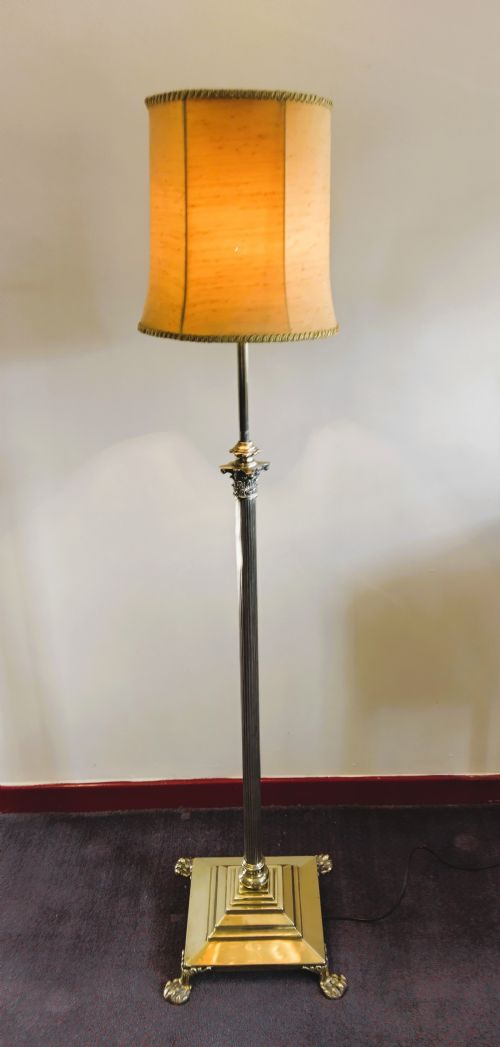
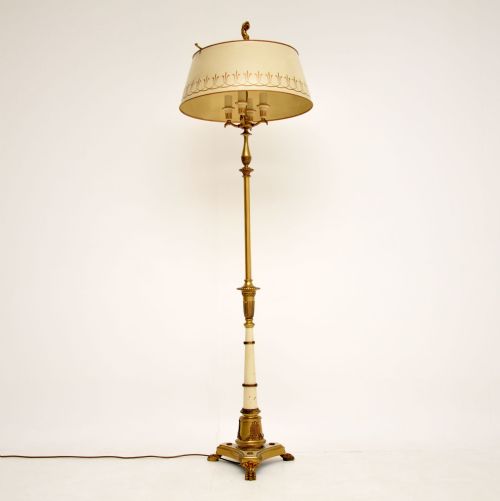
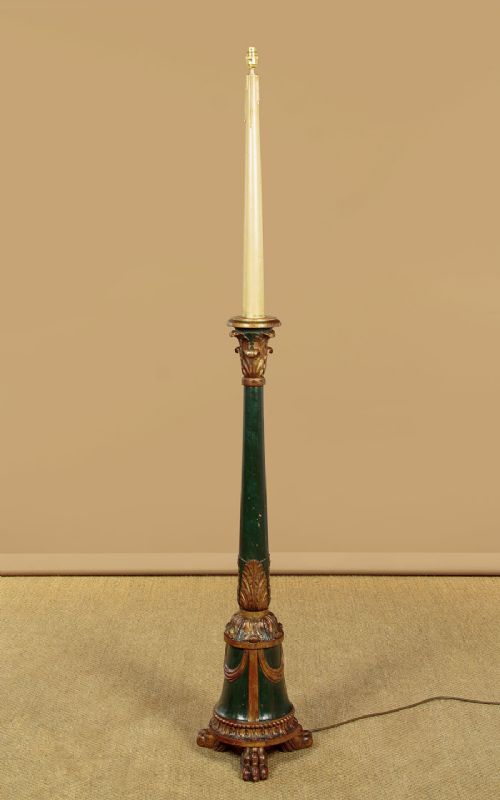
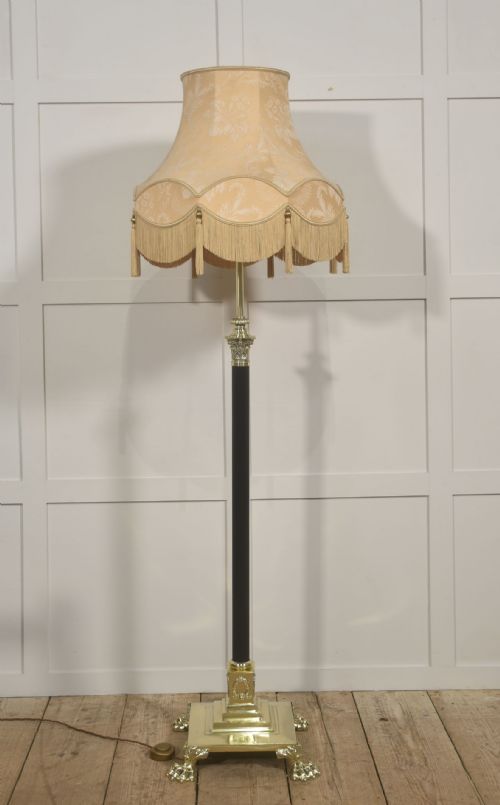
A neoclassical floor light stands as a vertical column, torchere, or figural standard designed to support a light source or candle. These pieces draw on historical motifs such as Corinthian capitals, rams' heads, and Grecian design principles.
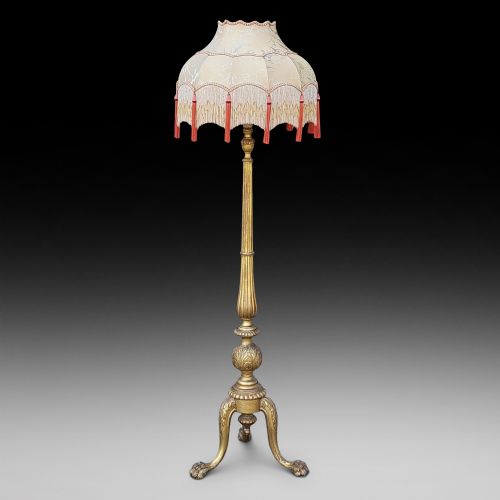
The selection here spans the nineteenth century through the 1930s, taking forms such as standard lamps, adjustable brass columns, and tall torcheres. Origin styles include French, Italian, Swedish, and English interpretations of the neoclassical aesthetic.
Makers and designers working in these styles adapt antique temple fittings and candelabra into functional floor-standing lighting. Buyers encounter heavy brass, carved giltwood, and patinated bronze configurations suited to period interiors.
What varies in quality
The standard of casting and carving separates basic production from finer workshop pieces. Crisp detail in bronze figures, cast rams' heads, and Corinthian capitals indicates skilled hand-chasing and careful mould work.
Material selection and structural weight dictate the physical presence of the object. Solid brass, substantial marble bases, and genuine giltwood surfaces hold up better mechanically than lightweight plated alternatives.
Listings feature materials spanning brass, giltwood, marble, bronze, and fabric, originating from nineteenth-century and early twentieth-century periods.
F. De Luca·Humphrey Hopper·Hinks·Coutan
The Neoclassical Floor Light Glossary
- Torchere
- A tall stand or candlestick originally designed to hold a torch or single light. These pieces often feature slender columns or figural supports.
- Standard lamp
- A floor-standing lamp base designed to support a shade and bulb. They frequently incorporate telescopic height adjustment.
- Giltwood
- Wood that has been coated with a thin layer of gold leaf. This finish appears frequently on neoclassical frames and altar candlesticks.
- Corinthian
- An order of classical architecture characterised by ornate capitals decorated with acanthus leaves. This motif appears often on brass and wooden lamp columns.
Neoclassical Floor Light: Frequently Asked Questions
What periods do these floor lights come from?
The listings span from the nineteenth century through the Edwardian era and into the 1930s. Pieces reflect nineteenth-century revivals as well as earlier Georgian and Regency design influences.
Craftsmen across England, France, Italy, and Sweden produced these standard lamps and torcheres, adapting historical architectural forms for domestic illumination.
How do adjustable stems work?
Many nineteenth-century brass standard lamps incorporate telescopic mechanisms within their vertical columns. A key or screw mechanism allows the upper shaft to raise or lower.
This functionality permitted users to alter the height of the light source depending on the room arrangement and seating height.
What materials are used in construction?
Construction materials include cast brass, bronze, patinated iron, and carved wood. Many pieces combine structural elements such as marble or alabaster columns with metal mountings.
Surface finishes range from polished or solid brass to giltwood, silvered mecca, and painted or parcel-gilt woodwork.
Are these lamps converted from older items?
Several pieces originate as torcheres, altar candlesticks, or Masonic columns before receiving electrical wiring. Standard lamps produced directly in the nineteenth or early twentieth centuries were originally built for lighting.
Examining the internal channels and base construction reveals whether a floor-standing piece began life as a candle holder or a dedicated lamp standard.