



Neoclassical Sideboard
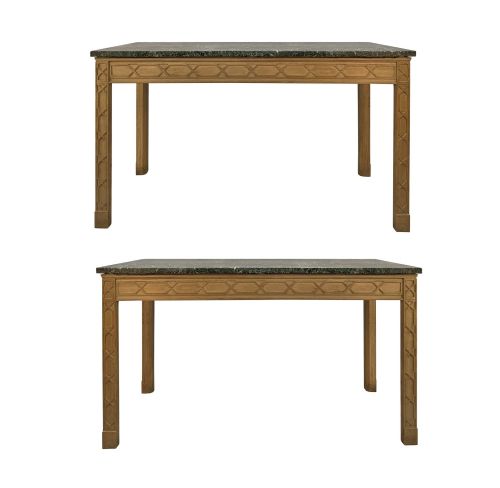
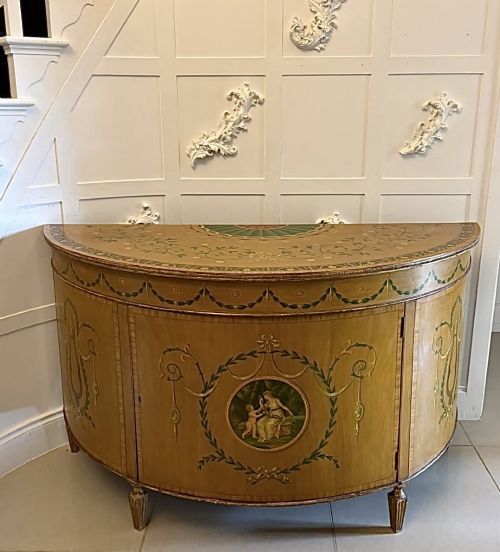
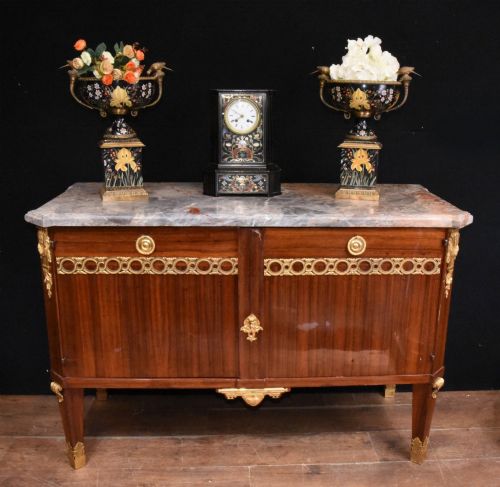
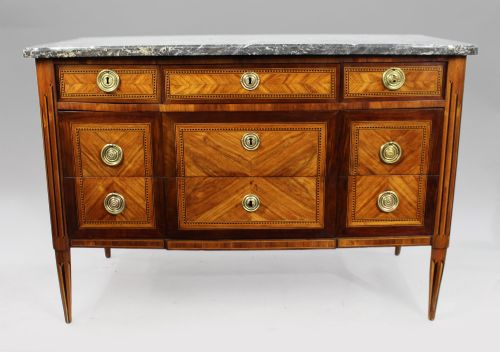
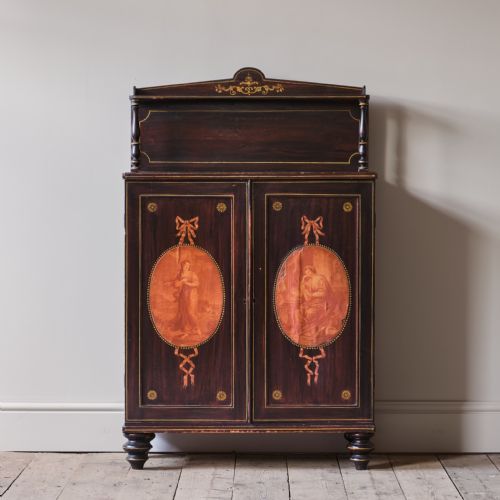
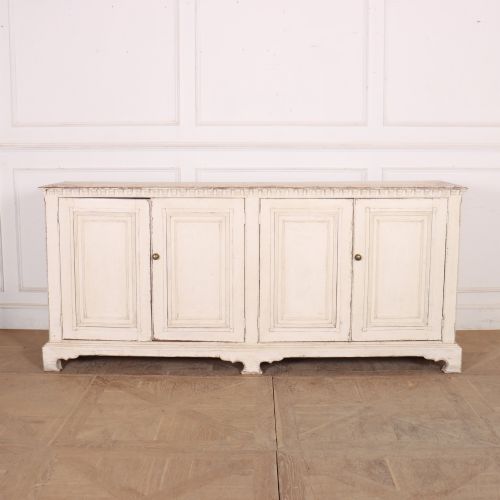
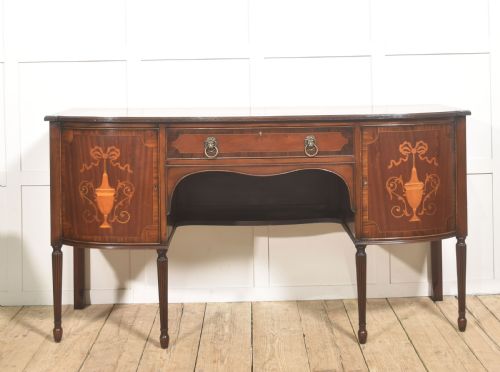
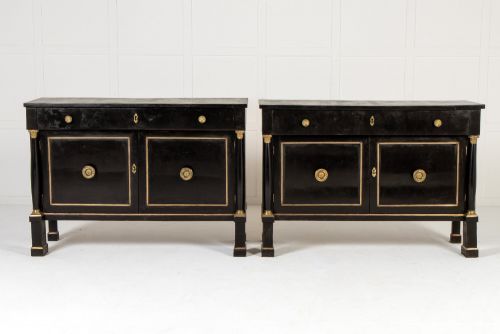
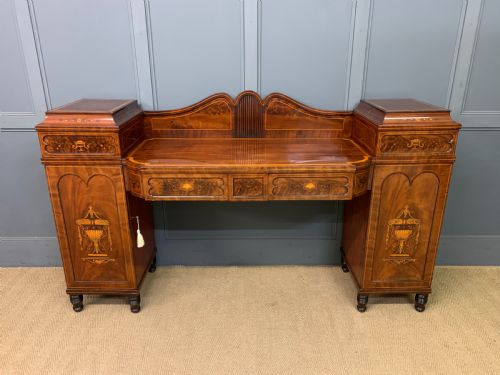
These neoclassical sideboard examples combine classical symmetry with rich timber, offering a formal centrepiece for the dining room.
Neoclassical Sideboard
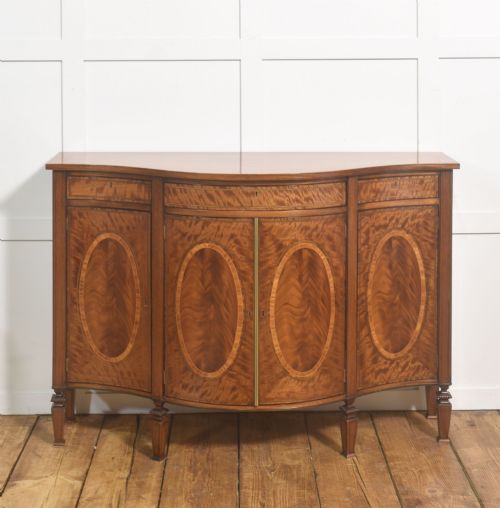
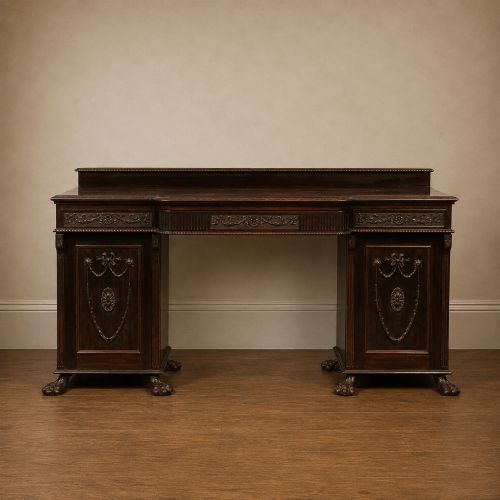
A neoclassical sideboard brings architectural proportion and restrained ornament to dining spaces and reception rooms. The pieces gathered under this term range from eighteenth-century George III pedestal formats to late nineteenth-century Sheraton Revival satinwood models.
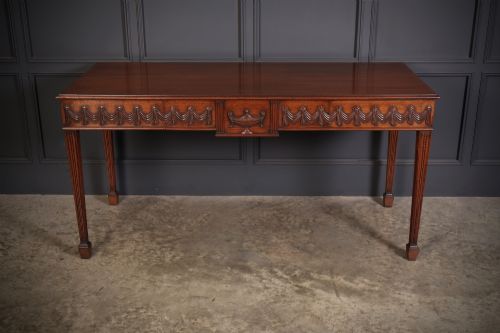
Most examples encountered here favour the warmth of figured mahogany or the pale elegance of inlaid satinwood, often shaped in bow-front or demi-lune profiles. Alongside formal sideboards, the selection encompasses related serving tables, commodes, and breakfront cabinets sharing the same classical vocabulary.
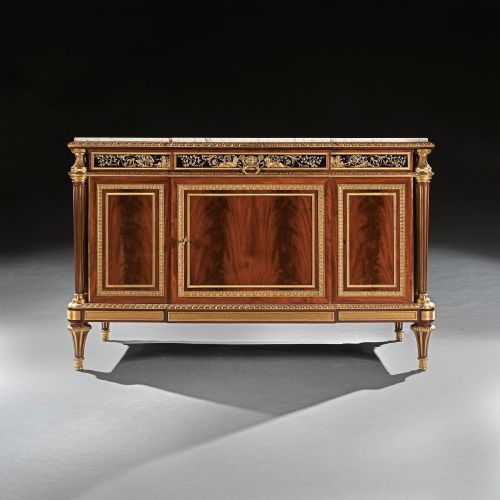
Origins span English workshops of the Georgian period, continental French commodes with marble tops, and Italian painted enfilades. This breadth allows a buyer to place either an imposing breakfront or a delicate painted demi-lune cabinet within a room.
Materials and construction
Cabinet makers relied primarily on solid and veneered mahogany, complemented by satinwood and walnut for contrasting panels and borders. Marquetry and delicate stringing in boxwood define the surface decoration, creating linear geometry derived from ancient architectural motifs.
Structural surfaces frequently incorporate imported marble tops on commodes and side cabinets, while cast or gilt ormolu mounts provide structural highlights and handle hardware. Pine and secondary timbers form the internal carcases of drawers and backing boards.
Neoclassical Sideboard Retail Price Guide 2026
Typical asking prices for neoclassical sideboard among the pieces listed under this phrase on Sellingantiques today, from the lower quarter to the upper quarter. They describe what is for sale here now, not the wider market.
Lord Leverhulme once owned one of these serving tables, proving that even empire builders needed a proper place for the cutlery.
Evaluating craftsmanship
Quality rests in the precision of the timber selection and the restraint of the inlay. Finer pieces display book-matched veneers and tightly cut boxwood stringing that follows complex curves without buckling or lifting.
The integration of metalwork and stone also distinguishes the tier of execution. Cast ormolu mounts fit flush against the timber, and marble slabs feature clean, polished edges rather than crude machine cutting.
James Hicks·Henry Dasson·Pietro Ferrario
The Neoclassical Sideboard Glossary
- Demi-lune
- Having a half-moon or semicircular shape in plan. This profile is common in side cabinets and commodes designed to stand flat against a wall.
- Marquetry
- The art of forming decorative patterns using fitted pieces of wood veneer. It differs from inlay by assembling the entire design on a backing before gluing it to the carcase.
- Ormolu
- Gilt bronze ornament applied to furniture mounts and lamps. The technique involves treating brass or bronze with an amalgam of gold.
- Breakfront
- A piece of furniture whose central section projects forward from the flanking wings. This form breaks up the flat plane of large sideboards and cabinets.
- Satinwood
- A lustrous, yellow-toned timber imported from the tropics. It provides a pale, reflective surface ideal for contrasting stringing and classical motifs.
Neoclassical Sideboard: Frequently Asked Questions
What is a neoclassical sideboard?
A neoclassical sideboard is a formal dining room serving piece inspired by the classical architecture of ancient Greece and Rome. These designs emphasise symmetry, straight lines, and urn or floral motifs.
They emerged strongly in the eighteenth century through designers like Robert Adam and George Hepplewhite, before seeing revivals in Victorian and Edwardian times.
How were these sideboards used?
Historically, these pieces served as staging surfaces for silver, serving dishes, and cutlery during formal meals. Drawers and cupboards housed linen and tableware out of sight.
Today, they function as display surfaces in dining rooms or hallways, providing substantial storage without occupying excessive floor space.
How do I distinguish periods?
Earlier eighteenth-century pieces often rely on heavy carved mahogany and architectural pediments. Revival pieces from the late nineteenth century frequently use lighter satinwood, painted details, and finer crossbanding.
Examining the secondary timbers inside drawers and the ageing of the fixings helps confirm whether a piece is Georgian or a later Sheraton Revival interpretation.
How do I live with one?
These pieces require stable room temperatures to prevent timber shrinkage and veneer lifting. Regular polishing with a traditional beeswax maintains the lustre of mahogany and satinwood.
Avoid placing them in direct sunlight to protect dyed veneers and painted details from fading over time.