
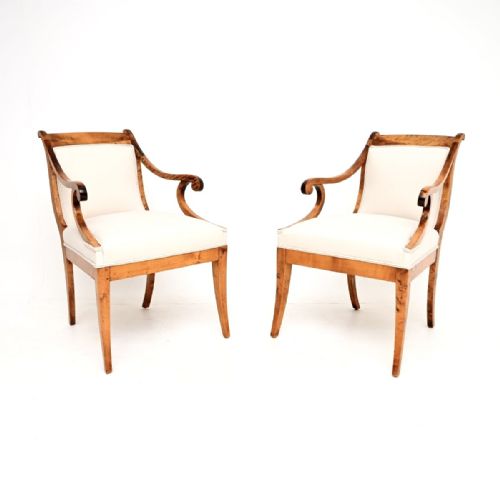

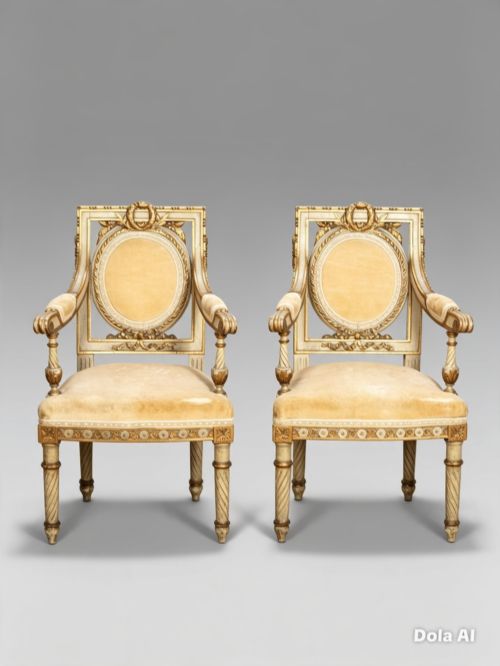


Neoclassical Salon Chairs
Neoclassical salon chairs bring refined symmetry and classical ornament to reception spaces.
Neoclassical Salon Chairs
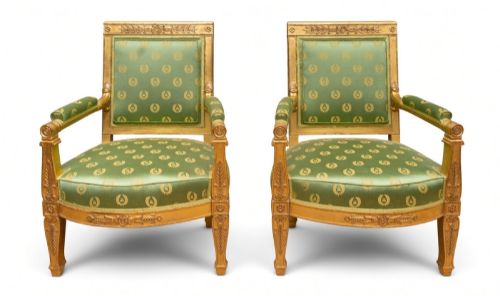
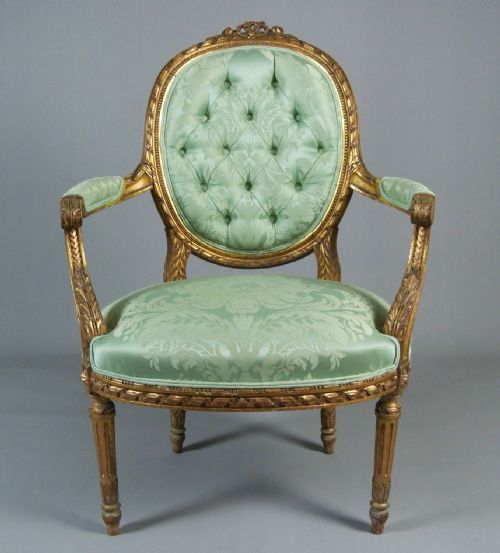
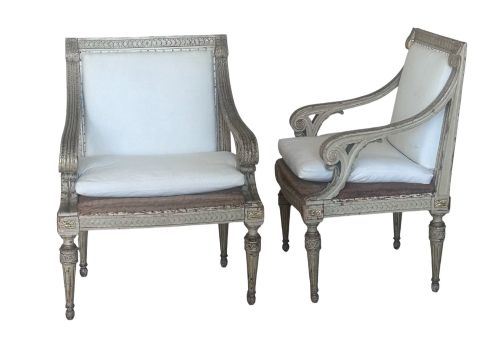
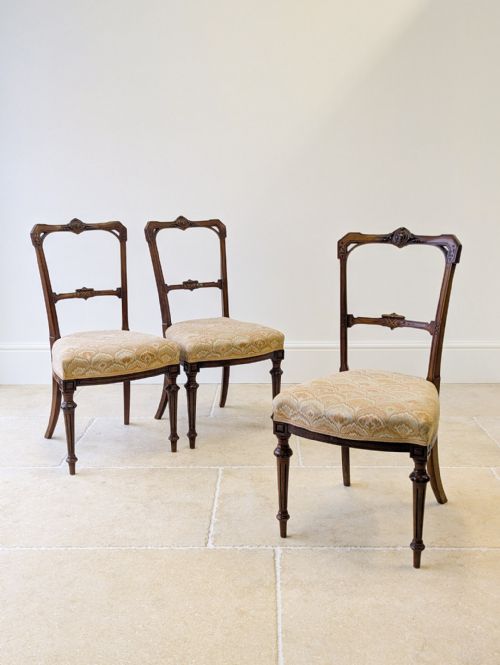
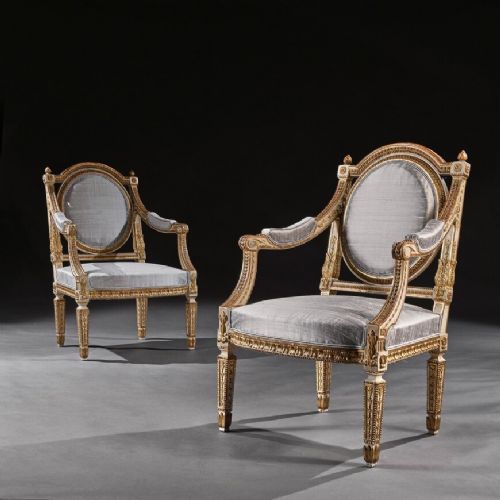
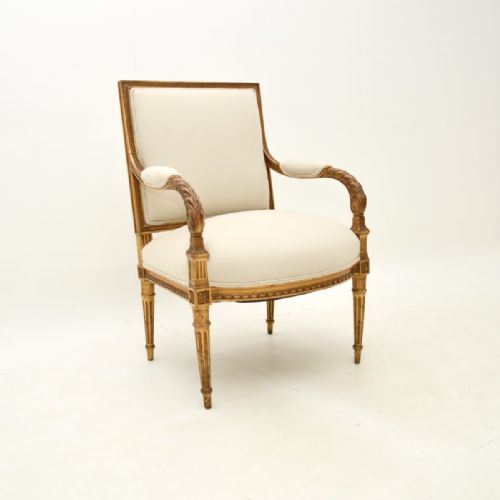
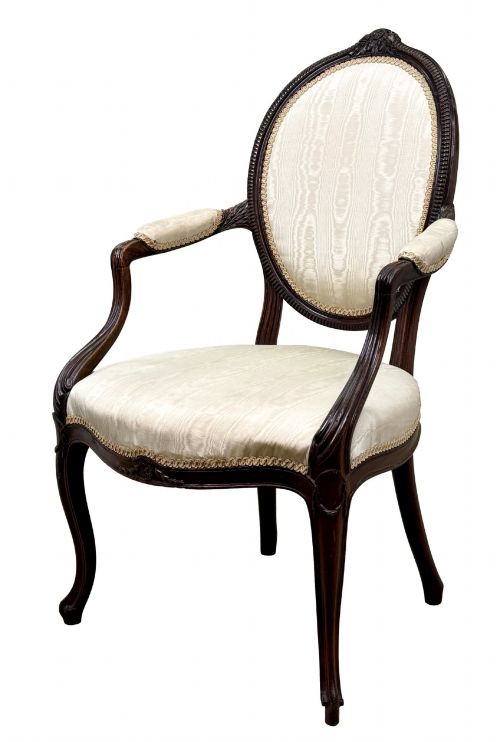
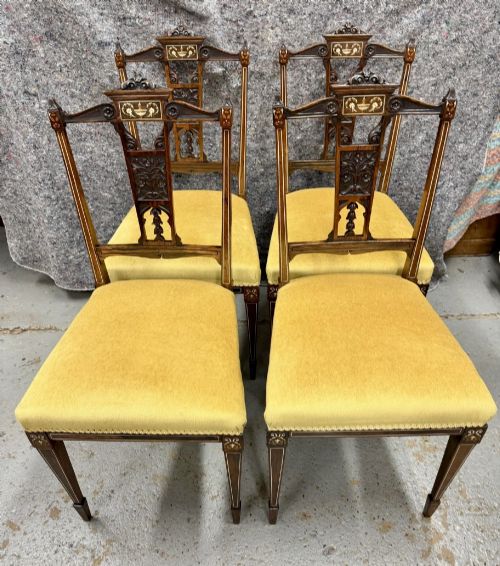
When you search for neoclassical salon chairs, you encounter seating designed to evoke the architectural severity and proportion of antiquity, spanning French, English, and Swedish interpretations. The pieces on this page range from formal eighteenth-century armchairs and George III mahogany designs to nineteenth-century French giltwood fauteuils, Italian parcel-gilt items, and later Edwardian inlaid salon chairs.
You are most likely to meet pairs or small sets of armchairs and side chairs, alongside larger parlour and lounge suites originating from French, English, and Scandinavian workshops. These seats served in formal reception rooms and drawing rooms, combining structural uprightness with restrained decorative carving.
The aesthetic bridges the late eighteenth century through various nineteenth-century revivals into the early twentieth century. Forms include open armchairs, tub chairs, and children's salon chairs executed in styles from Louis XVI and French Empire to Biedermeier and Regency.
Construction and Materials
Makers utilised timber frames of mahogany, walnut, birch, and rosewood, alongside softwood carcasses heavily prepared for gilding and painting. Giltwood and painted wood finishes frequently incorporate parcel-gilt highlights to accentuate carved classical details.
Upholstery relies on traditional textile coverings such as silk, velvet, damask, and patterned fabric secured over padded seats and backs. Structural decoration often involves carved woodwork, inlay work, and satin birch veneers.
Materials represented across the inventory include silk, velvet, mahogany, satin birch, and giltwood.
Judging Quality
The distinction between standard production and exceptional examples lies in the crispness of the carved ornament and the integrity of the timber framing. Master carvers delivered deep, sharply defined acanthus leaves, fluting, and paterae that retain their geometric precision across the frame.
Original surface treatments, such as period gilding or authentic painted and parcel-gilt layers, elevate an example above later repainting. Furthermore, documented attribution to notable makers or royal provenances defines the upper tier of these pieces.
Jacob-Desmalter·Thomas Chippendale·John Linnell
The Neoclassical Salon Chairs Glossary
- Fauteuil
- An open-framed upholstered armchair with wooden armrests, typical of French seating design. These chairs often feature carved frames and exposed wood.
- Giltwood
- Timber that has been coated with a thin layer of gold leaf or gold paint. This finish was widely applied to formal chairs to create a luminous appearance.
- Parcel-gilt
- A decorative treatment where only specific carved elements of a painted or stained wooden surface are gilded. It highlights particular architectural details on the frame.
- Restauration
- A French stylistic period dating to the early nineteenth century between the fall of the Empire and the July Revolution. Furniture from this era bridges Empire heaviness and later revival styles.
Neoclassical Salon Chairs: Frequently Asked Questions
How do I identify a neoclassical salon chair?
Look for straight tapered legs, symmetrical geometry, and classical motifs such as fluting, urns, and wreaths drawn from Greek and Roman architecture. These structural traits separate them from curved rococo predecessors.
Evidence on this page shows these forms executed in mahogany, giltwood, and painted finishes across eighteenth- and nineteenth-century periods.
Where were these chairs used historically?
They furnished formal drawing rooms, reception spaces, and private salons where guests gathered for conversation and entertainment. Their upright proportions encouraged formal posture suitable for receiving visitors.
Listings include pieces originating from major palaces, grand English houses, and continental European parlours.
How do I care for antique giltwood frames?
Keep giltwood furniture away from direct sunlight and moisture to prevent the delicate gold leaf from flaking or tarnishing. Dust gently with a dry, soft brush rather than using wet cloths or polishes.
Many listed items retain fragile nineteenth-century gilding requiring careful environmental control.
Are these chairs suitable for daily seating?
While structurally sound, antique salon chairs were built for formal reception spaces rather than heavy daily lounging. Modern users often place them in low-traffic areas or bedrooms as accent seating.
The upholstery materials seen here, including silk and delicate velvet, reflect this decorative purpose.