
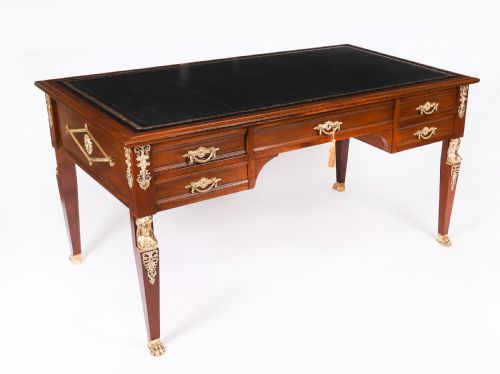



Neoclassical Pedestal Desk
A neoclassical pedestal desk is a commanding workspace defined by architectural restraint, offering deep drawers and a leather surface for serious study.
Neoclassical Pedestal Desk
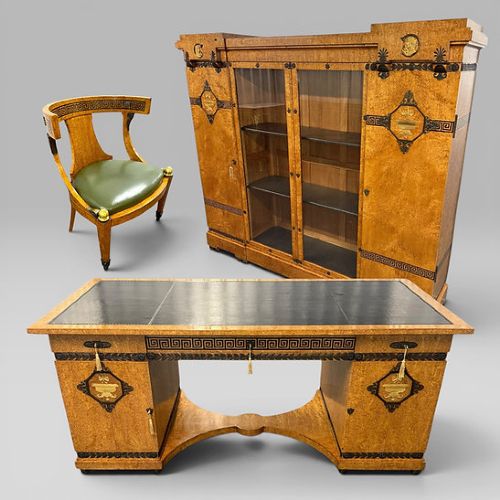
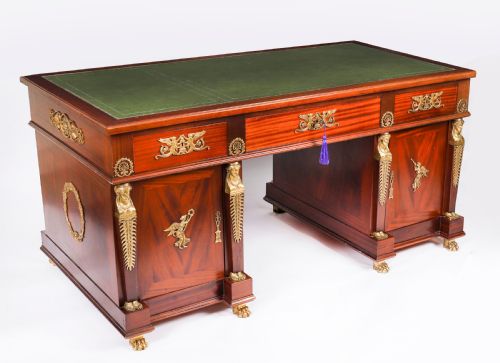
When you search for a neoclassical pedestal desk, you enter a lineage of furniture that draws upon ancient Greek and Roman architecture for proportion and dignity. These pieces pair twin banks of drawers with a central writing surface, anchored by classical columns, pilasters, or restrained moulding.
The versions most commonly met span the nineteenth and early twentieth centuries, including revival pieces from Edwardian workshops and French ateliers. They appear in timbers such as mahogany and birch, frequently accented with cast metal mounts.
The form suits private libraries and executive studies alike, providing substantial storage without sacrificing visual symmetry.
How they were made
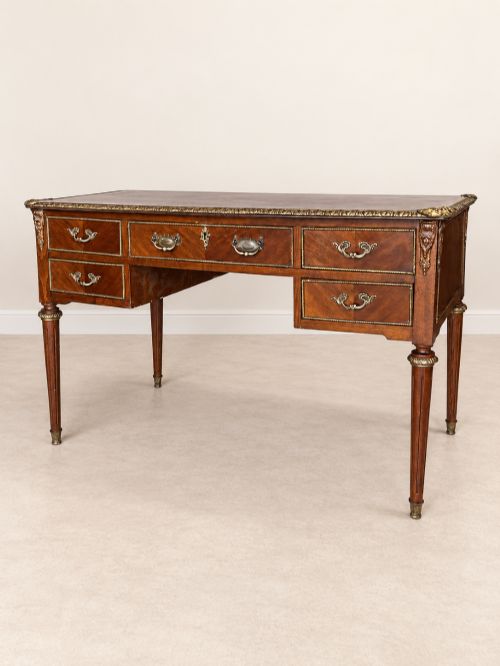
Makers constructed these desks around sturdy timber carcases, predominantly utilising mahogany or birch as the primary structural and visual wood. Surfaces intended for writing were inset with panels of leather, providing a durable and refined texture for daily use.
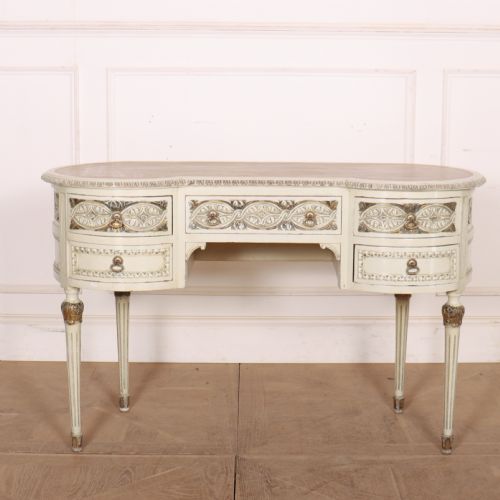
Decorative emphasis relied heavily on cast metals, specifically brass and ormolu, which formed structural mounts, key escutcheons, and column capitals. Paint was also employed on specific English examples, offering an alternative to exposed grain.
Neoclassical Pedestal Desk Retail Price Guide 2026
Typical asking prices for neoclassical pedestal desk among the pieces listed under this phrase on Sellingantiques today, from the lower quarter to the upper quarter. They describe what is for sale here now, not the wider market.
Listings for this phrase include examples executed in mahogany and birch, spanning the Victorian period through the early twentieth century.
What varies in quality
The division between standard workshop production and exceptional craftsmanship lies in the crispness of the cast metal mounts and the selection of timber veneers. Finer desks display sharply detailed ormolu or brass elements that fit flush against the wood without excessive gap filling.
Internal construction, such as drawer dovetailing and the quality of the secondary timbers used out of sight, dictates the longevity of the piece. Desks retaining their original leather inserts and integrated locking mechanisms command greater appreciation from collectors.
Mercier Frères
The Neoclassical Pedestal Desk Glossary
- Pedestal desk
- A form of writing table featuring two independent pedestals containing drawers, supporting a central desktop.
- Ormolu
- Gilded bronze used for decorative mounts and architectural details on French and revival furniture.
- Mahogany
- A dense, dark timber prized for its stability and rich grain, widely utilised in nineteenth-century case furniture.
- Neoclassical revival
- A late nineteenth and early twentieth-century movement reviving classical architectural motifs and proportions.
Neoclassical Pedestal Desk: Frequently Asked Questions
How do I care for the leather top?
Clean the leather gently using a slightly damp cloth, avoiding harsh chemical cleaners that strip natural oils.
Apply a specialist leather cream periodically to maintain suppleness and prevent cracking across the writing surface.
Are these desks suitable for daily use?
These pieces were built for sustained administrative work, offering robust construction and ample drawer space for modern stationery.
Care should be taken with modern electrical equipment to avoid scratching finished wooden surfaces or antique leather.
How can I identify the period?
Examine the secondary woods inside the drawers and the construction techniques used for the drawer joints, which evolved from hand-cut to machine-sawn methods.
Stylistic markers, such as specific ormolu casting styles and column proportions, align these desks with nineteenth-century revival movements or earlier Georgian origins.
Where should I place a pedestal desk?
Because the back panels of these desks are frequently finished with paneling or mounts, they sit comfortably in the centre of a room rather than strictly against a wall.
Ensure adequate clearance around the pedestals for seating movement and drawer access.