
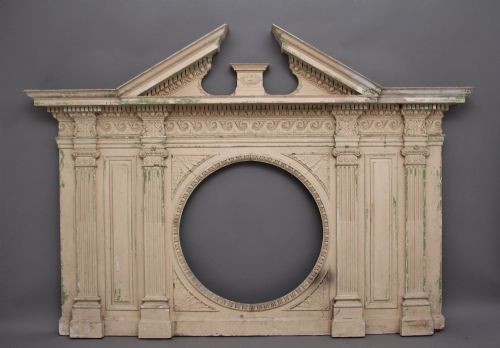
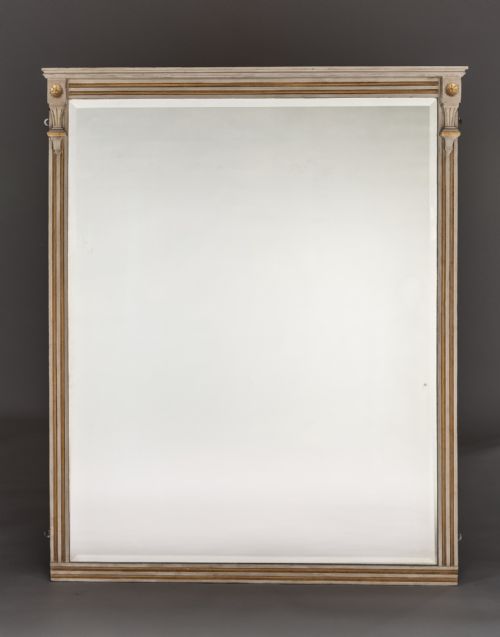


Neoclassical Painted Mirror
These neoclassical painted mirror pieces bring classical restraint and light into a room, spanning wall mirrors, pier glasses and overmantels.
Neoclassical Painted Mirror
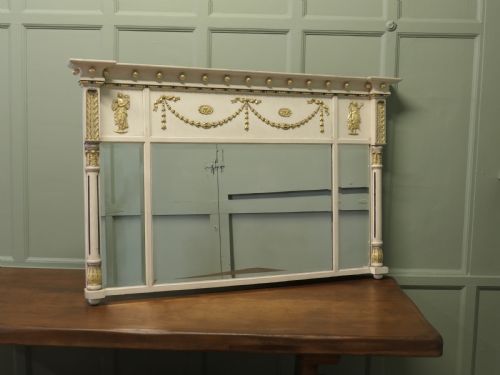
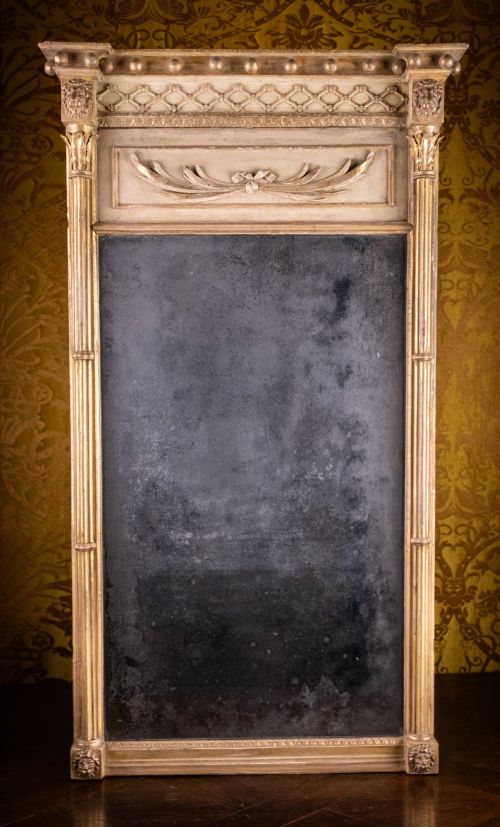
A neoclassical painted mirror is a formal looking-glass designed in styles from the eighteenth and nineteenth centuries, incorporating architectural motifs such as pilasters, urns and swags. Buyers searching this phrase meet pieces intended for principal rooms, including large overmantels, tall pier mirrors and trumeau panels.
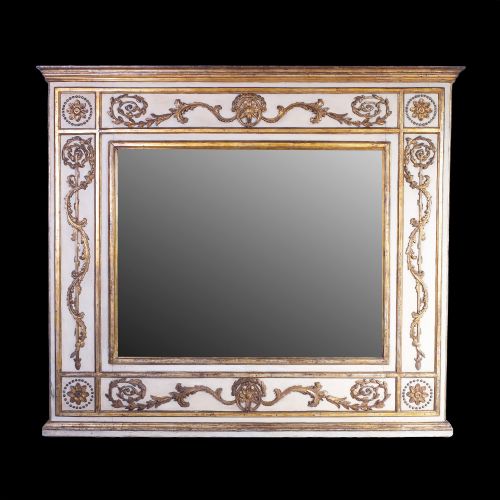
The selections on this page draw from periods spanning the eighteenth century through the Victorian era, alongside Regency, French Empire and Louis XVI styles. Overmantel mirrors and wall mirrors dominate the forms, frequently combining painted surfaces with parcel-gilt highlights or carved wooden frames.
How they were made
Carved wood and gesso provide the structural relief for these frames, which receive coats of paint and gold leaf or parcel-gilt finishing. Makers built these mirrors using timber frames, often pine or hardwoods, layered with gesso to hold crisp classical ornamentation before the final paint layer is applied.
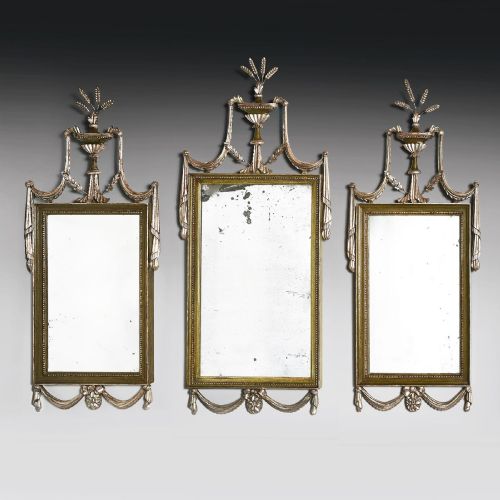
Many examples incorporate multi-plate glass configurations, such as triple-plate or triptych arrangements, held within architectural borders featuring vitruvian scrolls or lion masks.
Listings feature periods from the eighteenth century to 1900, with materials including painted wood, gesso, gold leaf and mirror glass.
What varies in quality
The distinction between standard decorative pieces and finer examples rests on the depth of the carving and the cohesion of the painted and gilded scheme. High quality pieces exhibit crisp architectural detailing, such as well-defined relief panels or hand-carved classical motifs, rather than mass-produced composition ornament.
Proportion and the handling of the painted finish determine visual success. Finer mirrors demonstrate subtle interplay between the base paint colour and the gilt accents, while retaining authentic period mirror glass.
Gillows Of Lancaster
The Neoclassical Painted Mirror Glossary
- Overmantel mirror
- A large mirror designed to hang specifically above a fireplace mantelpiece. These pieces often feature wide horizontal formats to span the breast of the fireplace.
- Trumeau mirror
- A decorative wall mirror incorporating a painted or carved panel above the glass plate. This French style integrates the looking-glass directly into wall panelling or decorative schemes.
- Pier mirror
- A tall, narrow mirror designed to hang on the wall space between two windows. They frequently pair with narrow console tables placed beneath them.
- Parcel-gilt
- A surface treatment where only specific raised portions of a carved frame receive gold leaf, while the rest remains painted. This technique highlights architectural details against a contrasting background.
- Gesso
- A plaster-like mixture applied to wooden frames to create a smooth surface for gilding and painting. It allows craftsmen to carve and stamp intricate classical relief patterns.
Neoclassical Painted Mirror: Frequently Asked Questions
Where should I hang a neoclassical painted mirror?
These mirrors suit principal reception rooms, dining spaces and hallways where their architectural lines can reflect natural light. Overmantel versions belong above fireplace openings, while pier mirrors function best on uninterrupted wall spaces between windows.
Positioning them opposite a window maximises the distribution of light across the room. Ensure the wall construction can support the weight of larger carved wood and gesso frames.
How do I distinguish Regency from Victorian examples?
Regency pieces, dating from the early nineteenth century, typically exhibit restrained classical geometry, lion masks and crisp architectural moulding. Victorian interpretations from later in the century often display heavier proportions and more eclectic revival detailing.
Examining the underlying construction timber and the formulation of the paint or gilt layers helps clarify the age of the piece. Earlier mirrors frequently use older plate glass techniques with minor irregularities.
What is a trumeau mirror?
A trumeau mirror is a French-origin wall mirror that combines a glass plate with an upper decorative panel containing painting or relief carving. They were originally built to fit flush into wooden wall panelling.
These pieces bring vertical emphasis to a room without requiring excessive width. The upper panel often depicts classical scenes, pastoral motifs or decorative arabesques.
How do I care for painted and gilded frames?
Dust these frames gently with a dry, soft brush to prevent accumulation in the carved gesso crevices. Avoid using liquid cleaners, chemical sprays or abrasive cloths on the painted and gilt surfaces.
Keep the mirrors away from direct heat sources and damp environments to protect the wooden structure and the mirror silvering. Professional mounting ensures heavy frames remain secure on the wall.