




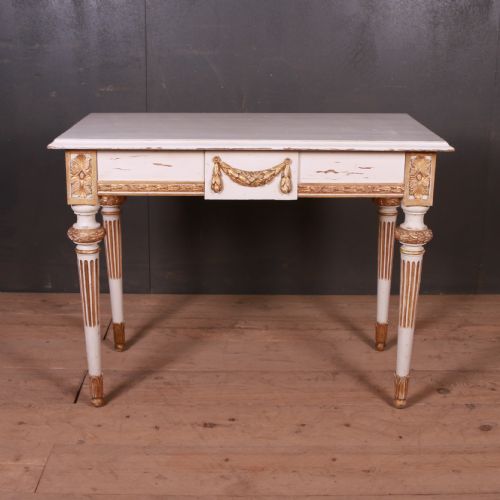
Neoclassical Painted Dressing Table
A neoclassical painted dressing table brings refined classical proportions and crisp painted surfaces to a bedroom scheme, offering both daily utility and distinct historical character.
Neoclassical Painted Dressing Table
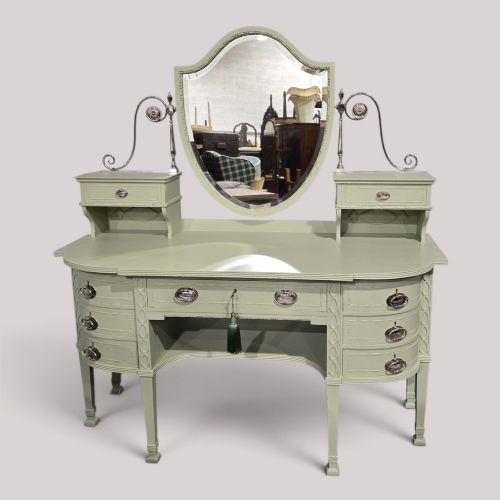
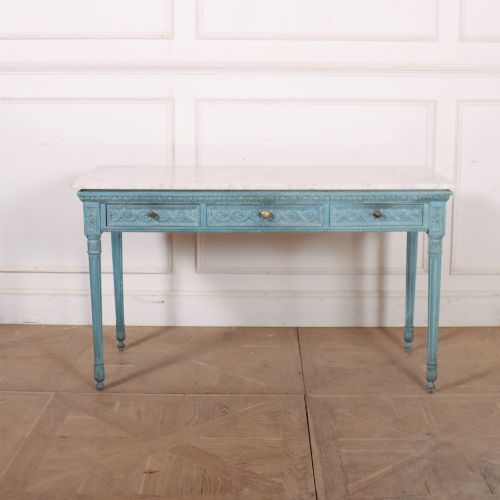
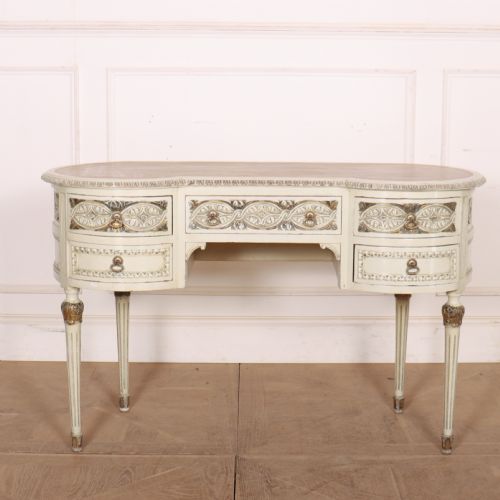
A neoclassical painted dressing table embodies the restrained geometric forms and classical ornamentation typical of the nineteenth century. These pieces integrate structured lines with decorative surfaces, frequently manifesting as dressing tables, writing desks, and side tables.
The versions most commonly encountered on this page originate from nineteenth-century European workshops, encompassing Swedish, French, and Italian iterations. Makers employed distinct regional interpretations of neoclassical, Gustavian, and Louis XVI styles to shape these functional items.
Associated seating such as stools and benches frequently accompanies the primary tables to form a complete dressing arrangement. Each object demonstrates the period's preference for balanced proportions and light, painted finishes over heavy dark timbers.
Materials and construction methods
Construction relies primarily on painted wood and beech, providing a stable structural carcass for subsequent decorative treatment. Craftsmen applied paint directly to the wooden surfaces, often incorporating gilt wood and brass details to highlight structural profiles.
Selected pieces integrate contrasting materials such as marble tops and glass components to increase durability and visual texture. Paint finishes range from simple monochrome schemes to intricate decorative paintwork executed by hand.
Neoclassical Painted Dressing Table Retail Price Guide 2026
Typical asking prices for neoclassical painted dressing table among the pieces listed under this phrase on Sellingantiques today, from the lower quarter to the upper quarter. They describe what is for sale here now, not the wider market.
Some dressing tables preserve untouched decorative paintwork that has survived over a century of powder and perfume.
Distinguishing quality across examples
Quality rests upon the preservation of the original decorative paintwork and the crispness of any carved wooden elements. Examples retaining untouched historical surfaces command greater attention than those with later repainting.
The execution of the joinery and the selection of secondary timbers indicate the standard of workshop production. Finer pieces display harmonious proportions and integrated brass hardware that complement the classical design without overwhelming the painted ground.
The Neoclassical Painted Dressing Table Glossary
- Neoclassical
- A style drawing inspiration from the classical art and architecture of ancient Greece and Rome. It prioritises symmetry, straight lines, and restrained ornamentation.
- Gustavian
- The Swedish interpretation of French neoclassical design, characterised by pale painted finishes and simplified classical motifs. This style emerged during the late eighteenth century and persisted through the nineteenth.
- Gilt wood
- Wood that has been coated with a thin layer of gold leaf or gilt powder. It provides metallic contrast against painted wooden surfaces.
- Serpentine front
- A furniture front characterised by a concave central section flanked by two convex curves, or the reverse. This undulating shape adds movement to case pieces and side tables.
- Biedermeier
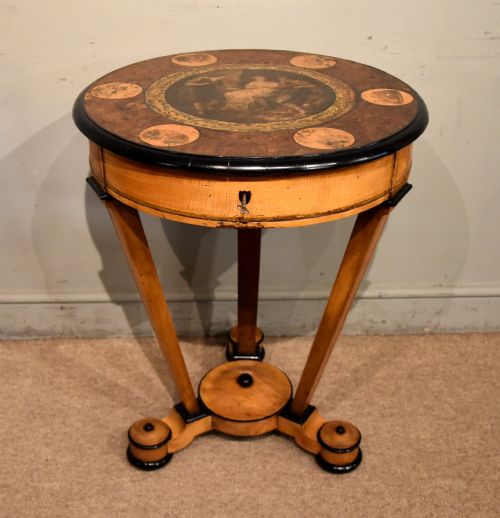
- A Central European style developing during the nineteenth century that favours utilitarian comfort and clean lines over excessive ornamentation. It often utilises local woods and restrained neoclassical forms.
Neoclassical Painted Dressing Table: Frequently Asked Questions
How do I care for antique painted wood?
Antique painted wood requires gentle maintenance to preserve delicate surface layers. Dusting with a soft, dry cloth prevents particle buildup without harming the finish.
Keep these pieces away from direct sunlight and excessive moisture fluctuations to protect both the timber substrate and the historic paintwork.
Where were these painted tables made?
These tables originate from various European workshops active during the nineteenth century. Swedish, French, and Italian makers produced distinct regional variations of the neoclassical style.
Swedish pieces frequently display pale Gustavian palettes, while French and Italian examples often incorporate more elaborate carved elements and gilt wood highlights.
Are stools usually sold with these tables?
Stools and benches sometimes accompany dressing tables as part of a matched or period-appropriate grouping. Pairs of antique Swedish stools also appear independently within these listings.
Buyers often pair dressing tables with contemporary or period seating when original stools are absent from the ensemble.