



Painted Wood Dressing Table
These painted wood dressing table pieces combine practical surface space with decorative painted finishes across several centuries of design.
Painted Wood Dressing Table
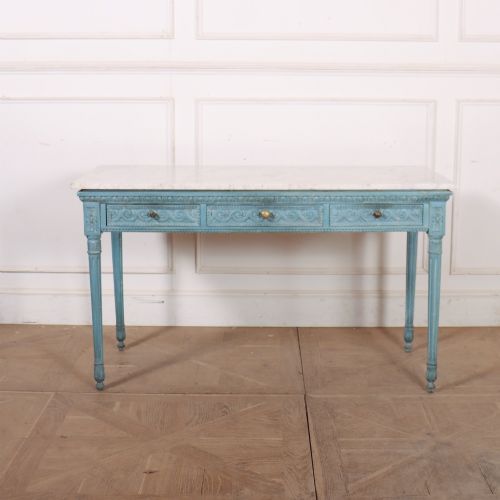
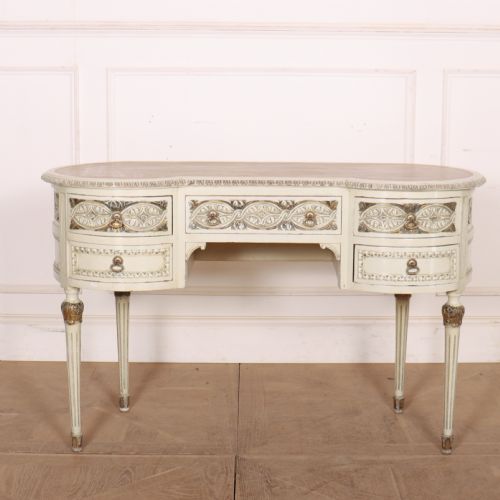
When you examine a painted wood dressing table on this page, you are looking at items designed for personal grooming and writing that feature applied decorative paint finishes. The selection ranges from compact Victorian dressing mirrors and satin birch dressing table chests to grander Sheraton Revival pieces equipped with matching stools.
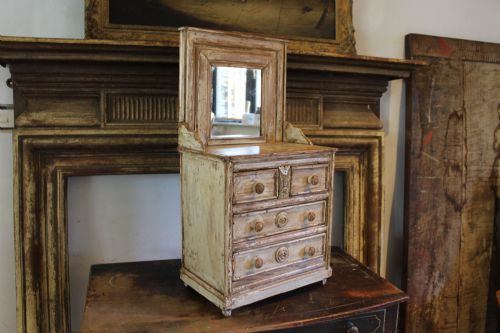
You are most likely to meet pieces originating from the nineteenth century, including Victorian examples alongside French provincial and Louis XV style variants. Forms stretch beyond standard tables to incorporate miniature chests of drawers, low boys, and specialised shaving stands fitted with adjustable vanity mirrors.
How they were made
The primary construction relies on timber carcases, predominantly pine, mahogany, and satin birch, which provide a stable foundation for decorative treatment. Artisans applied lead or oil-based paints directly to the wood, sometimes executing intricate stencilling or hand-painted motifs across the surface.
Hardware details such as brass handles, metal mounts, and pivoting glass mirror plates were integrated to complete the functional aspects of the furniture. Upholstered elements on accompanying stools utilise traditional stuffing techniques housed within painted wooden frames.
Object types span side tables, console tables, stools, desks, dressing tables, footstools, dressing mirrors, and miniature chests of drawers.
What varies in quality
The standard of a painted wood dressing table rests largely on the preservation and execution of its surface decoration, whether original paintwork or later embellishment. Pieces demonstrating crisp stencilling, coherent patination, and undisturbed decorative schemes separate themselves from lesser finished examples.
Structural integrity of the underlying timber carcase and the quality of secondary woods like pine or satin birch dictate overall durability. The integration of period hardware, original glass mirror plates, and matching seating components elevates the cohesion of the complete ensemble.
Whytock and Reid·Gillows
The Painted Wood Dressing Table Glossary
- Dressing table
- A low table or chest equipped with drawers and a mirror, used while applying makeup or arranging hair. These items frequently incorporate surface painting.
- Console table
- A table supported by wall brackets or console legs, often placed against a wall in a hallway or bedroom.
- Low boy
- A small English table with drawers, standing on relatively tall legs, commonly produced in the eighteenth century.
- Shaving stand
- A specialist piece of furniture featuring an adjustable vanity mirror and small surface area designed for personal grooming.
- Tray back
- A table top finished with a raised gallery border around the edges to prevent small objects from rolling off.
Painted Wood Dressing Table: Frequently Asked Questions
What periods do these pieces date from?
The listings encompass items spanning the eighteenth, nineteenth, and early twentieth centuries, with a strong representation of Victorian and Edwardian examples.
Craftsmanship from these eras often incorporates regional British and French stylistic influences, ranging from Georgian proportions to later revival movements.
How do I care for original painted surfaces?
Original painted finishes require gentle dusting with a dry microfibre cloth and protection from direct sunlight and excessive moisture. Avoid harsh chemical cleaners that can lift or dissolve historic paint layers.
Maintaining stable indoor humidity prevents the underlying timber from expanding or contracting, which preserves the bond between the wood and the paint.
Were dressing tables always sold with mirrors?
Many dressing tables were manufactured as complete units with attached or pivoting mirrors, while others functioned purely as writing or side tables until mirrors were added later.
Standalone dressing mirrors and tabletop vanity glasses were frequently placed atop chests of drawers to serve the same grooming purpose.
What is the difference between a console table and a side table?
A console table is traditionally designed to be fixed against a wall and may rely on brackets for support, whereas a side table stands independently on four legs.
Both forms appear frequently in painted finishes and served versatile decorative and functional roles within period sitting rooms and bedrooms.