

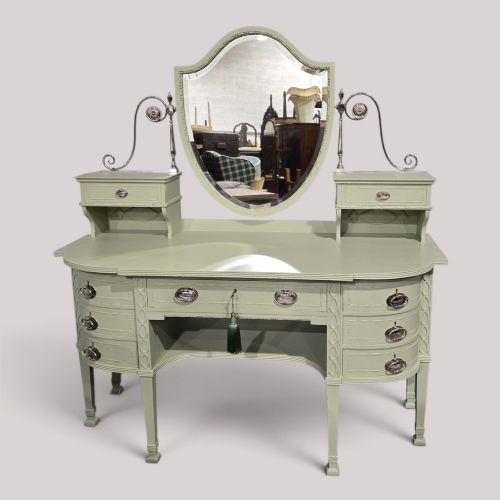


Painted Vanity Unit
A painted vanity unit brings decorative colour and practical surface space to a bedroom, combining functional timber furniture with hand-finished surfaces.
Painted Vanity Unit
A painted vanity unit encompasses dressing tables, washstands, and dressing chests designed for personal grooming and domestic utility. These pieces incorporate surfaces for basins or mirrors, integrating storage drawers with decorative finishes.
Buyers encountering this selection will most frequently find late nineteenth-century and turn-of-the-century examples, including Edwardian Revival and Victorian forms. These items utilise pine, softwood, and satinwood, often featuring original painted decoration or stencilled details.
Forms range from rustic farmhouse washstands in pine to refined satinwood dressing tables and walnut chests with swing mirrors. Earlier Regency country dressers also appear, alongside French decorative pieces.
How they were made
Construction relies upon traditional cabinetmaking timbers such as pine, softwood, walnut, and satinwood, joined to form durable washstands and dressing chests. Metal elements like brass and forged iron provide structural support and hardware fittings.
Surfaces receive decorative treatments including scumble glazing, stencilling, and original hand-painted finishes to enhance the grain or provide solid colour. Glass components are integrated into swinging mirrors attached to the upper sections of dressing tables.
Painted Vanity Unit Retail Price Guide 2026
Typical asking prices for painted vanity unit among the pieces listed under this phrase on Sellingantiques today, from the lower quarter to the upper quarter. They describe what is for sale here now, not the wider market.
Some washstands in the selection rely on forged iron frames, proving that even a morning wash could involve a touch of blacksmith artistry.
What varies in quality
Quality rests upon the preservation of original decorative paintwork and the integrity of the underlying timber construction. Pieces retaining untouched stencilling or scumble glazes hold greater character than those with later repainting.
The sophistication of the timber selection, from standard softwood to figured satinwood or walnut, marks the distinction between utilitarian farmhouse pieces and refined revival furniture.
The Painted Vanity Unit Glossary
- Dressing table
- A low bedroom table fitted with one or more drawers and usually supporting a mirror, used while grooming. These items form a central category within painted bedroom furniture.
- Washstand
- A piece of furniture designed to hold a basin and pitcher for washing, often constructed from pine or softwood. They provide a compact surface suitable for domestic ablutions.
- Scumble glaze
- A translucent decorative paint technique applied over a base coat and manipulated with combs or brushes to imitate wood grain. It creates textural depth on pine and softwood surfaces.
- Swing mirror
- A looking glass mounted on vertical pivots between two upright posts, allowing the angle to be adjusted. These are frequently attached to dressing chests and tables.
- Satinwood
- A durable, light yellow hardwood with a natural sheen, favoured for fine cabinetmaking during revival periods. It provides a smooth canvas for painted decoration.
Painted Vanity Unit: Frequently Asked Questions
What is a painted vanity unit?
A painted vanity unit is a functional bedroom furnishing designed for personal grooming, encompassing dressing tables, washstands, and dressing chests.
These pieces combine timber construction with decorative paint finishes, often incorporating drawers and mirrors.
How were washstands used historically?
Washstands served as dedicated bedroom stations for morning washing before plumbed bathrooms became common.
They held basins, pitchers, and toiletries on sturdy wooden surfaces.
What woods are used in these pieces?
Makers utilised a range of timbers depending on the intended finish and utility of the furniture.
Common materials include pine, softwood, walnut, and satinwood.