
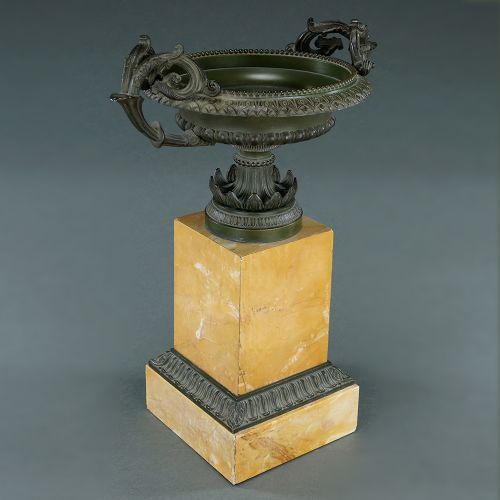
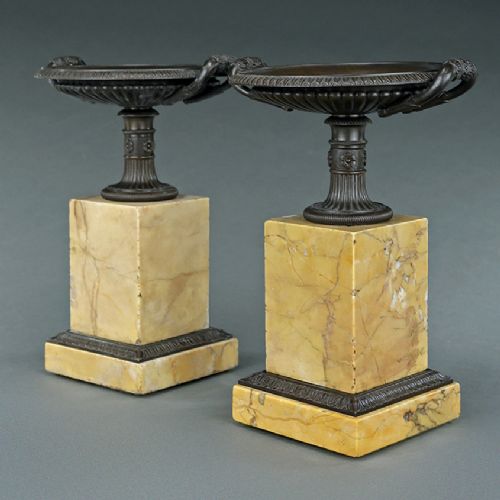
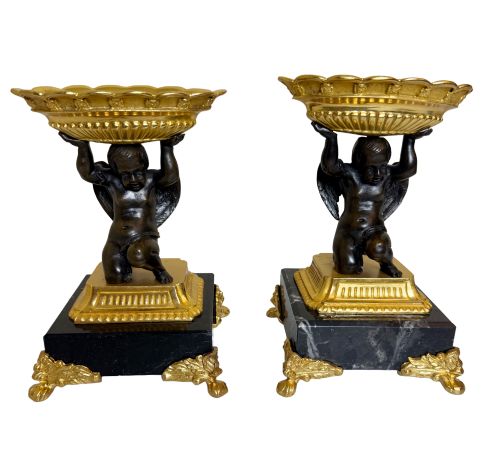
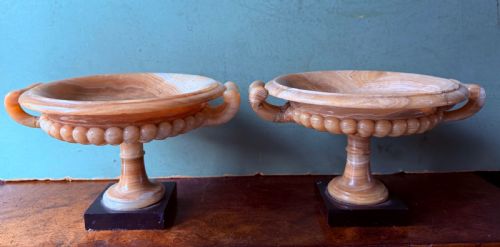
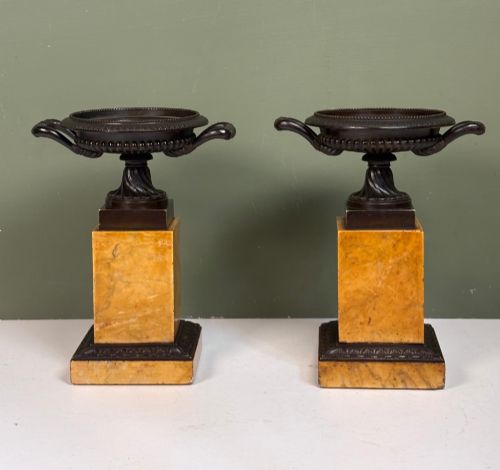
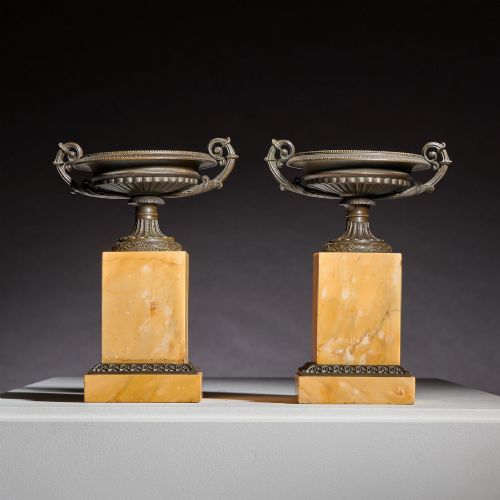
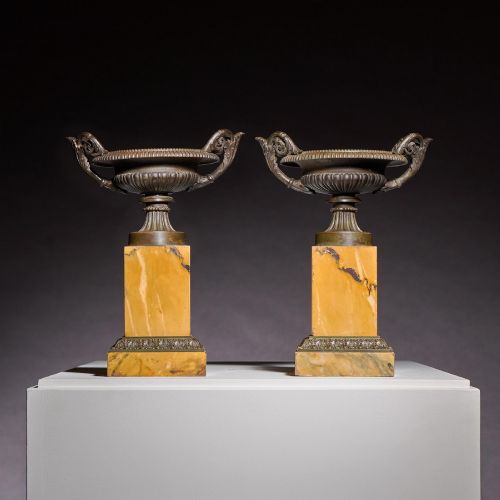
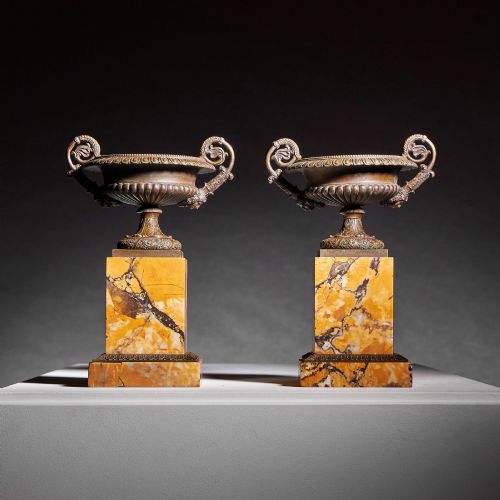


Neoclassical Marble Tazza
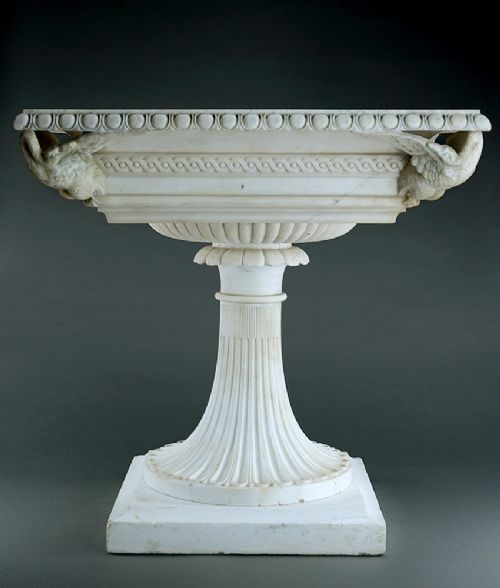
These neoclassical marble tazza pieces are classical pedestalled vessels created as decorative objects and souvenirs.
Neoclassical Marble Tazza
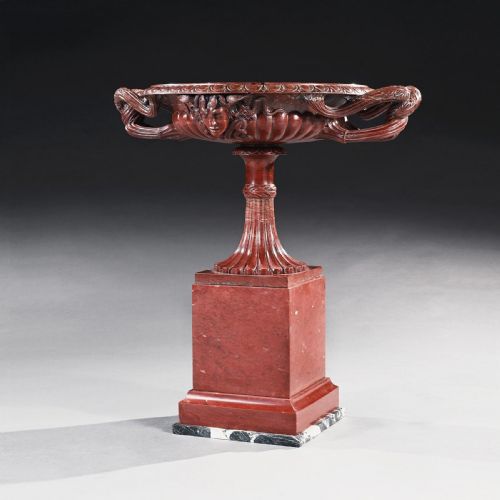
A neoclassical marble tazza is a classical pedestalled vessel fashioned as a decorative bowl, urn, or lidded cup, frequently originating from Italian and French workshops during the 18th and 19th centuries. The pieces on this page are predominantly Grand Tour souvenirs and French Empire decorative objects produced in the 19th century.
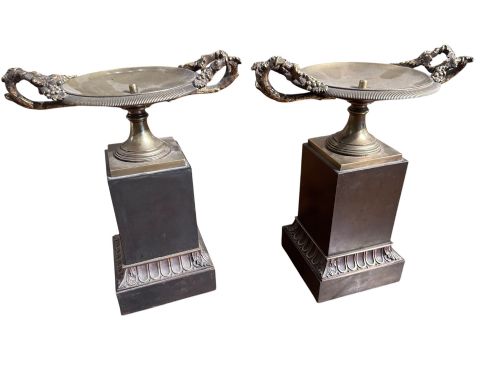
Buyers encounter pedestal bowls, decorative urns, and tazze resting on square or block bases made from black, Siena, or white marble. Many examples take the form of pairs, incorporating bronze, ormolu, and gilt metal mounts alongside carved stone.
Defining qualities in neoclassical marble tazza pieces
Quality rests upon the choice and figure of the marble, the crispness of the carved detail, and the integration of bronze or ormolu mounts. Finer examples display richly figured stones such as rosso antico or Siena marble paired with finely chased metalwork.
Scale and proportion separate standard souvenir items from monumental pieces, with larger pairs and substantial library tazzas commanding greater presence.
Listings feature 19th-century French Empire and Italian Grand Tour pieces incorporating Siena marble, rosso antico, bronze, and ormolu.
Benedetto Boschetti
The Neoclassical Marble Tazza Glossary
- Tazza
- A shallow bowl on a pedestal foot, used as a decorative vessel or centrepiece.
- Grand Tour
- A traditional journey through Europe undertaken by upper-class young men in the 18th and 19th centuries, resulting in the acquisition of art and souvenirs such as marble tazze.
- Ormolu
- Gilded bronze used for mounts and decorative accents on furniture and objects.
- Rosso Antico
- A deep red antique marble prized by classical sculptors and later revivalists.
- Siena Marble
- A distinctive yellow Italian marble with dark grey or brown veining.
Neoclassical Marble Tazza: Frequently Asked Questions
What is a neoclassical marble tazza used for?
These vessels served primarily as decorative objects, ornamental urns, and souvenir display pieces rather than for serving food or drink.
In 19th-century interiors and libraries, they were placed on mantelpieces, pedestals, and bookcases as classical ornaments.
How do I identify a Grand Tour tazza?
Grand Tour tazze are typically Italian souvenirs created in the 18th or 19th centuries after ancient archaeological models.
They frequently combine carved marble, alabastro egiziano, or rosso antico with bronze mounts and black marble block bases.
Are these pieces always sold in pairs?
Many examples appear as matched pairs of tazze or urns, though single pieces and monumental library tazze also occur.
Pairs were often produced for symmetrical placement on mantelpieces or side tables in neoclassical rooms.
What materials are used in these tazze?
The primary material is marble, including varieties such as Siena, black marble, white marble, and rosso antico.
Bronze, gilt bronze, ormolu, and malachite also appear as structural elements, mounts, and decorative bases.