


Neoclassical Mahogany Carvers
Neoclassical mahogany carvers bring architectural discipline and warm timber tones to a dining table.
Neoclassical Mahogany Carvers
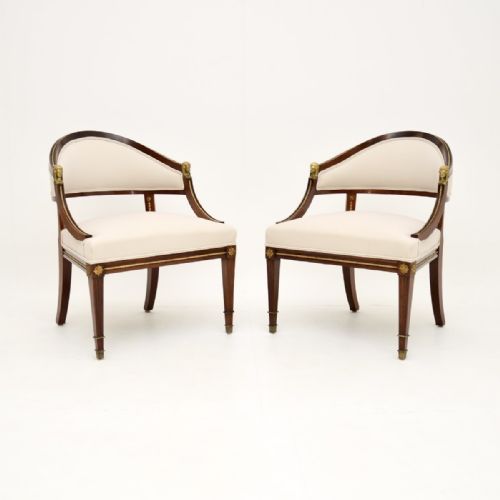
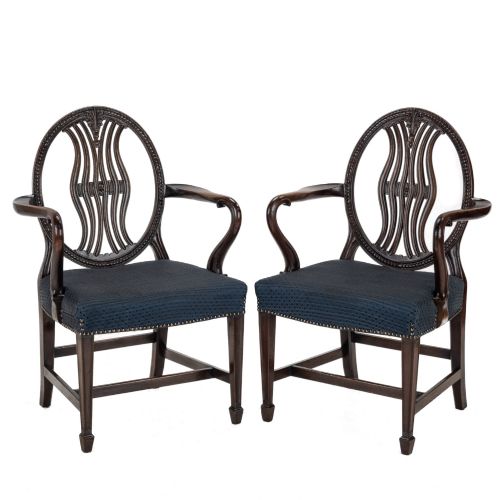
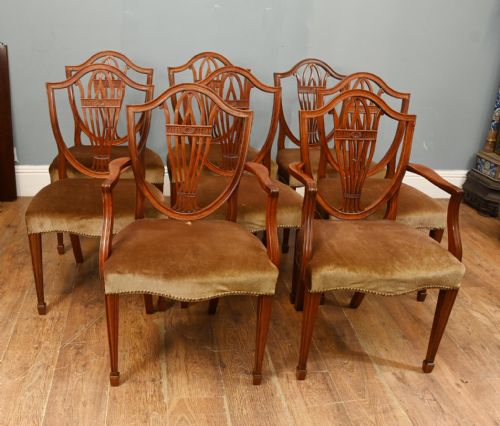
Neoclassical mahogany carvers are armchairs designed to sit at the head and foot of a dining table, embodying the restraint and symmetry of the Neoclassical style. When you search for neoclassical mahogany carvers, you encounter pieces that span from the eighteenth century through the Georgian and Regency periods, alongside later revivals from the nineteenth and early twentieth centuries.
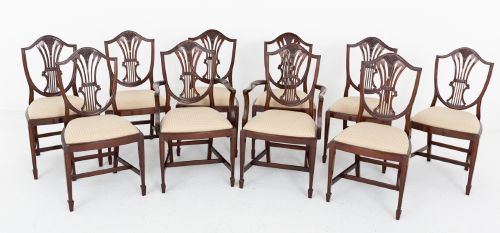
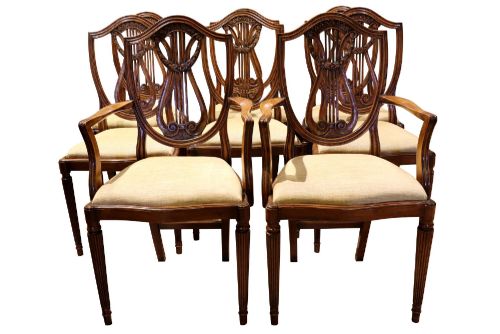
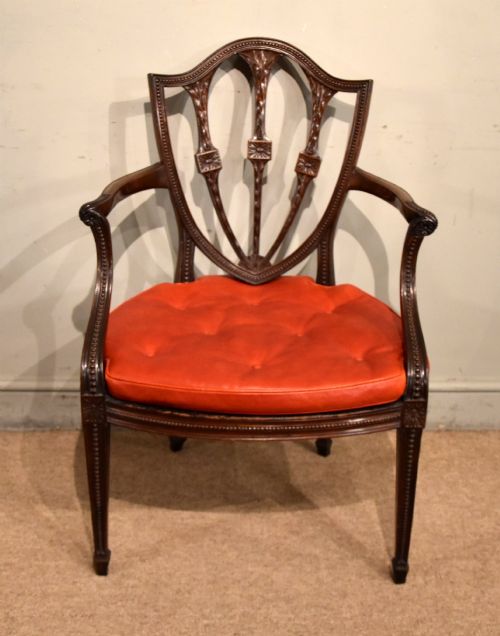
The form typically manifests as dining chairs or armchairs with upright proportions, straight or subtly tapered legs, and open arms. Makers working in the manner of Hepplewhite, Sheraton, and Swedish Neoclassical traditions created these seating options using rich timber, often incorporating shield backs, lyre motifs, or geometric splats.
While original eighteenth-century and Georgian examples appear alongside nineteenth-century iterations, twentieth-century revivals also populate the selection. These armchairs balance decorative carving with functional seating, providing sturdy structural support while maintaining a formal silhouette.
What varies in quality
Quality rests significantly on the crispness of the hand-carving and the selection of the timber figure. Superior examples exhibit deep, clean definition in motifs like the lyre or shield back, whereas lesser pieces show softer, shallower execution.
The weight and stability of the mahogany frame indicate the integrity of the original construction. Pieces with tight joinery and well-balanced proportions command greater appreciation than those with loose joints or heavy replacement timber.
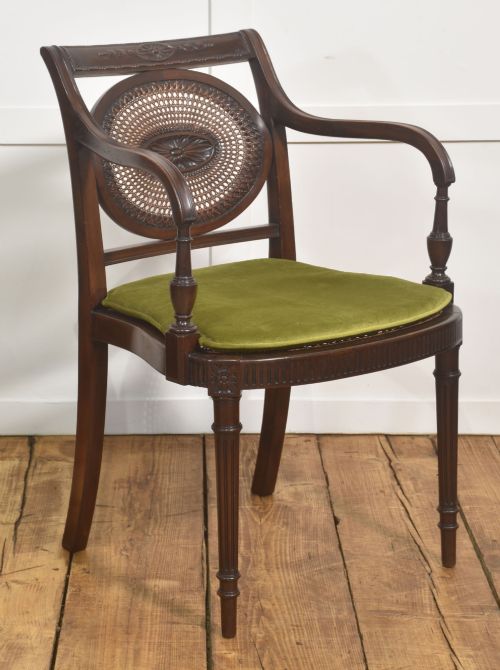
Upholstered elements across these chairs incorporate fabric, velvet, leather, damask, and textile seat coverings alongside exposed satinwood and brass details.
The Neoclassical Mahogany Carvers Glossary
- Carver
- An armchair designed specifically to sit at the ends of a dining table, offering armrests for comfort. These chairs traditionally match a set of standard side chairs.
- Hepplewhite
- A style of eighteenth-century English furniture characterised by lighter proportions, shield-shaped chair backs, and tapered legs. It draws heavily from French neoclassical design.
- Sheraton
- A late eighteenth-century furniture style defined by straight lines, rectangular or wheel backs, and neoclassical ornamentation. Thomas Sheraton published influential design books that shaped this aesthetic.
- Lyre back
- A chair back featuring an open splat shaped in the precise form of a classical stringed musical instrument. This motif appears frequently in Regency and revival seating.
- Satinwood
- A durable, yellowish-toned hardwood utilised for contrasting inlay work and decorative banding on mahogany furniture. It provides visual brightness against darker primary timbers.
Neoclassical Mahogany Carvers: Frequently Asked Questions
What defines a carver chair?
A carver is an armchair traditionally placed at the head and foot of a dining table to accompany standard side chairs.
These pieces provide structural armrests while matching the decorative scheme of the broader dining set.
How do I spot a revival piece?
Revival pieces, such as those from the Sheraton Revival period, imitate eighteenth-century aesthetics using nineteenth- or twentieth-century manufacturing techniques.
Examination of the timber ageing, tool marks, and secondary woods helps differentiate an original Georgian piece from a later interpretation.
Can I use these in a modern interior?
These armchairs integrate easily into contemporary rooms by adding textural warmth and historical contrast against minimalist architecture.
They function well as desk chairs, accent seating, or head-of-table dining chairs.
What is Swedish Neoclassical style?
Swedish Neoclassical design combines the austere symmetry of continental neoclassical movements with lighter, brighter finishes suited to northern interiors.
Pieces from this tradition often feature restrained fluting and refined mahogany framing without excessive ornamentation.