
Neoclassical Inlaid Table
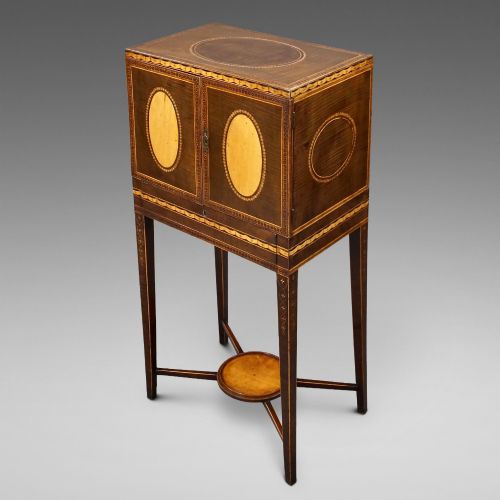
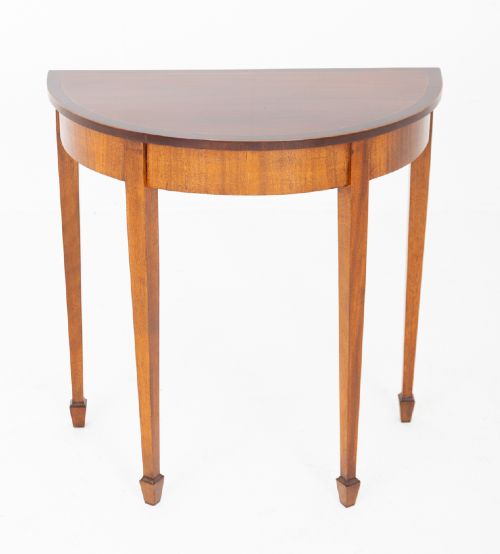
A neoclassical inlaid table brings symmetry and refined marquetry into a room, spanning forms from demi-lune console tables to Pembroke tables.
Neoclassical Inlaid Table
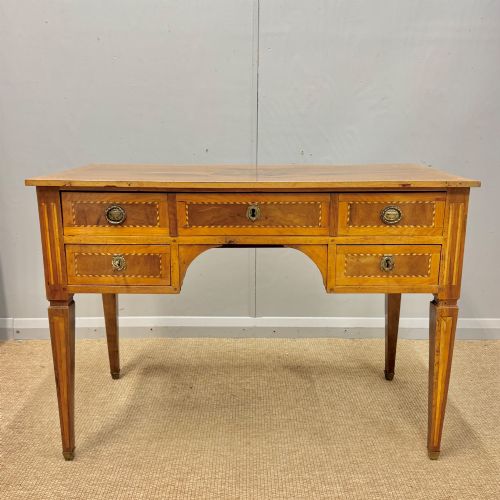
When you search for a neoclassical inlaid table, you encounter forms designed for display and polite society, including card tables, side tables, and occasional tables. These pieces emerge primarily from the eighteenth and nineteenth centuries, alongside revival periods into the twentieth century, reflecting classical architectural lines and balanced proportions.
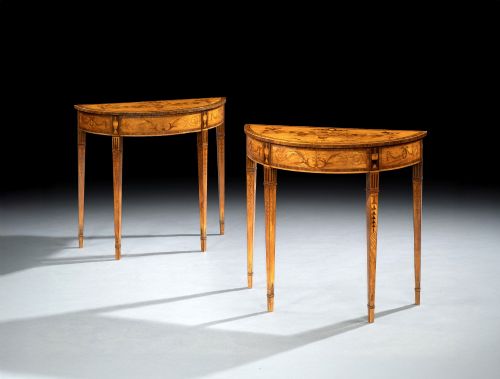
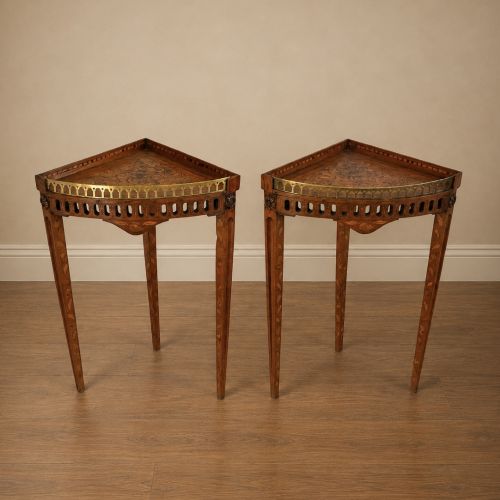
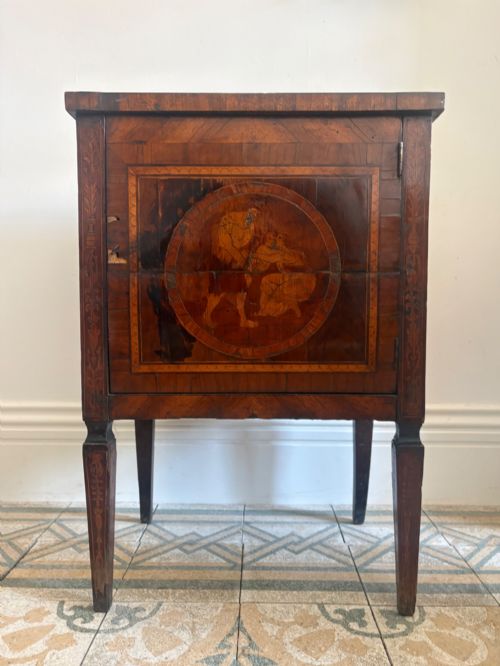
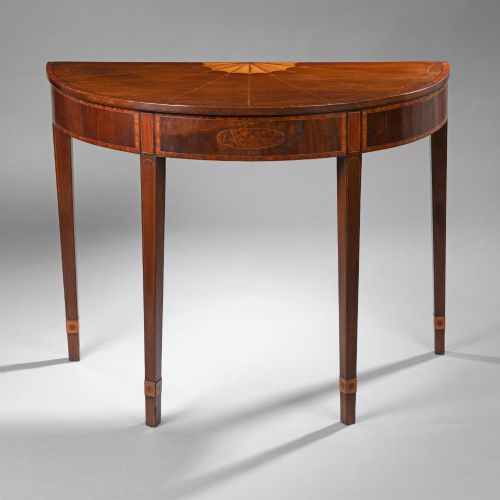
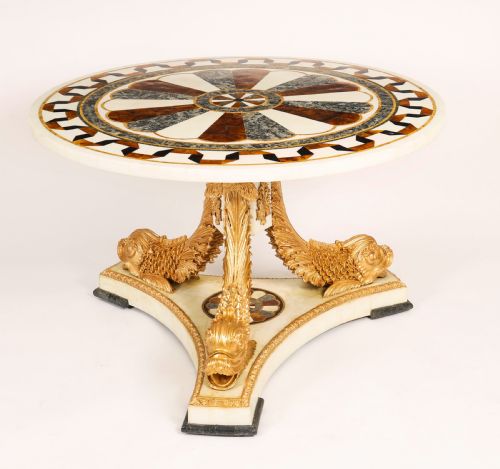
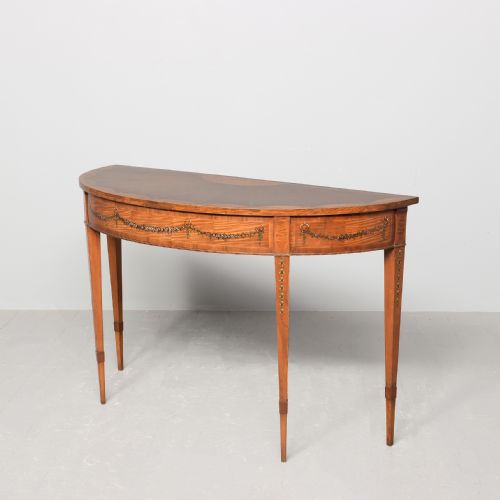
The demi-lune console table represents one of the most common configurations on this page, often paired for symmetry against a wall. Alongside these, you find Pembroke tables, freestanding centre tables, and writing desks produced in both English workshops and continental centres like Italy and France.
How they were made
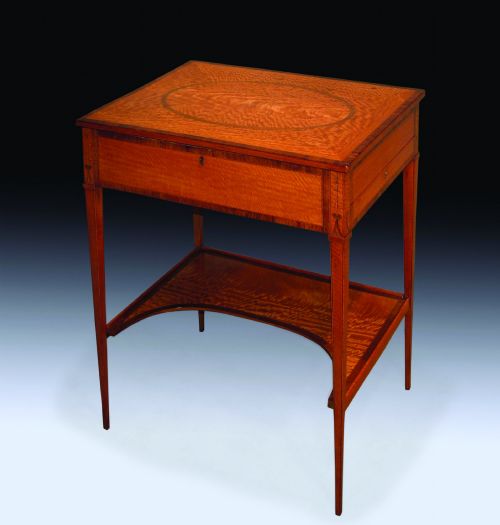
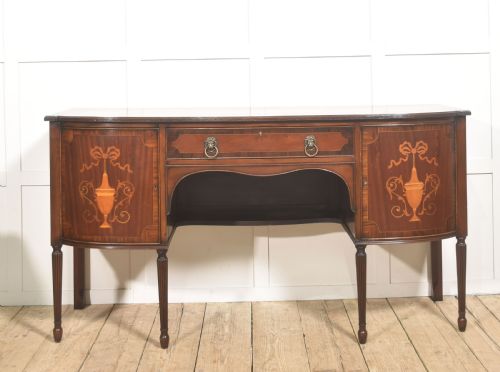
Cabinet makers constructed the carcases using foundational timbers such as mahogany, walnut, and satinwood, frequently applying contrasting veneers like harewood, amboyna, and fruitwood. Marquetry patterns relied on precise hand-cut sections of various woods fitted together to create floral or geometric motifs.
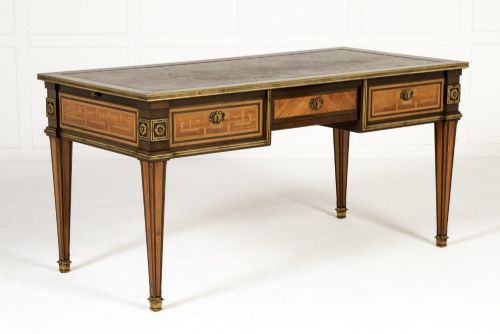
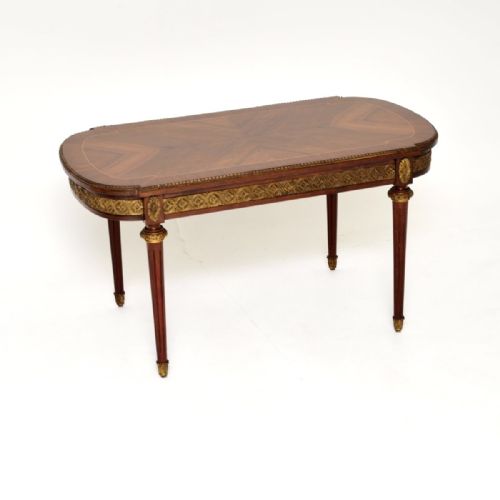
Many examples incorporate decorative metalwork, utilising brass galleries, ormolu mounts, and specialised hardware. Marble tops, including specimen and purple marble inserts, appear on Italian and French centre tables and consoles alongside hand-painted elements.
Listings feature items from the eighteenth, nineteenth, and twentieth centuries, incorporating Georgian, Sheraton, and Louis XVI styles.
What varies in quality
The precision of the marquetry and the choice of secondary timbers dictate the upper tiers of the range. Tables featuring dense satinwood veneers, intricate contrasting stringing, and well-executed painted details demonstrate superior craftsmanship compared to plainer revival pieces.
Integration of mounts and structural elements such as brass galleries distinguishes workshop production. Pieces retaining original marble tops and consistent patination across the timber surfaces command greater consideration from collectors.
Pietro Ferrario
The Neoclassical Inlaid Table Glossary
- Demi-lune
- A half-moon shape popular for console and side tables designed to sit flush against a wall. This profile allowed tables to occupy minimal floor space while providing a decorative surface.
- Marquetry
- The art of applying pieces of veneer to a structure to form decorative patterns and pictures. Craftsmen used various coloured woods to achieve tonal depth.
- Ormolu
- Gilt bronze mounts applied to furniture for decorative effect. This technique was prevalent on French and high-status English pieces.
- Pembroke table
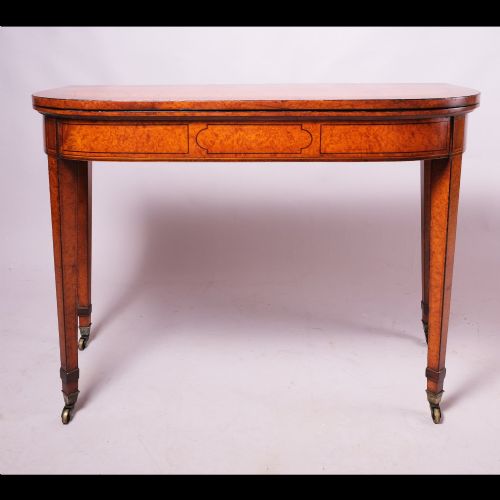
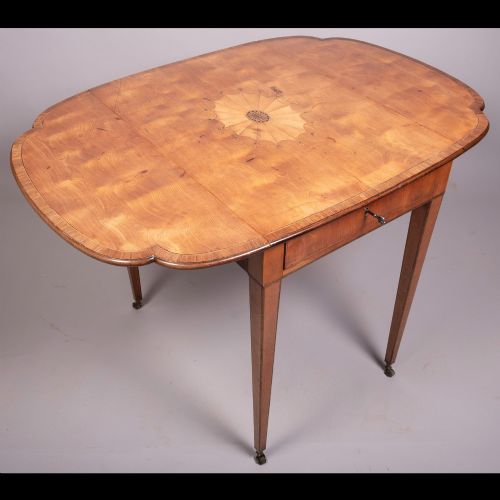
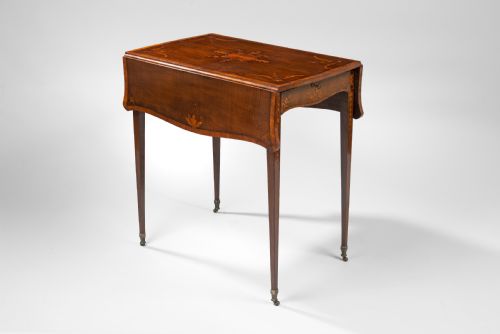
- A small rectangular table with hinged drop flaps on either side. It typically includes a single drawer and slender legs.
- Satinwood
- A durable timber with a natural golden lustre used extensively in eighteenth-century and revival furniture. It provided a pale canvas for detailed inlay work.
Neoclassical Inlaid Table: Frequently Asked Questions
How do I identify a Sheraton period table?
Sheraton pieces typically display tapered legs, satinwood veneers, and restrained classical inlay work influenced by late eighteenth-century design manuals. The proportions remain light and graceful, avoiding heavy carving.
Look for fine stringing, symmetrical marquetry panels, and structural elements like tambour doors or folding leaves characteristic of the era.
Where were demi-lune tables placed historically?
Demi-lune tables stood against drawing room walls, often beneath mirrors or flanked by matching side pieces. Their flat backs allowed them to occupy minimal space.
They served as display surfaces for porcelain and decorative objects or functioned as card tables when fitted with folding tops.
What is the difference between eighteenth-century and revival pieces?
Eighteenth-century tables were built during the primary currency of the neoclassical and Sheraton styles, utilising period joinery and contemporary timbers. Revival pieces date from the nineteenth and twentieth centuries.
Revival furniture often employs similar satinwood and mahogany materials but can be identified through secondary woods, machine-cut veneers, and historical manufacturing marks.
How do I care for an antique inlaid table?
Protect antique wood and delicate marquetry from direct sunlight and extreme humidity fluctuations to prevent veneer lifting or timber splitting. Maintain a stable indoor environment.
Apply high-quality beeswax sparingly and buff gently with a soft cloth, avoiding modern liquid polishes that contain silicone.