
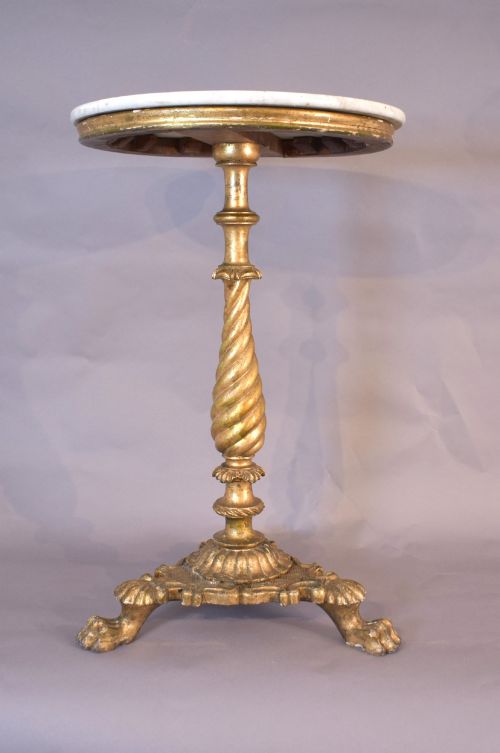
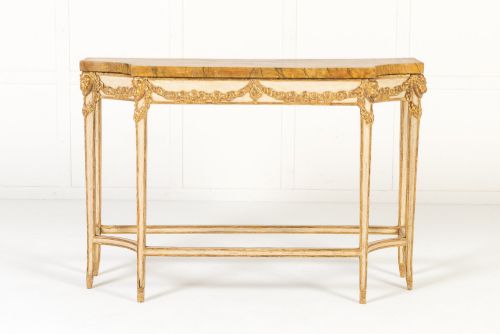
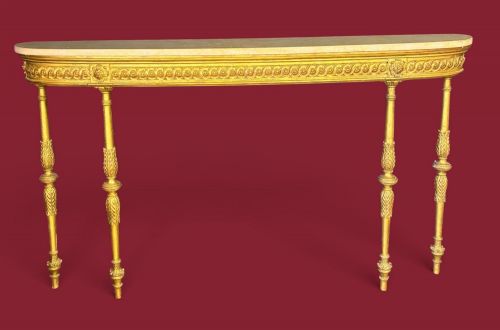


Neoclassical Giltwood Side Table
A neoclassical giltwood side table brings architectural discipline and metallic warmth into a room, framed by carved surfaces and stone tops.
Neoclassical Giltwood Side Table
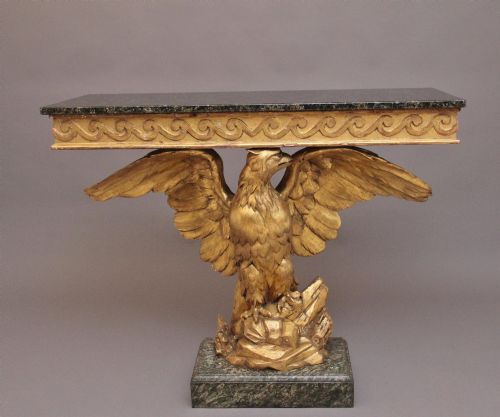
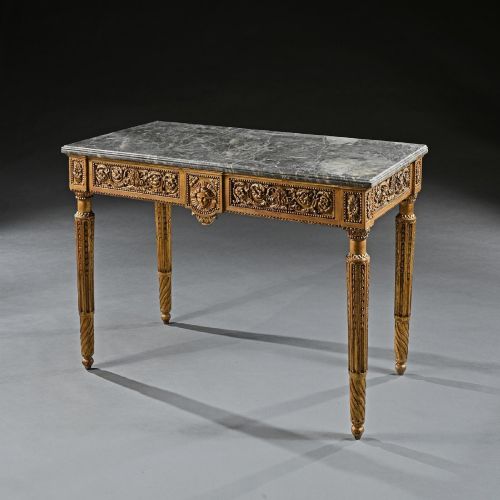
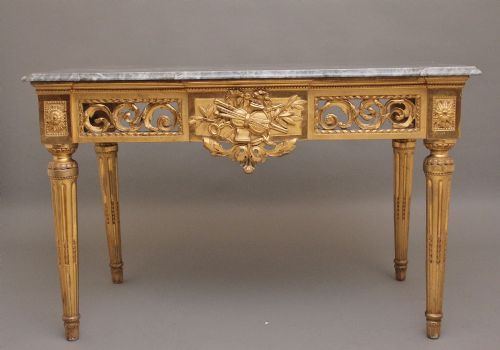
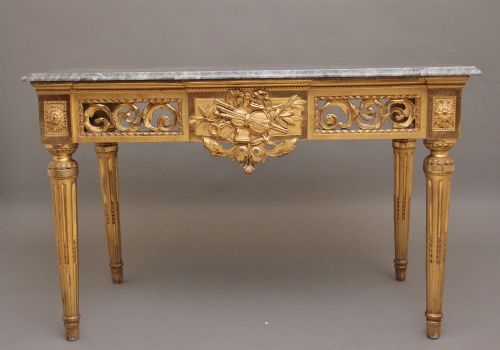
When searching for a neoclassical giltwood side table, buyers encounter formal serving and display surfaces designed with classical restraint. These pieces frequently appear as console tables and demi-lune forms set against walls, featuring rectangular or curved profiles.
The versions most commonly met on this page span the eighteenth and nineteenth centuries, alongside revival pieces from the early twentieth century. Italian, French, English and Swedish origins dominate the selection, often uniting carved wooden frames with heavy stone surfaces.
How they were made
Carpenters shaped the foundational structure using carved wood such as satinwood, applying gesso layers to smooth the surface before laying down gold leaf. This metallic application catches ambient light, highlighting the crisp linearity typical of the style.
Tops were frequently formed from marble, onyx or painted wood, fitted precisely to the supporting frame. Artisans integrated decorative mouldings and composition details to enhance the classical vocabulary of columns, friezes and floral motifs.
Listings feature pieces spanning the eighteenth, nineteenth and early twentieth centuries, constructed from giltwood, marble, satinwood and carved wood.
What varies in quality
Quality rests upon the crispness of the hand-carved relief work and the depth of the gilding on the wooden frame. Superior examples display sharply defined ornament rather than softened, mass-produced composition castings.
The integrity and weight of the fitted marble or stone top also separate standard items from finer pieces. Seamless integration between the stone slab and the supporting apron demonstrates superior craftsmanship.
The Neoclassical Giltwood Side Table Glossary
- Giltwood
- Wood coated with gold leaf or powder over a prepared gesso base. This finish provides the characteristic metallic sheen seen on period frames.
- Demi-lune
- A half-moon shape used for console and side tables designed to stand flat against a wall. This format saves floor space while offering a display surface.
- Console table
- A table supported by wall brackets or console legs rather than four independent vertical posts. These pieces were traditionally built to stand permanently against drawing room walls.
- Marquetry
- The art of applying pieces of veneer to a structure to form decorative patterns. It frequently incorporates contrasting timbers like satinwood.
Neoclassical Giltwood Side Table: Frequently Asked Questions
Where were these tables placed originally?
These tables stood primarily in formal reception rooms, entrance halls and drawing rooms against perimeter walls. They served as decorative surfaces for lamps, urns and decorative objects.
Their narrow footprints allowed them to occupy circulation spaces without obstructing movement through domestic interiors.
How do I distinguish eighteenth-century pieces from later revivals?
Eighteenth-century examples display hand-carved detailing executed with deep relief and tool marks visible on secondary timbers. Revival pieces from the nineteenth and twentieth centuries often rely on moulded composition ornaments.
Examining the construction joints and the wear patterns beneath the marble top helps clarify the age of the piece.
Are the marble tops original to the tables?
Many tables retain their original fitted marble or onyx slabs, cut specifically to follow the profile of the wooden frame. Rouge and white marble varieties are typical of the period.
Replacement tops do occur and can be identified by mismatched edge profiles or lack of historical grime on the underside.
How do I care for giltwood surfaces?
Giltwood requires dusting with a dry, soft brush and protection from direct sunlight and excessive moisture. The gold leaf layer is delicate and easily damaged by liquid cleaners or abrasive cloths.
Maintaining stable indoor humidity prevents the underlying gesso and wood from expanding and cracking.