


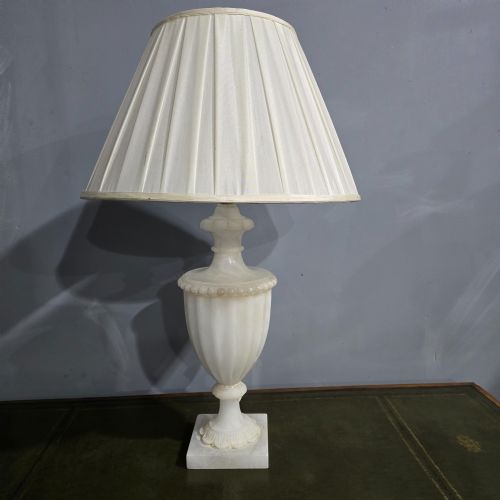


White Marble Accent Table
A white marble accent table brings a bright, cool surface to a room, combining solid stone with wood or bronze frames.
White Marble Accent Table
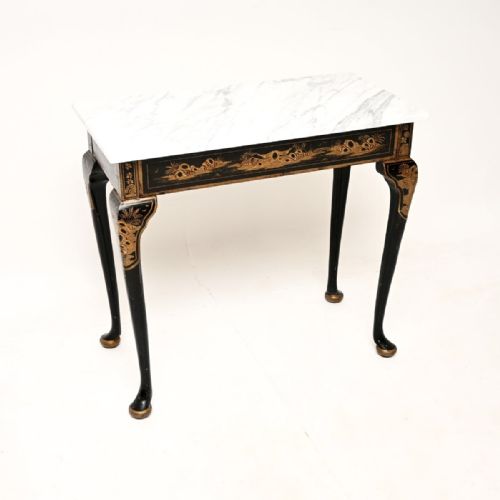
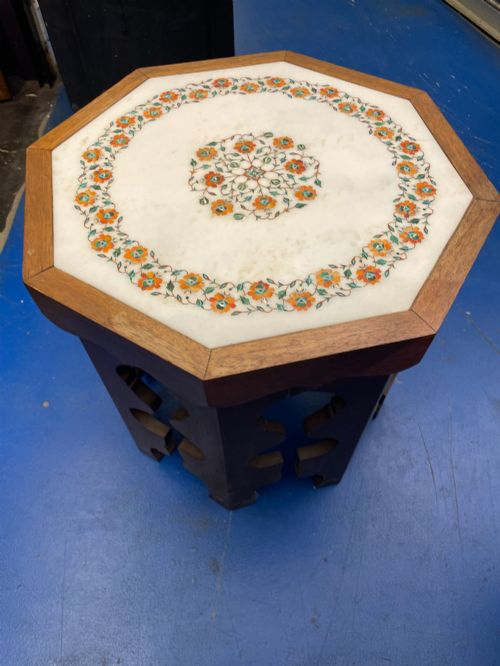
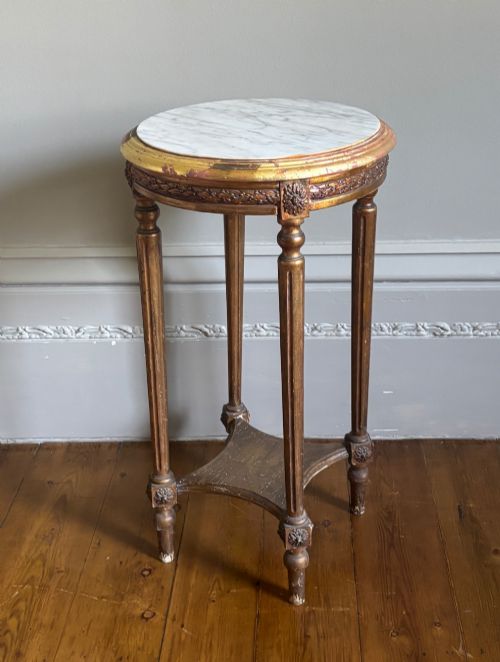
A white marble accent table combines a stone top with supporting structures ranging from 18th-century Italian Baroque lime wood to 19th-century French giltwood and early 20th-century painted wood. These pieces function primarily as side tables, bedside tables, centre tables, and occasional lamp tables within domestic interiors.
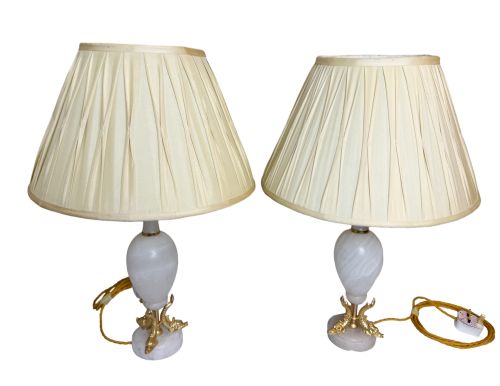
The materials paired with the stone include brass, fabric, gilt bronze, alabaster, and gold leaf, reflecting diverse historical styles such as Neoclassical, Louis XVI, and Victorian Chinoiserie. Buyers encounter formats dating from the mid-18th century through the Regency era and into the early 20th century.
Side tables and lamp tables dominate the selection, offering compact surfaces suitable for displaying objects or providing functional bedside storage. The integration of white marble provides a durable, reflective top that contrasts with carved wood and metal bases.
How they were made
The construction of these tables relies on combining quarried stone slabs with handcrafted wooden or cast metal frames. Lime wood, mahogany, and painted wood serve as common foundational timbers for the tables, often enhanced with carved detailing and gilded finishes.
Metal components such as brass and gilt bronze provide structural mounts and decorative trim, securing the stone tops to the pedestals or legs. Alabaster and marble are shaped and polished to create smooth upper surfaces, while gold leaf is applied manually to wooden carvings.
Listings feature white marble combined with brass, alabaster, and giltwood across 18th-century, 19th-century, and 1920s periods.
What varies in quality
The distinction between tiers of quality rests on the depth of hand-carving in the wooden or giltwood frames and the refinement of the bronze or brass mounts. Elaborate Italian Baroque lime wood carving or precise French Louis XVI gilt bronze detailing demonstrates superior workshop execution compared to simpler, plain-timber formats.
The selection and finishing of the stone top also determine the standing of the piece, with dense, finely polished white marble or alabaster representing a higher grade of material. The harmony between the weight of the stone and the structural integrity of the base dictates the overall longevity and balance of the furniture.
The White Marble Accent Table Glossary
- Gueridon
- A small circular table on a central pillar or three legs, frequently topped with marble. This French form gained popularity during the 19th century.
- Gilt Bronze
- Copper alloy cast and finished with a layer of gold, commonly used for decorative mounts on furniture. It is also known as ormolu.
- Alabaster
- A fine-grained, translucent stone used for lamp bodies and table elements. It takes a smooth polish similar to marble.
- Baroque
- An ornate style characterised by dynamic forms and rich surface decoration. It appears in Italian lime wood tables from the mid-18th century.
- Louis XVI Style
- A neoclassical design vocabulary featuring straight lines, symmetrical proportions, and classical motifs. It frequently incorporates painted wood and gilt bronze.
White Marble Accent Table: Frequently Asked Questions
How are these tables cleaned?
Clean white marble surfaces using a soft cloth dampened with mild, pH-neutral soap and water. Avoid acidic solutions that can etch the polished stone.
Dry the surface thoroughly after wiping to prevent water spots and protect any surrounding wood or gilt bronze mounts from moisture damage.
What periods do these pieces date from?
The pieces span from the mid-18th century through the Regency era and into the early 20th century. Examples include 1750s Italian lime wood designs and 19th-century French gueridons.
Later items comprise early 20th-century painted night tables and side lamps incorporating marble and alabaster elements.
Where were these tables used?
These tables served primarily as occasional furniture in formal sitting rooms, hallways, and bedrooms. Side and lamp tables provided convenient surfaces for illumination and decorative objects.
Night tables offered enclosed storage alongside beds, while larger centre tables stood as prominent focal points within domestic interiors.