

Neoclassical Fauteuils
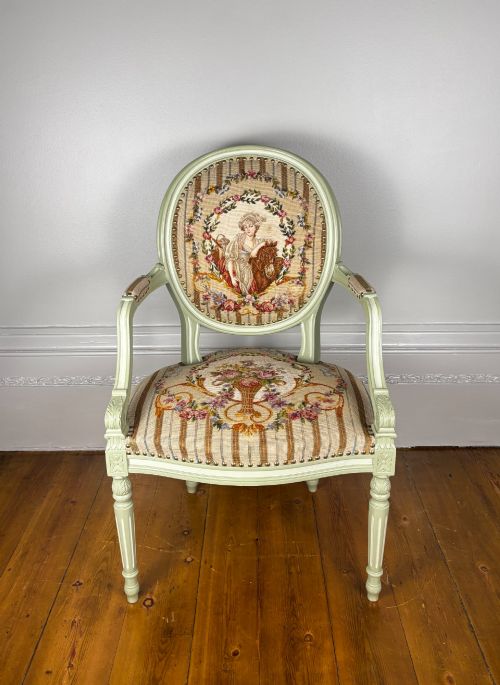
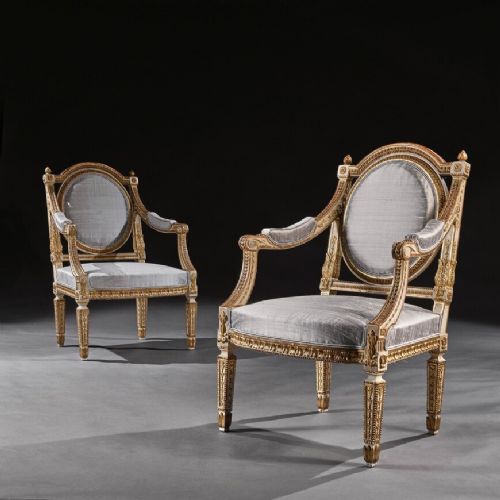
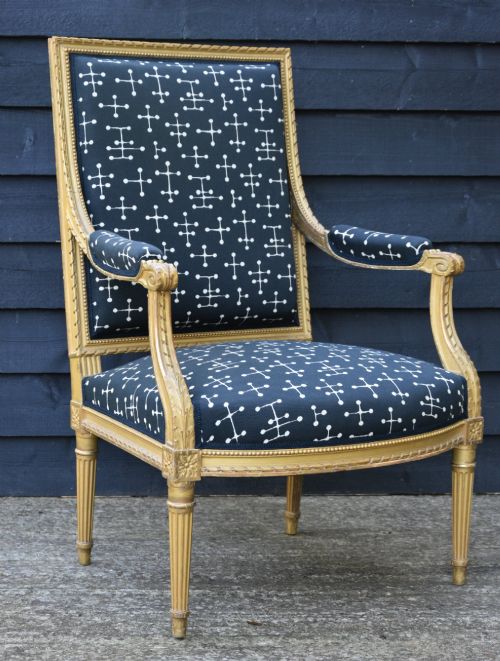
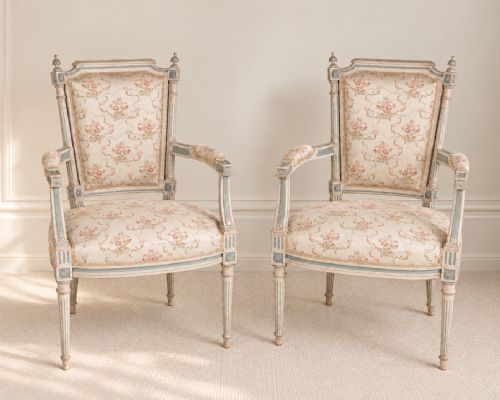
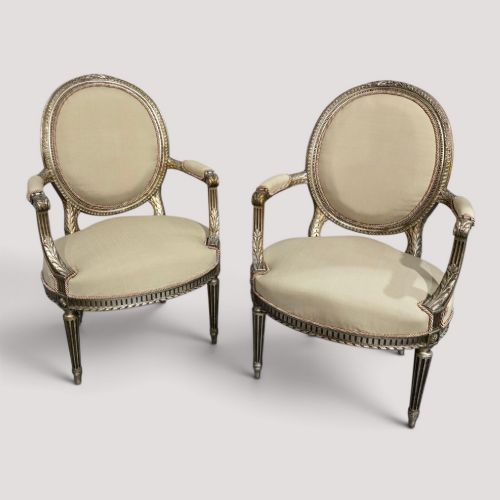
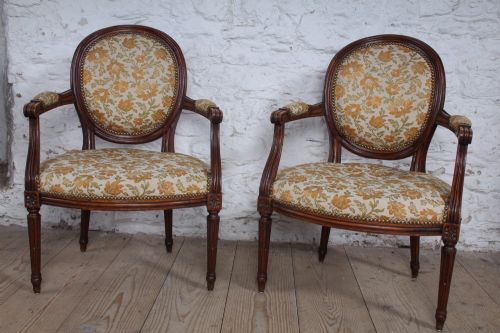
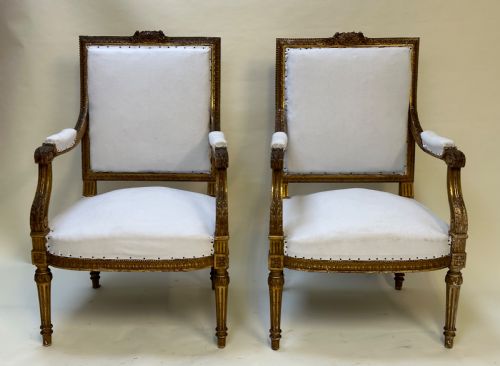
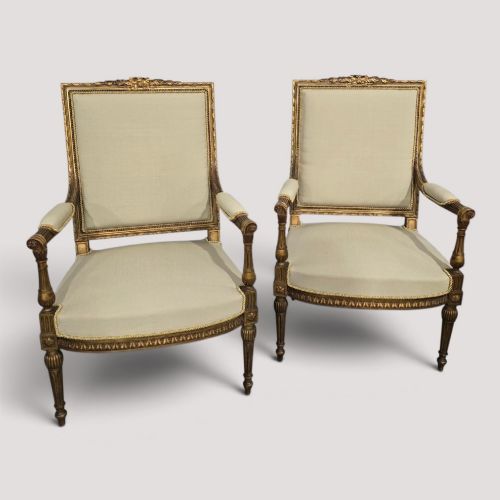
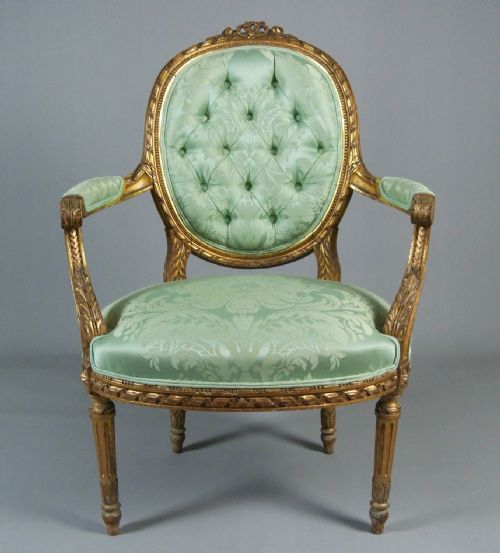
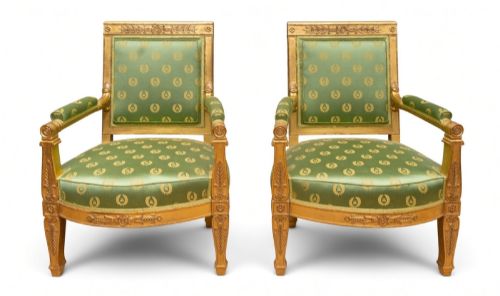
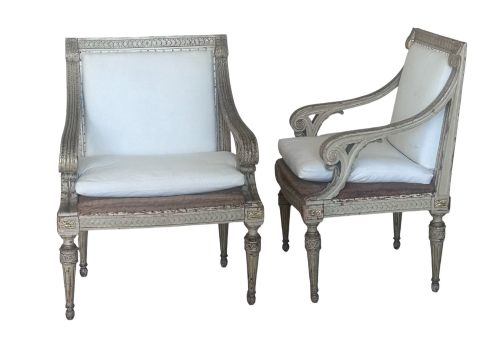
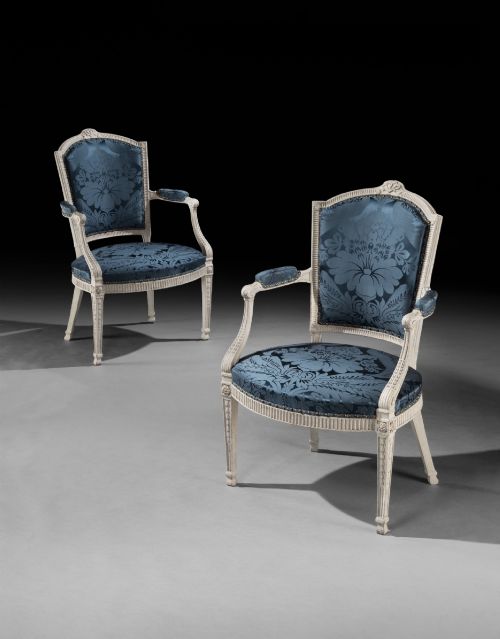
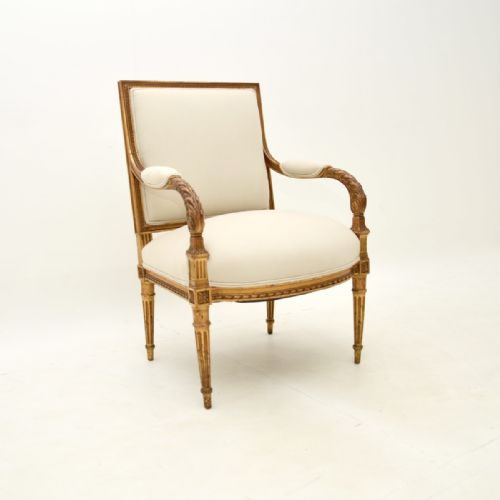
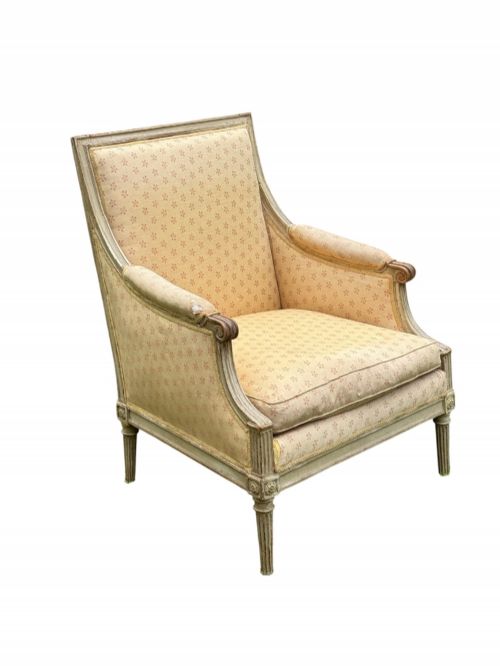
These neoclassical fauteuils are open-framed upholstered seats offering distinct architectural lines and carved woodwork that elevate any refined interior.
Neoclassical Fauteuils
When buyers search for neoclassical fauteuils, they encounter formal seating featuring exposed wooden frames, padded armrests, and upright backs designed for salons and reception rooms. The pieces appearing here span centuries of design, ranging from 18th-century origins to later revivals.
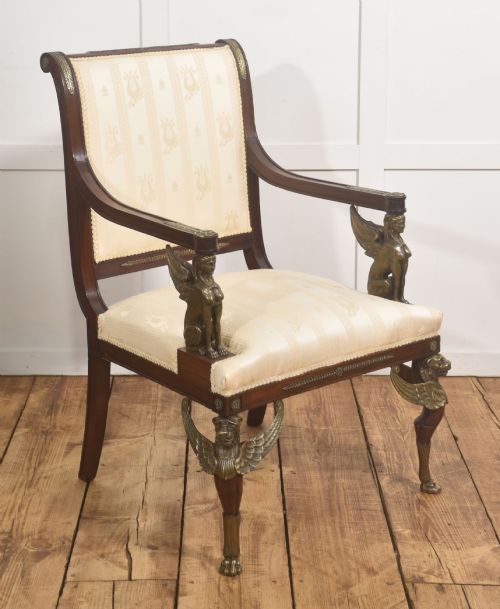
French and Italian workshops dominate the selections, alongside English interpretations of the style. Most examples belong to broader stylistic groups such as Louis XVI, Empire, or Directoire, reflecting classical symmetry and restraint.
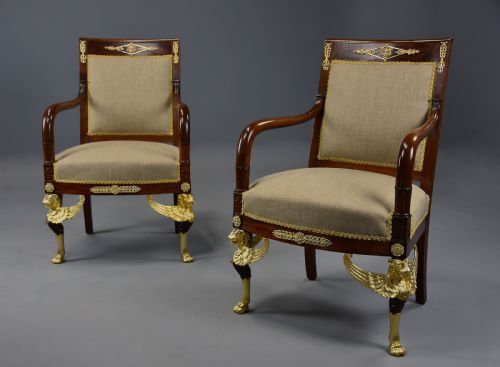
Forms vary from standard open armchairs and desk chairs to compact salon suite pieces and children's chairs. Giltwood, painted surfaces, and polished mahogany provide the primary visual frameworks for these seats.
Materials and Construction
Carpenters shaped structural frames from hardwoods such as beech, walnut, and mahogany, selecting timber capable of supporting crisp carved detail. Gilding, gesso, and lead-based paint finishes were then applied to the wooden show frames.
Upholsterers integrated webbing, stuffing, and outer covers utilising silk, velvet, fabric, and textile materials. Brass mounts and ormolu details frequently accented the frames, particularly on Empire style variants.
Neoclassical Fauteuils Retail Price Guide 2026
Typical asking prices for neoclassical fauteuils among the pieces listed under this phrase on Sellingantiques today, from the lower quarter to the upper quarter. They describe what is for sale here now, not the wider market.
The available seating spans the eighteenth, nineteenth, and early twentieth centuries.
Quality Variations
The degree of hand-carved definition in the wooden foliage, fluting, and scrollwork distinguishes exceptional pieces from standard workshop output. Crisp execution of gesso work and the preservation of original gilt or painted surfaces dictate higher standards.
Structural integrity depends on the original joinery within the frame and the quality of the timber selected by the cabinetmaker. Upholstery methods and the survival of period fabric layers also influence the standing of an armchair.
Jacob-Desmalter·Thomas Chippendale·Henri Jacob
The Neoclassical Fauteuils Glossary
- Fauteuil
- An open-framed armchair with upholstered armrests, back, and seat, originating in France. These chairs emerged during the seventeenth century and evolved through successive royal reigns.
- Giltwood
- Timber coated with a thin layer of gold leaf over a prepared gesso base. This finish provided reflective brilliance in candlelit rooms.
- Ormolu
- Cast bronze finished with a mercury-gilded amalgam, used for decorative mounts on furniture frames. The technique flourished during the eighteenth and nineteenth centuries.
- Directoire
- A transitional French style bridging the Louis XVI period and the Empire style. Designs favoured clean classical lines and simplified ornamentation.
- Parcel gilt
- Woodwork where only specific carved elements receive a gold leaf application while the remaining surface retains paint or natural wood.
Neoclassical Fauteuils: Frequently Asked Questions
Are these chairs comfortable for daily use?
These seats offer an upright, supportive posture intended for formal conversation rather than lounging. The rigid frame and structured stuffing reflect period standards of deportment.
Placing them in studies or drawing rooms provides functional seating while maintaining historical integrity within a modern interior.
How can I distinguish 18th-century pieces from later revivals?
Examination of the timber ageing, joinery methods, and tool marks reveals the age of the wooden frame. Hand-cut pegs and subtle hand-carving irregularities usually indicate earlier manufacture.
Nineteenth-century revival pieces often display machine precision in their secondary woods and standardised decorative mounts.
What is the difference between Empire and Louis XVI styles?
Louis XVI chairs display restrained classical motifs like straight fluted legs, carved ribbons, and oval backs. The aesthetic draws direct inspiration from ancient Greek and Roman architecture.
Empire pieces incorporate heavier classical symbolism, military motifs, and rich mahogany surfaces reflecting later Napoleonic tastes.