

Neoclassical Carver Chairs
Neoclassical carver chairs bring balanced symmetry and refined woodwork to a dining room, offering sturdy arm support combined with period elegance.
Neoclassical Carver Chairs
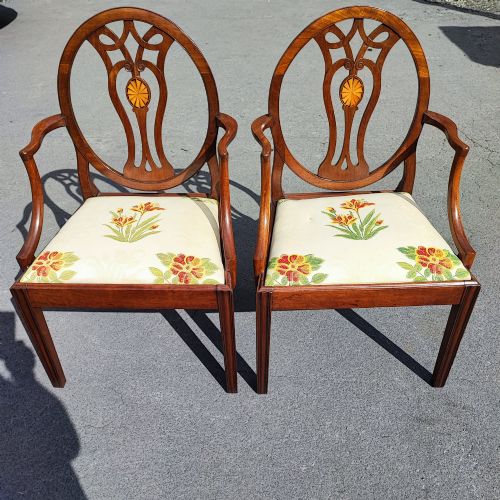
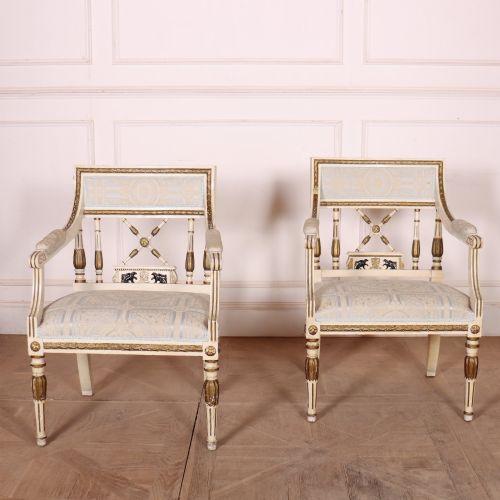
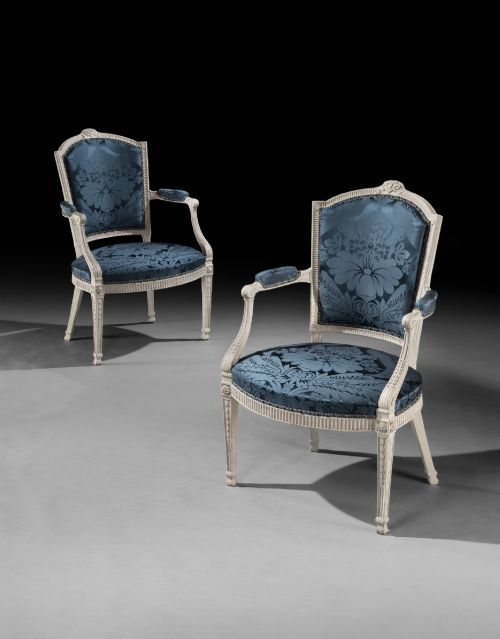
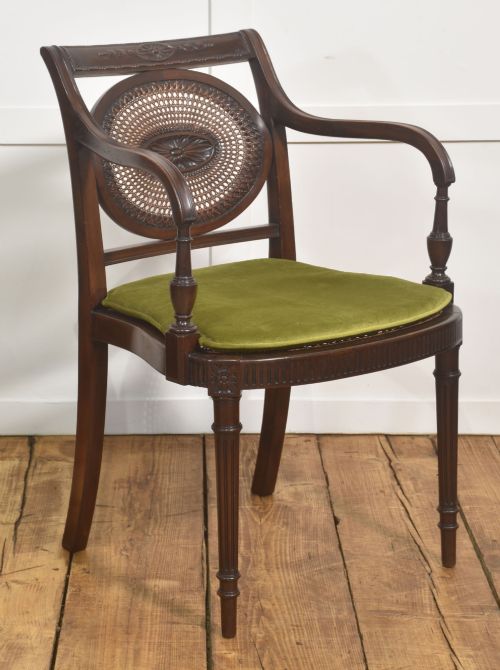
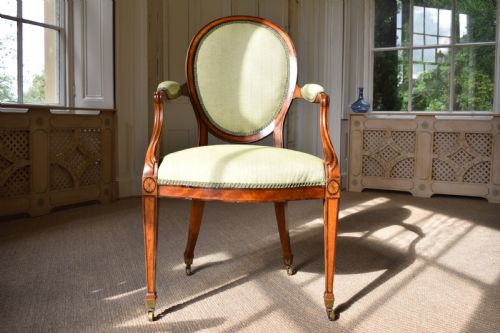
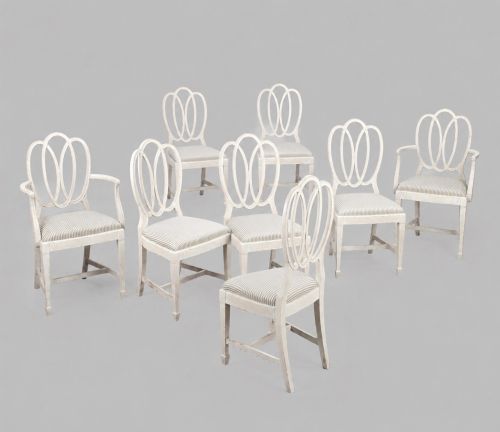
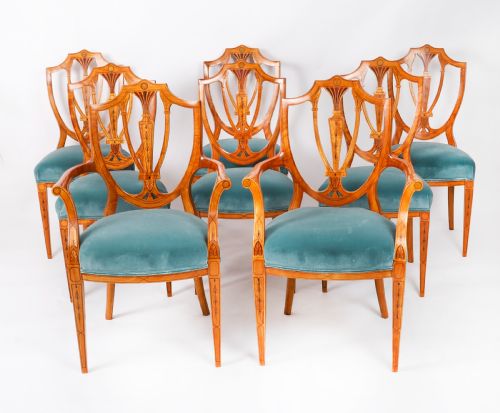
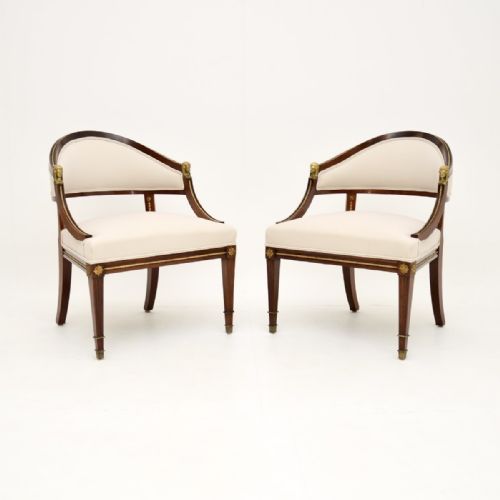
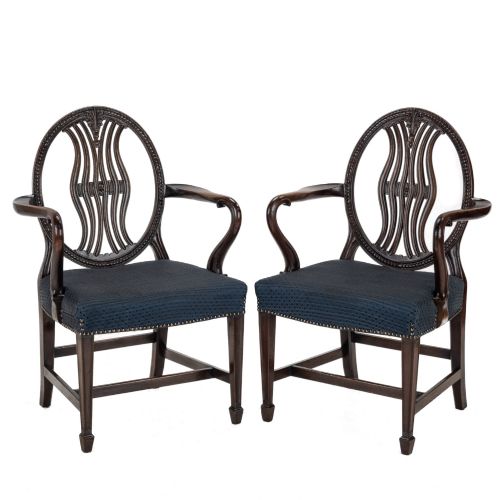
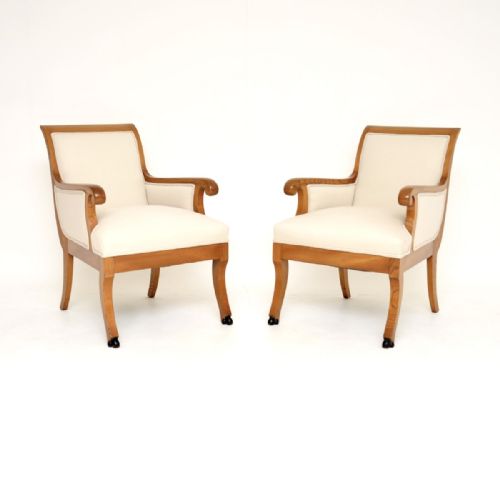
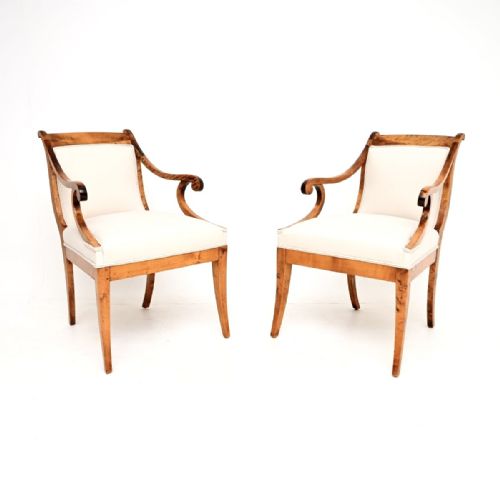
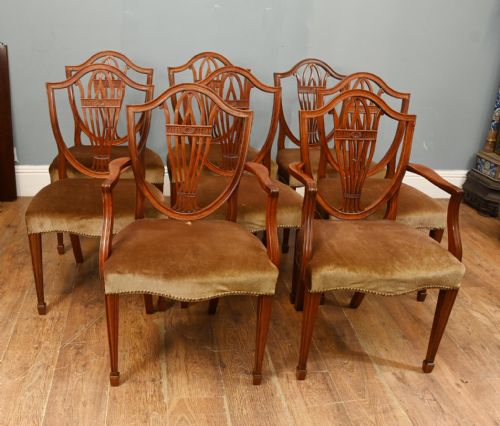
Neoclassical carver chairs are formal seated furniture pieces featuring armrests designed to stand at the heads of dining tables or serve as accent armchairs. When exploring neoclassical carver chairs, buyers encounter forms ranging from 18th century originals to later revivals from the 19th and early 20th centuries. The selection includes George III, Hepplewhite, Sheraton, and Swedish Empire styles, often appearing in pairs or larger matched sets.
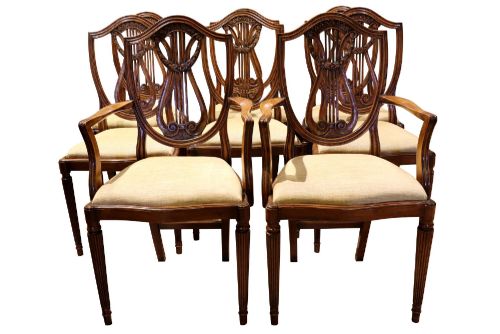
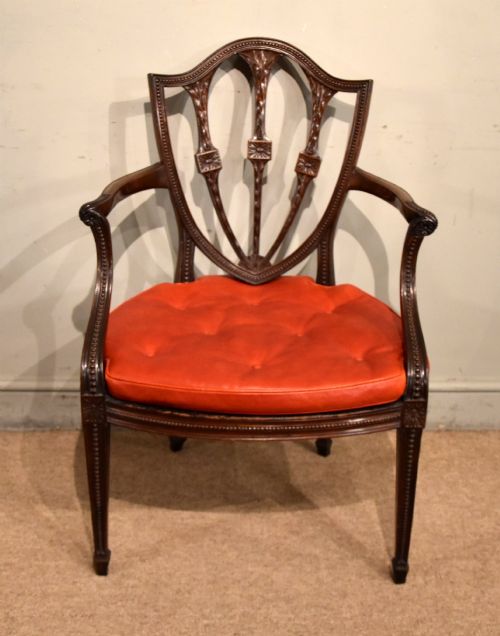
Makers and workshops across England, Sweden, France, and Italy produced these armchairs using traditional framing. Common configurations on this page include shield-back, lyre-back, and open arm styles built for domestic reception rooms and grand dining halls. Surviving examples display influences spanning the Georgian era through to Edwardian interpretations.
How They Were Made
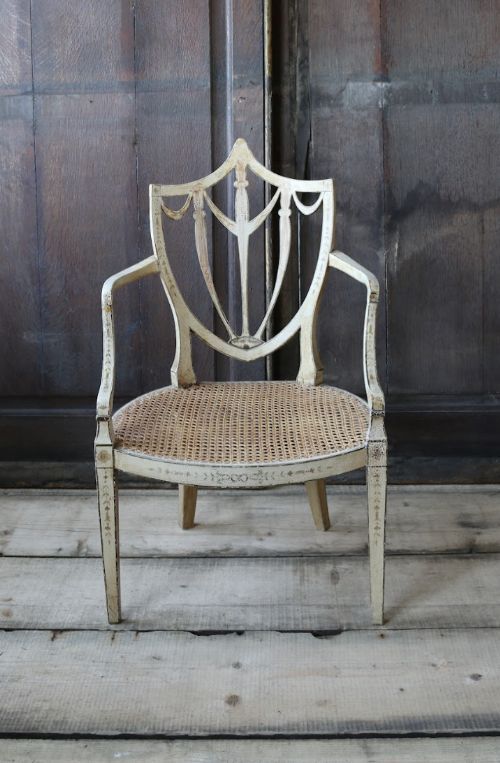
Cabinetmakers constructed these frames primarily from solid mahogany, satinwood, birch, walnut, elm, and occasionally giltwood or painted wood. Joinery relied on traditional mortise and tenon techniques to ensure stability for the open arms and carved backsplats. Surfaces received hand-applied polish, paint, or parcel gilding.
Upholstery methods utilised stuffing over webbing or cane panels, finished with textile, velvet, fabric, silk damask, or leather secured by decorative tacks or brass detailing. Carved elements such as fluted legs, shields, and lyre motifs required skilled hand-chiselling directly into the timber.
Listings feature mahogany, birch, satinwood, and painted wood across 18th century, Georgian, and 20th century revival periods.
What Varies In Quality
Quality differentiates through the crispness of hand-carved details on the woodwork and the integrity of the timber selection. Superior examples maintain tighter joinery and original surface patination without excessive structural timber replacement.
The refinement of proportions and the sophistication of painted decoration or gilt finish distinguish standard workshop production from exceptional maker-attributed commissions.
The Neoclassical Carver Chairs Glossary
- Carver chair
- An armchair designed to match a set of dining chairs, traditionally placed at the table ends for the head of the household. These pieces feature integrated armrests.
- Shield-back
- A chair back shaped in the outline of a heraldic shield, popularised by George Hepplewhite during the late 18th century. This design often incorporates pierced splats.
- Lyre-back
- A chair back featuring an open central splat carved in the symmetrical shape of a classical stringed musical instrument. This motif is frequently associated with Sheraton and Regency designs.
- Giltwood
- Timber that has been coated with a thin layer of gold leaf or gilt paint for decorative splendour. It appears prominently on neoclassical and French style seating.
- Satinwood
- A durable, yellowish timber prized for its smooth grain and used extensively for fine veneer and inlay work on late 18th century and revival furniture.
Neoclassical Carver Chairs: Frequently Asked Questions
What is a carver chair?
A carver chair is an armchair built with matching side chairs to complete a dining set. They traditionally sat at the head and foot of the dining table.
Today, they also function as standalone accent chairs in studies or bedrooms due to their supportive armrests and decorative back designs.
How do I identify neoclassical styles?
Neoclassical seating draws inspiration from classical Greek and Roman architecture, featuring straight lines, symmetrical balance, and restrained ornamentation.
Look for geometric carved motifs, fluted tapered legs, and shield or oval chair backs rather than heavy curves.
Are these chairs comfortable for daily use?
Most period carver chairs provide upright posture support thanks to their rigid frames and supportive armrests. Their ergonomics reflect the formal dining habits of their original eras.
Many examples feature upholstered seats in fabric, leather, or velvet, which can be maintained or updated for modern seating comfort.
Can I mix these with modern tables?
These armchairs pair effectively with contemporary dining tables by introducing historical contrast and texture to a room. Their classic wood tones and clean lines complement minimalist or eclectic interior schemes.