

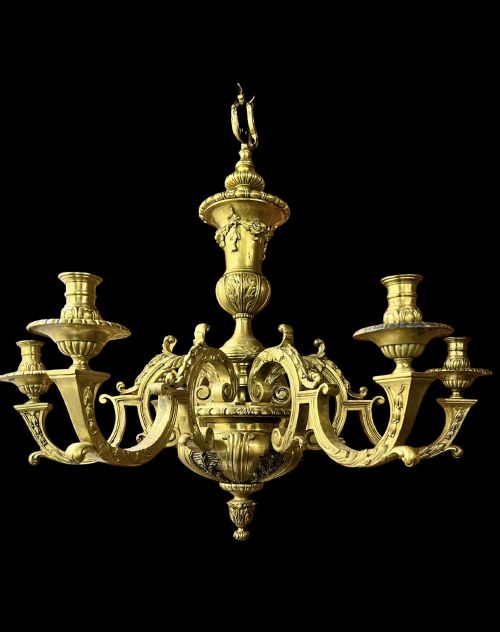


Neoclassical Brass Candelabra
Neoclassical brass candelabra bring formal balance and rich metallic lustre to a room, drawing on classical antiquity.
Neoclassical Brass Candelabra
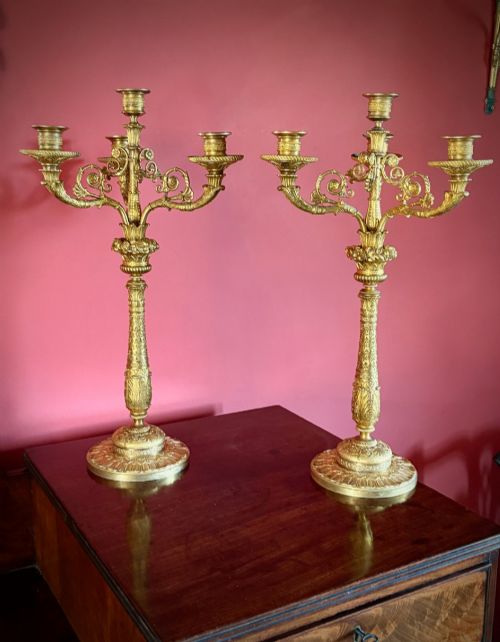
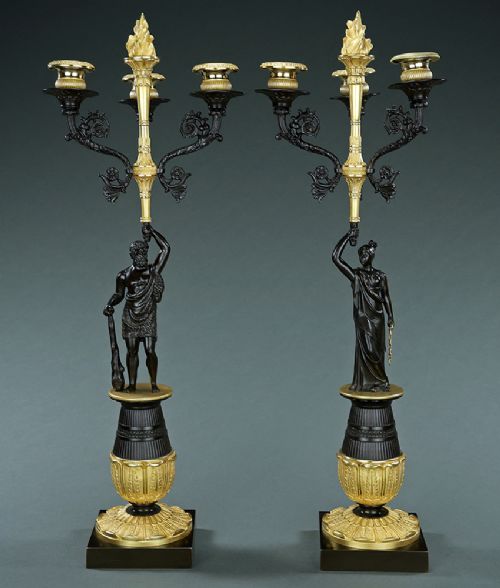
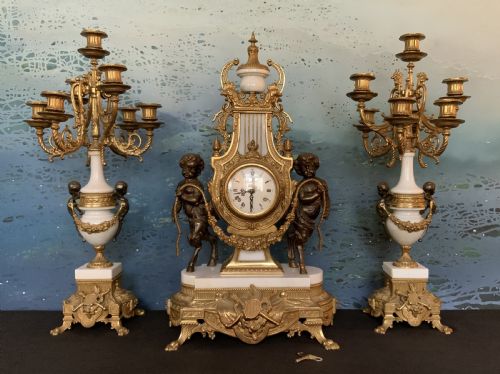
Neoclassical brass candelabra draw upon ancient Greek and Roman motifs, offering formal symmetry and architectural detail for a room. These pieces appear in matched pairs and larger garniture sets alongside mantel clocks.
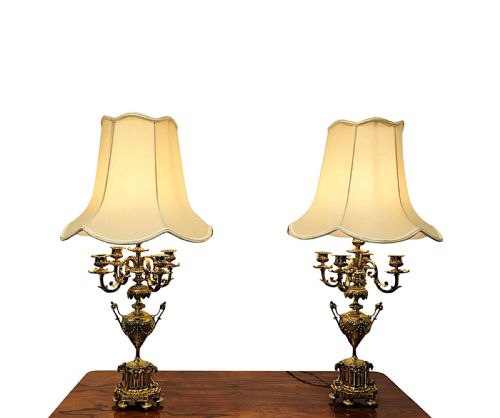
The selection ranges from nineteenth-century French Empire and Regency designs to later twentieth-century revivals. Many examples incorporate branches for multiple candles or arrive converted to electric lamps.
Materials and construction
Maker workshops utilised cast brass, gilt bronze, and ormolu, applying patinated finishes to highlight sculptural details. Skilled founders cast metal components in sections before assembling them with threaded rods.
Selected pieces integrate contrasting materials such as white or dark marble bases, enamel highlights, and tailored fabric shades on converted lamp versions.
The site listings feature pieces spanning the nineteenth and twentieth centuries, incorporating marble, gilt bronze, and fabric.
Evaluating quality and finish
Quality rests in the crispness of the cast ornamentation, where finely chased acanthus leaves and figural details retain sharp definition. Heavy metal gauge and substantial marble plinths indicate superior construction.
Surface finishing distinguishes the pieces, from polished brass to fire-gilded ormolu that maintains a warm, deep luminescence over centuries.
The Neoclassical Brass Candelabra Glossary
- Ormolu
- A method of applying finely ground high-karat gold to a bronze base using a mercury amalgam. This technique produces a durable, rich golden surface characteristic of fine French decorative objects.
- Garniture set
- A coordinated group of decorative objects, typically comprising a central mantel clock flanked by matching candelabra or urns. These sets create a balanced display on a chimneypiece or sideboard.
- Regency
- A British design period spanning the early nineteenth century that drew heavy inspiration from classical antiquity. Furniture and metalwork from this era favour clean architectural lines and military motifs.
- Louis XVI Style
- A revival movement reflecting the neoclassical taste of late eighteenth-century France. Pieces display straight tapered legs, urns, swags, and classical ribbons.
- Patinated metal
- Metal treated with chemicals, heat, or age to produce a stable surface colour. This process darkens raw brass or bronze to create depth and contrast.
Neoclassical Brass Candelabra: Frequently Asked Questions
How are candelabra cleaned?
Dust surfaces gently with a soft, dry brush to protect delicate gilt or patinated finishes. Avoid commercial abrasive cleaners that strip away historic surface layers.
For stubborn grime, a slightly damp cloth used sparingly on solid brass parts suffices, followed by immediate drying. Keep moisture away from any marble bases or electrical fittings.
Can electric conversions be reversed?
Most conversions preserve the original branch structure by running wiring through the central column without drilling destructive new holes. This allows a restorer to remove lamp fittings and restore the piece to hold candles.
Inspect the internal channel and socket seating to confirm whether original drip pans and candle nozzles remain intact inside the assembly.
What defines a garniture set?
A garniture set consists of matching decorative items designed to sit together as a unified display. The configuration usually pairs a central clock with twin candelabra sharing identical stylistic motifs.
This arrangement originated in grand salons to provide symmetrical decoration across a mantelpiece. Each matching component repeats the same bronze casting style and marble base material.
How do I spot nineteenth-century work?
Examine the construction joints, hand-cut threaded screws, and the density of the metal casting. Nineteenth-century pieces often display heavier components and hand-chased surface details absent in later reproductions.
Wear patterns on gilt bronze or ormolu reveal the natural softening of the gold layer over generations of handling and gentle maintenance.