




Electric Candelabra Table Lamps
Electric candelabra table lamps are heavy, branch-armed lighting pieces adapted from older candlesticks, offering dramatic illumination and period presence for a room.
Electric Candelabra Table Lamps
Electric candelabra table lamps are substantial lighting fixtures formed by converting multi-branched candelabra and candlesticks into wired lamps. These pieces combine the branched form of traditional candle holders with electrical wiring for domestic placement.
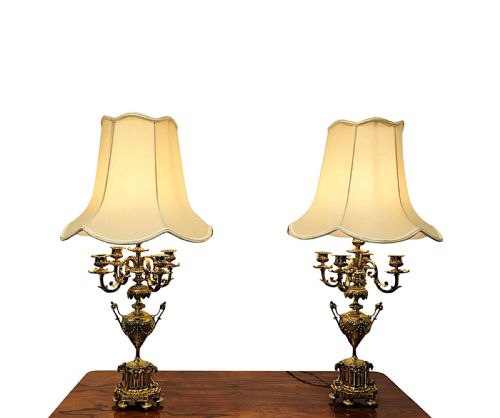
The selections available here span the nineteenth century up to the 1920s, drawing heavily on French styles including Rococo Revival, Neoclassical, and Napoleon III. Buyers will frequently encounter matched pairs featuring twin or triple light branches, often incorporating fabric shades or exposed bulb arrangements.
Originating largely from French workshops and the broader nineteenth-century decorative traditions, these objects serve as prominent table or sideboard lighting. Their construction preserves the sculptural qualities of earlier candelabra while adapting them for modern electrical use.
How they were made
Makers constructed these pieces using cast metals such as brass, bronze, gilt bronze, and silvered bronze, frequently combining them with cut crystal drops and glass elements. Ormolu gilding was applied to bronze surfaces to create a rich, reflective finish.
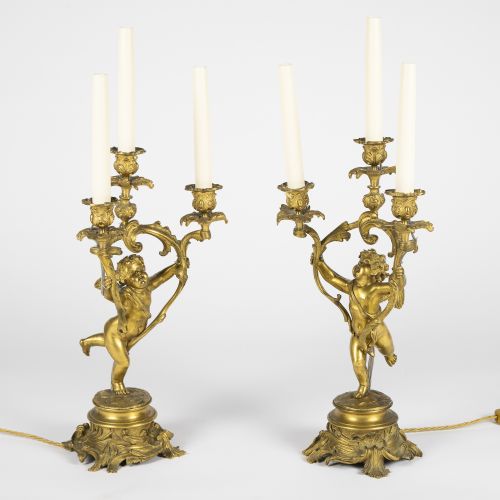
Component parts were cast separately and assembled with mechanical fixings, allowing for complex multi-branched structures adorned with motifs like putti and foliage. Marble bases were sometimes introduced to provide stability and a contrasting textural element to the metalwork.
Materials observed across these listings include brass, bronze, gilt bronze, cast brass, gilded brass, fabric, glass, and crystal.
What varies in quality
Quality rests in the crispness of the metal casting and the depth of the original gilding or silvering on the bronze and brass frames. Finer examples display sharply defined ornamentation and substantial weight in their structural metal components.
The integration of high-grade cut crystal pendants and the structural integrity of the multi-branch assembly distinguish superior pieces from simpler conversions. Well-executed adaptations maintain the visual balance of the original candelabrum without compromising its decorative proportions.
The Electric Candelabra Table Lamps Glossary
- Ormolu
- Gilded bronze produced by applying a mercury and gold amalgam to a bronze base and heating it. This technique creates a durable, luminous golden finish characteristic of fine French decorative objects.
- Candelabra
- A branched candlestick designed to hold multiple candles or, in later adaptations, electric lights. These fixtures provide symmetrical illumination and significant vertical presence.
- Napoleon III
- A mid-nineteenth-century French design style noted for its eclectic revival of earlier historical periods, particularly Rococo and Renaissance forms. It favours ornate detailing and opulent materials.
- Putti
- Depictions of chubby male infants, often winged, used as decorative sculptural elements in classical and revival art. They frequently appear supporting branches or seated among foliage on metalwork.
Electric Candelabra Table Lamps: Frequently Asked Questions
How do I clean antique brass lamps?
Dust the metal surfaces gently with a soft, dry cloth to prevent the accumulation of dirt in intricate cast crevices. Avoid abrasive metal cleaners that can strip original patination or historical gilt finishes from the brass and bronze.
For crystal drops, detach them if possible and wash them in lukewarm soapy water before drying thoroughly. This preserves the refractive clarity of the glass without risking moisture damage to the electrical components.
Can I replace the electrical wiring safely?
Professional rewiring is recommended for older metal lamps to ensure compliance with current safety standards. A qualified electrician can replace aged internal cords while preserving the vintage exterior fittings.
During rewiring, technicians can route cables discreetly through the existing central channels of the candelabra structure. This maintains the clean visual lines of the original nineteenth-century or 1920s metalwork.
What rooms suit these lamps best?
These large, branched fixtures suit formal reception rooms, dining sideboards, or large entry tables where their height and decorative weight can anchor a space. Their substantial proportions require sturdy placement surfaces.
Placing them against neutral walls allows the metallic finishes and crystal droplets to catch ambient light effectively. They function well as statement pieces rather than simple task lighting.
How are nineteenth-century pieces identified?
Dating relies on stylistic markers such as the heavy casting style of the bronze, the specific formulation of the ormolu, and period-typical decorative motifs like putti. Construction methods, including threaded metal fasteners and hand-finished joints, point towards earlier manufacturing eras.
Comparing the casting quality and materials against established French design periods helps separate nineteenth-century work from later reproductions. Subtle variations in hand-chased surface details confirm artisanal production.