




Brass Electric Candelabra
Brass electric candelabra combine heavy metal casting with electrified lighting, offering a practical way to bring period decorative illumination into modern rooms.
Brass Electric Candelabra
When you search for brass electric candelabra, you find multi-branch lighting fixtures that merge traditional metalwork with wired circuits. These pieces often originate from conversions of older lighting or were manufactured during the early twentieth century.
The selections available here span the nineteenth century up to nineteen twenty, incorporating French Chateau, Neoclassical, Victorian, and Rococo Revival styles. Table lamps, candelabra lamps, and table chandeliers dominate the forms you meet.
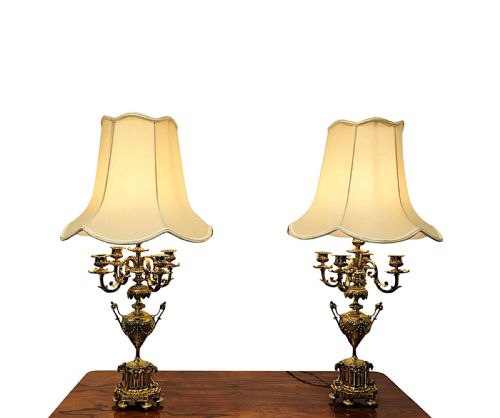
Parisian influences appear frequently, alongside Victorian British output. Buyers encounter pairs fitted with fabric shades, crystal drops, or exposed candle-tubes designed to hold electrical fittings.
Materials and construction methods
The backbone of these pieces is cast brass, bronze, or gilt bronze, sometimes referred to as ormolu, shaped through traditional foundry methods. Metal components receive silvered or gilded surface treatments to enhance their decorative impact.
Many examples integrate cut glass and crystal pendants that catch the electric light. Fabric elements and marble bases also appear, anchoring the heavier metal branches and providing stable support for table placement.
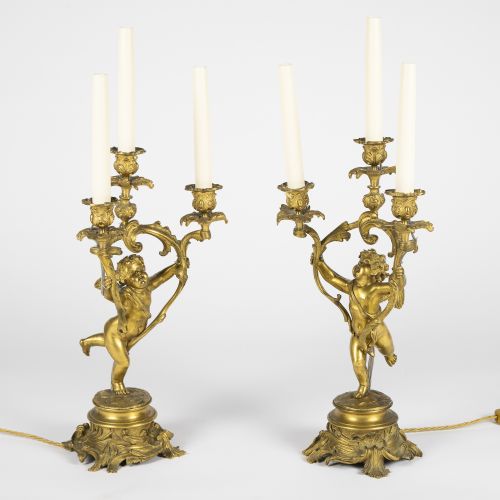
Several heavy metal branches are guarded by small bronze putti who appear entirely unconcerned about supporting modern electrical loads.
Assessing quality in metalwork and conversion
Quality rests heavily upon the crispness of the metal casting and the depth of the chased surface detail. Superior pieces exhibit sharply defined ornamentation on the putti, foliate scrolls, and arms, rather than soft or smoothed contours.
The method of electrical conversion also defines the standard of the piece. Professional rewiring that preserves the structural integrity of the antique metal without drilling destructive new channels separates expert adaptations from crude modifications.
The Brass Electric Candelabra Glossary
- Ormolu
- Gilded bronze used extensively in French decorative arts. This technique involves applying a mercury and gold amalgam to a bronze base before firing.
- Candelabra
- A branched candlestick holder designed to support multiple lights simultaneously. These forms frequently undergo conversion to hold electrical fittings.
- Napoleon III Style
- A nineteenth-century French aesthetic characterised by eclectic revivalism and ornate detailing. It draws heavily from earlier Rococo and Baroque precedents.
- Putti
- Depictions of chubby male infants, often winged, used as decorative motifs in classical art. They appear frequently on the bases and stems of French lighting.
Brass Electric Candelabra: Frequently Asked Questions
Are these originally electric?
Many items in this category began life as burning candle fixtures before undergoing later conversion to electricity. Some pieces were manufactured during the early twentieth century specifically to house electrical wiring.
Conversion work often retains the original branch configuration while routing modern cables discreetly through the central column.
How do I clean the metal?
Dusting with a soft, dry cloth is the safest routine for maintaining gilded and cast surfaces. Avoid abrasive polishes that can strip away thin layers of gilding or silvering.
Crystal drops can be removed carefully and washed in lukewarm soapy water if they require deeper cleaning.
Do they take standard bulbs?
Most converted fixtures utilise standard candle-style screw or bayonet fitting bulbs. The specific bulb size depends on the replacement sockets installed during electrification.
Checking the lampholder specifications ensures you select bulbs that fit safely beneath any fabric shades or crystal drops.
How do I date a piece?
Stylistic clues such as Napoleon III proportions or Victorian cast ornament help narrow down the period of manufacture. The weight of the metal and the method of assembly also provide strong indicators of age.
Nineteenth-century pieces typically show heavier casting and more hand-finished chasing than later twentieth-century reproductions.