
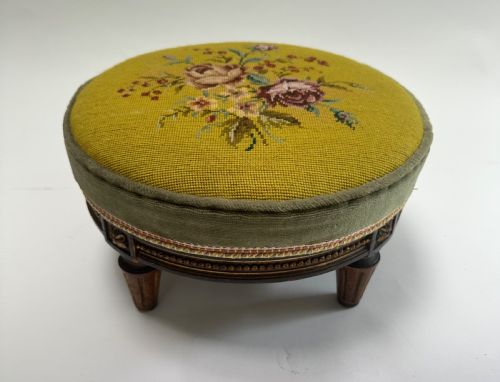
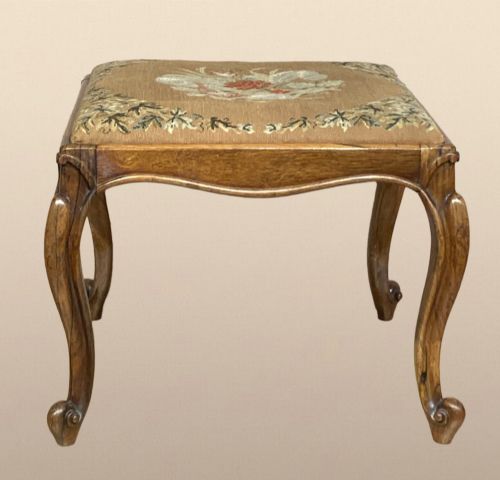
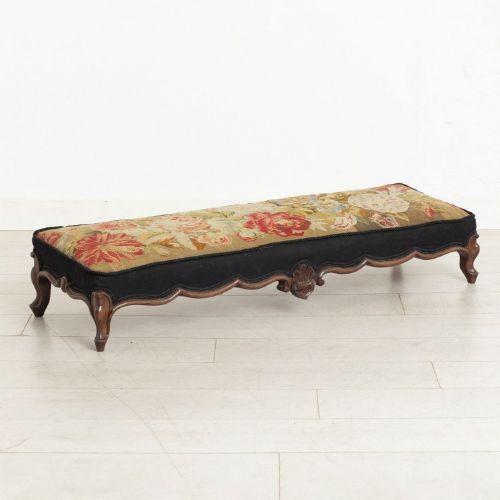


Needlepoint Tapestry Stool
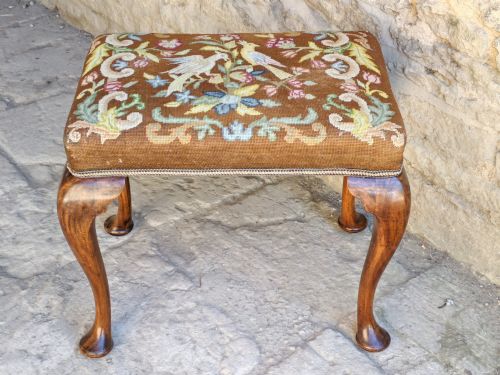
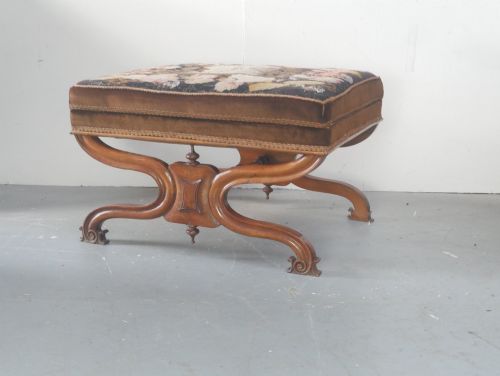
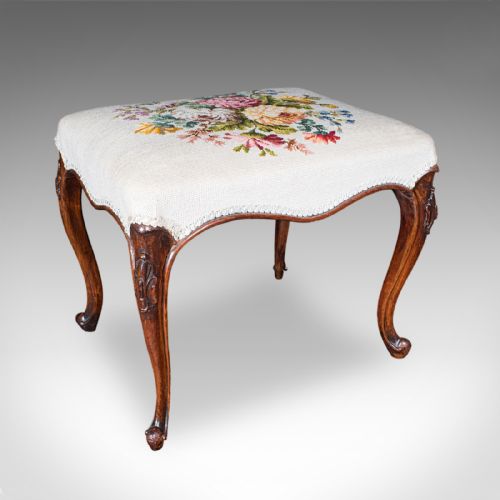
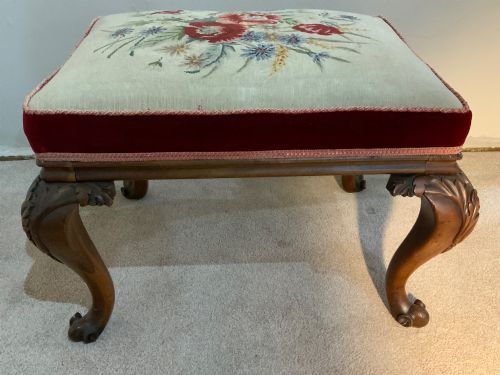
These needlepoint tapestry stool examples combine traditional frames with worked textile seats, providing practical low seating and foot support.
Needlepoint Tapestry Stool
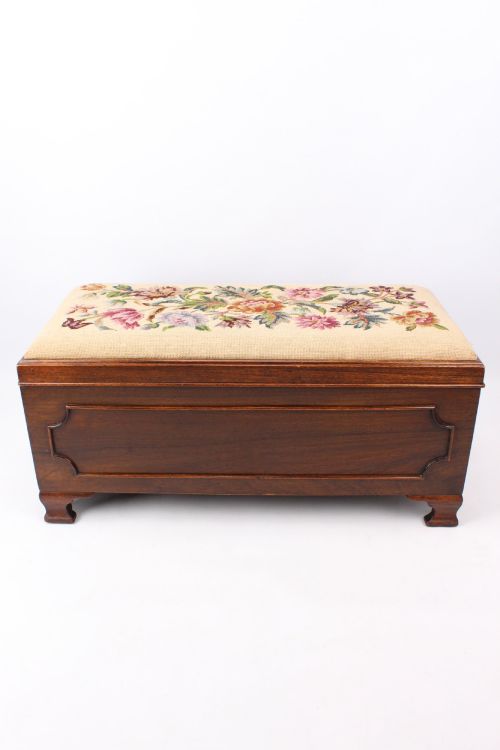
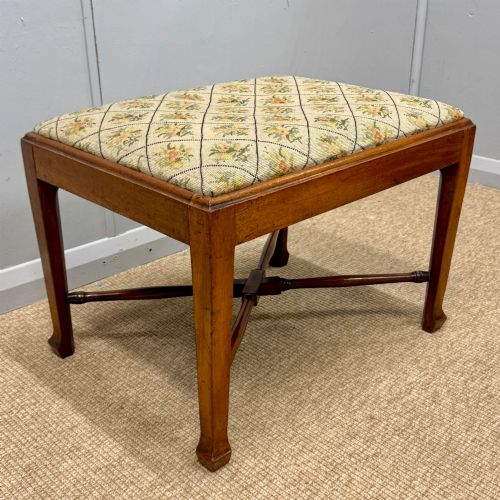
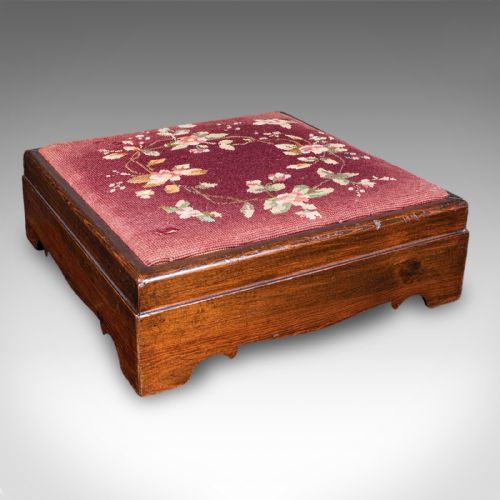
A needlepoint tapestry stool serves as a low seat, footrest, or dressing stool, appearing in forms such as compact footstools, piano stools, and long ottomans. The selection spans Victorian and Regency periods through to later revivals, reflecting diverse domestic uses from fireside resting to piano playing.
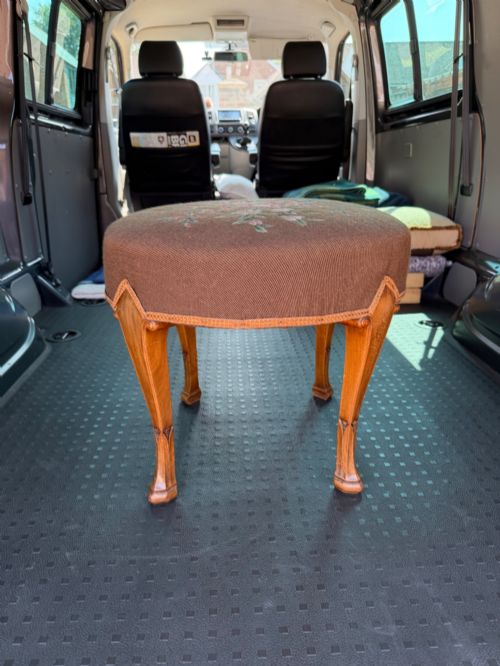
Victorian walnut and rosewood pieces dominate the selection, often featuring low cabriole legs and original needlework textile seats. Buyers also encounter mahogany frames, occasional oak structures, and French or Scottish provincial designs.
Functional variants include revolving piano stools, adjustable music seats, and long footstools designed to sit before a hearth or lounge chair.
How they were made
Frames rely on dense timbers such as walnut, mahogany, rosewood, and oak, shaped through turning, carving, and joinery methods appropriate to each period. Workshops shaped cabriole legs, straight supports, and cross stretchers from solid hardwoods.
Seats combine wool needlepoint or crewel tapestry worked by hand over textile foundations, mounted above traditional webbing, stuffing, and original fabric linings.
Listings feature walnut and rosewood as the predominant frame materials across Victorian and nineteenth-century examples.
What varies in quality
The refinement of the timber carving and the complexity of the frame construction distinguish standard utility seating from finer salon pieces. Robust joints, figured wood grain, and detailed decorative carving elevate certain frames above plain structural designs.
Needlepoint density, wool pile preservation, and the survival of original upholstery fabrics determine the integrity of the textile top. Pieces retaining untouched period tapestry demonstrate greater historical continuity than later re-covered examples.
Jas Shoolbred
The Needlepoint Tapestry Stool Glossary
- Cabriole leg
- A furniture leg that curves outward at the knee and tapers inward toward an ankle or foot, common on Victorian and revival seating.
- Tapestry
- A heavy textile woven or worked with decorative designs, utilising wool or silk threads over a foundation cloth.
- Gout stool
- A specialised low footrest designed to elevate the foot of someone suffering from joint discomfort.
- Ottoman
- A low upholstered seat or bench without arms or back, sometimes incorporating internal storage.
- Tunbridge ware
- Small-scale decorative woodwork utilising tiny mosaic wood tiles to form geometric patterns, seen on specific Victorian pieces.
Needlepoint Tapestry Stool: Frequently Asked Questions
What is a needlepoint tapestry stool used for?
These pieces function primarily as low footrests, fireside seats, or dressing table stools. They provide portable low seating or a supportive rest for the feet while sitting.
Historically, specific variants served musicians at pianos or accommodated individuals requiring leg elevation near a hearth.
How do I identify a Victorian needlepoint stool?
Victorian examples frequently utilise dark hardwoods like walnut or rosewood, combined with shaped cabriole legs and hand-worked wool tapestry seats. Construction details often reflect mid-nineteenth-century cabinet-making traditions.
Dates can be estimated through leg turning, frame joinery, and the specific style of the floral or geometric needlework.
Are these tapestry seats original?
Many pieces retain their original wool needlepoint or tapestry covers, showing natural wear consistent with age. Others have received later upholstery while retaining their period wooden frames.
Examining the underside reveals the webbing, tacks, and foundation materials that indicate whether the textile dates to the original manufacture of the stool.
How do I care for antique needlepoint upholstery?
Protect the wool tapestry from direct sunlight to prevent fading of the dyed threads. Gentle surface cleaning with a soft brush removes dust without straining the aged textile.
Avoid heavy moisture and keep the timber frames conditioned with appropriate furniture wax.