




Needlepoint Fireplace Screen
A needlepoint fireplace screen sets a hand-worked wool panel before a hearth, combining practical warmth with formal display across Georgian and Victorian interiors.
Needlepoint Fireplace Screen
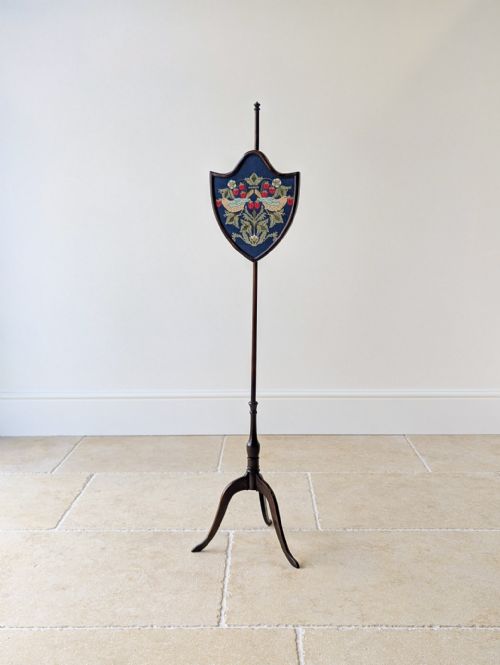
A needlepoint fireplace screen serves to block radiant heat from a fire while displaying intricate hand-worked textile panels. These pieces divide into standing frames supported on legs and pole screens where an adjustable embroidered panel slides vertically on a central wooden shaft.
The selection centres heavily on nineteenth-century examples, spanning the Regency, Early Victorian and later Victorian periods alongside earlier George III designs. Woods such as mahogany, rosewood and walnut predominate in the frames, carrying carved, bobbin-turned or tripod bases.
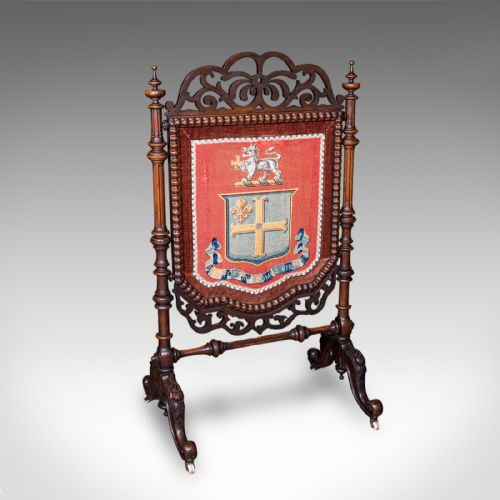
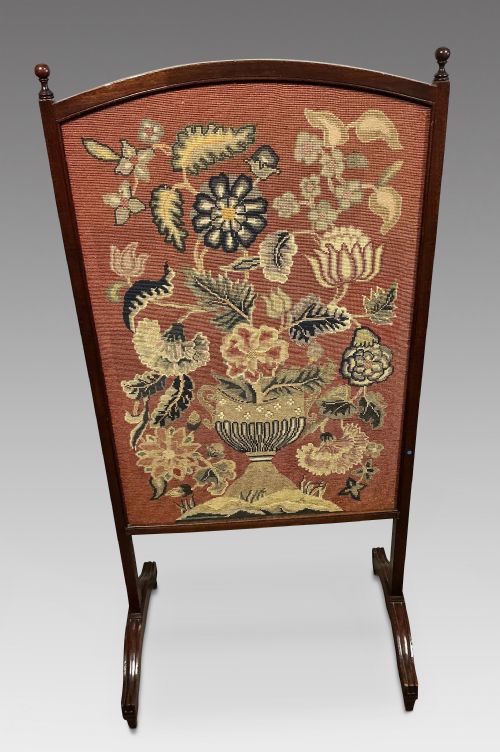
Textiles form the core of the visual impact, ranging from floral arrangements and pastoral scenes to armorial bearings and woolwork samplers. Occasional variants include metamorphic tables and brass frames featuring parrot tapestries.
Materials and construction
Frames rely on dense cabinet timbers, primarily mahogany, rosewood, walnut and satinwood, shaped through turning, carving and giltwood enrichment. Tripod bases and cheval supports provide stable grounding for tall upright panels.
The working centres on needlepoint, woolwork and tapestry executed on canvas, often incorporating silk threads or glass elements. Panels are set securely into wooden rebates or hung from brass pole brackets for adjustable height.
Period styles across the inventory include George III, Regency, William IV, Early Victorian, Rococo Revival and Art Nouveau.
Standards of execution
Quality rests significantly on the precision and density of the needlework panel itself, where finely shaded wools and complex pictorial subjects like coats of arms demand superior skill. Hand-woven pastoral and armorial scenes elevate an example far above simple repeating geometric patterns.
Cabinetwork distinguishes the better frames, showing crisp carving on mahogany, rosewood or walnut rather than soft, worn mouldings. Smooth mechanical action in adjustable pole brackets and stable, well-balanced tripod or cheval bases complete the superior piece.
The Needlepoint Fireplace Screen Glossary
- Pole screen
- A standing fire screen featuring a vertical wooden shaft and a sliding panel that adjusts to block heat. The panel is held at the desired height by a thumb screw or brass collar.
- Needlepoint
- A form of counted or canvas work embroidery stitched through a stiff open-weave mesh. It forms the primary decorative surface for Victorian and Georgian fire screens.
- Cheval screen
- A self-standing floor screen supported by two vertical pillars on feet, allowing the central frame to swing or pivot. This form provides a broader viewing area than a standard pole screen.
- Tapestry
- A hand-woven textile used here to describe pictorial needlework panels depicting figures, animals or landscapes. These panels were often worked domestically by hand before being mounted into antique frames.
- Tripod base
- A three-legged support structure commonly found beneath the central pillar of pole screens. It offers a balanced footprint on uneven floorboards.
Needlepoint Fireplace Screen: Frequently Asked Questions
How do pole screens work?
A pole screen operates via a sliding collar that grips a central wooden shaft, allowing the embroidered panel to move up and down. This lets sitters adjust the height of the textile to shield their faces from the direct heat of an open fire.
Most mechanisms use a simple friction fit or a tightening screw at the back of the panel mount. The heavy tripod or pedestal base keeps the tall stand stable despite the top-heavy weight distribution.
Where were fire screens placed?
Fire screens stood directly in front of the fireplace when the hearth was not actively burning, or were positioned beside an armchair during a fire. Their primary purpose in period rooms was protecting complex cosmetic finishes and heavy makeup from radiant heat.
In larger reception rooms, multiple screens created decorative accents across different seating areas. They also served to hide cold grates during summer months when fireplaces remained unlit.
How do I date a screen?
Dating relies on combining the timber and style of the frame with the technique and subject of the textile. Georgian and Regency pieces typically show cleaner classical lines in mahogany or rosewood, while Victorian examples often feature heavier carving, walnut, or vibrant woolwork.
Turned elements like bobbin legs, giltwood finishes, and specific floral or armorial motifs align with the prevailing fashions of the 1830s through to the end of the nineteenth century. Examining the construction joints of the frame provides further confirmation of the period.
Can I use these near a fire?
Historic textile panels are extremely sensitive to dry heat, smoke and stray sparks from modern open fires. Placing a fragile antique needlepoint directly in front of an active, unprotected hearth risks scorching the old wool and brittle backing canvas.
Collectors generally use these pieces in rooms with gas fires, electric hearths, or simply as decorative room dividers and standing furniture. Keeping them at a safe distance preserves both the wooden frame and the delicate tapestry work.