

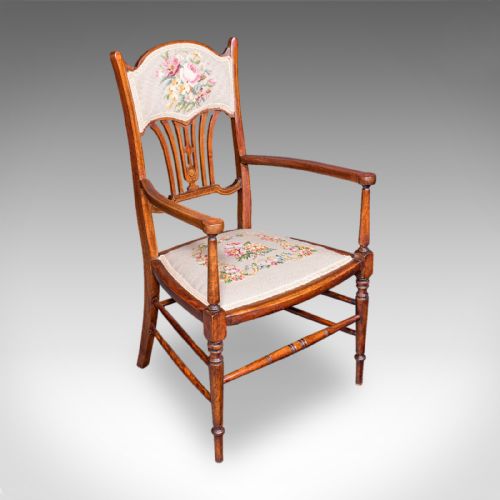
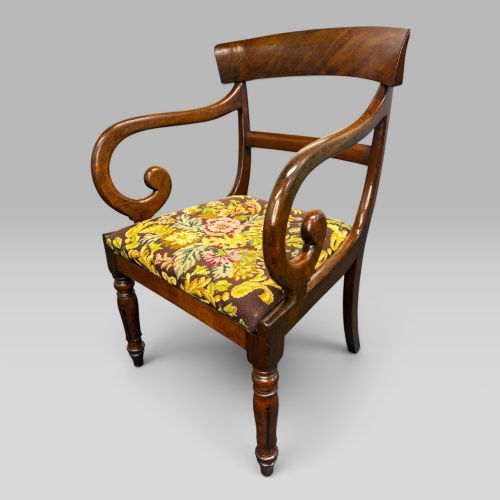
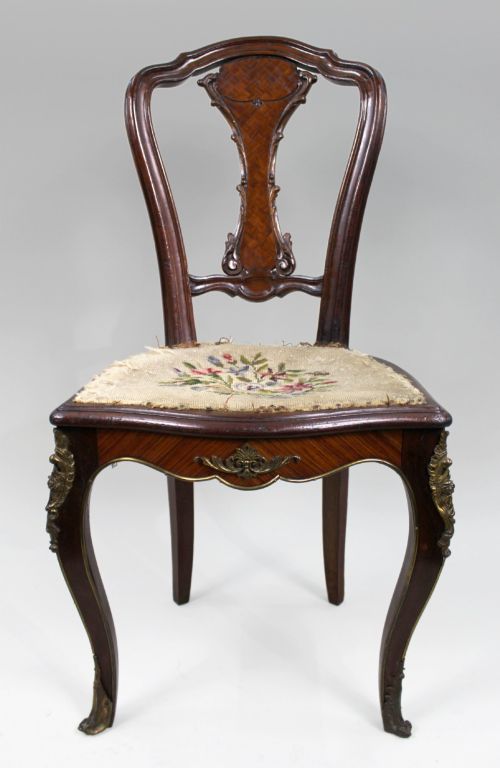
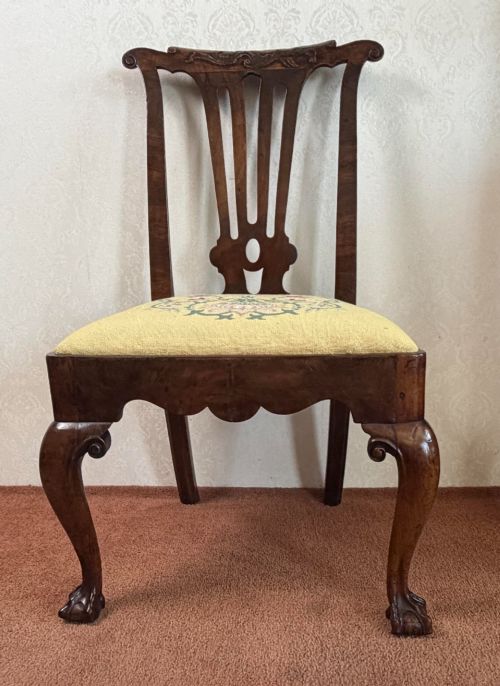
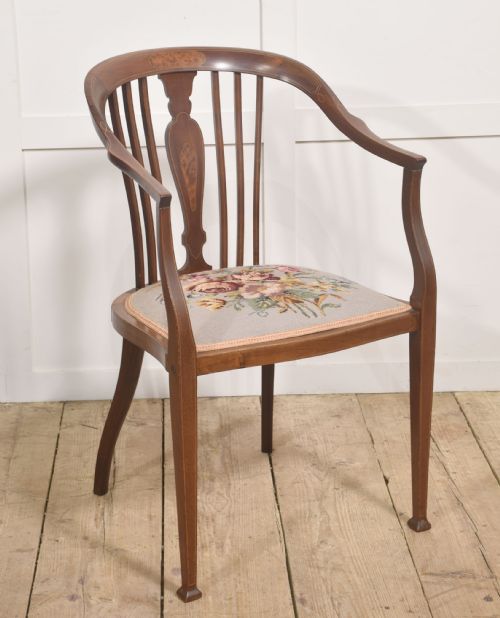


Needlepoint Desk Chair
A needlepoint desk chair brings tactile wool work and sturdy timber frames together for daily workspace use.
Needlepoint Desk Chair
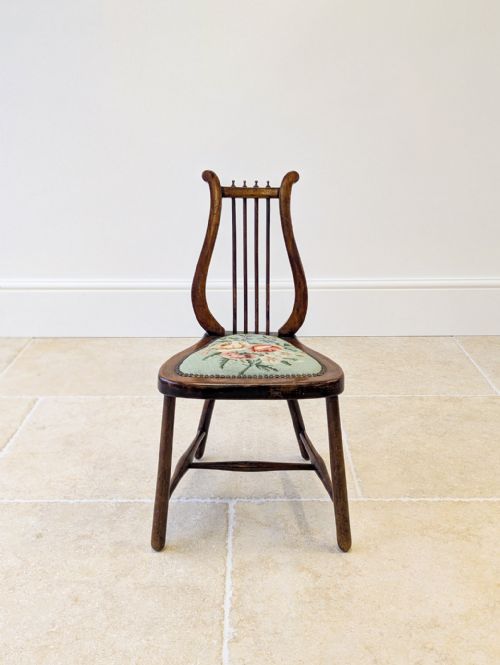
A needlepoint desk chair combines a sturdy wooden frame with worked textile upholstery designed for a workspace or study. These pieces span periods from the eighteenth century through the Edwardian era, showing forms like side chairs, elbow chairs, and carvers.
The most common examples on this page date from the Georgian and Victorian periods, often constructed in mahogany, walnut, or beech. They integrate drop-in seats or fixed upholstery worked in wool tapestry.
Makers across England, Scotland, Ireland, and France produced these seats for libraries, morning rooms, and writing desks. Their survival depends on the durability of the hardwood frame and the preservation of the textile work.
How they were made
Cabinetmakers shaped the primary structures from dense timbers including mahogany, walnut, oak, and beech, frequently employing mortise and tenon joinery to ensure stability under daily sitting. Decorative touches range from simple carved details to satinwood inlay and ormolu mounts.
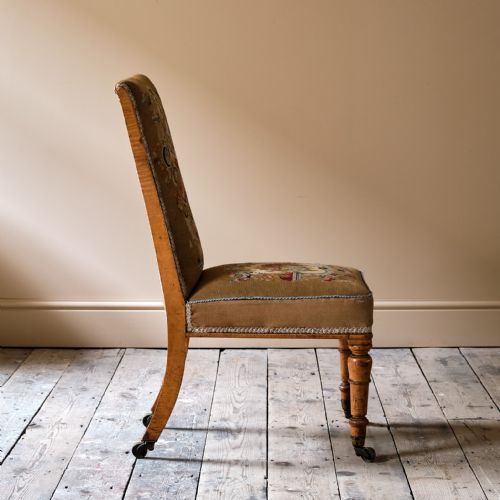
The textile component relies on wool worked in needlepoint or tapestry stitches, secured over drop-in frames or padded seats. Brass tacks or decorative banding often finish the edges where the fabric meets the timber.
Listings feature woods like mahogany, walnut, satinwood, birds eye maple, and elm across Georgian, Regency, and Edwardian periods.
What varies in quality
The grade of timber and the tightness of the joinery set the foundation of a superior piece, with dense grain and minimal structural intervention marking the better examples. Timbers like figured walnut and rich mahogany indicate a higher workshop standard.
The intricacy and preservation of the needlepoint work dictate much of the visual standard, alongside the harmony between the textile design and the period of the frame. Original upholstery surfaces show careful hand-stitching and balanced colour palettes.
Charles Tozer
The Needlepoint Desk Chair Glossary
- Needlepoint
- A type of counted thread embroidery stitched onto an open-weave canvas foundation. It provides a firm, durable surface suitable for heavy daily seat use.
- Drop-in seat
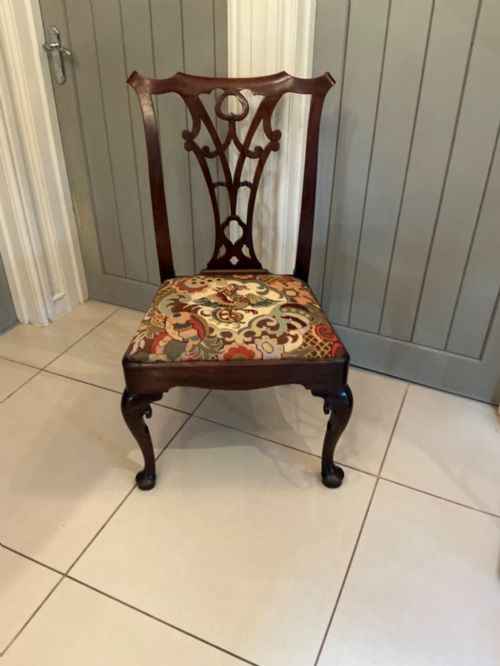
- A removable wooden frame padded and upholstered separately before dropping into the seat rails of the chair. This construction method allows easier reupholstering without dismantling the main structure.
- Elbow chair
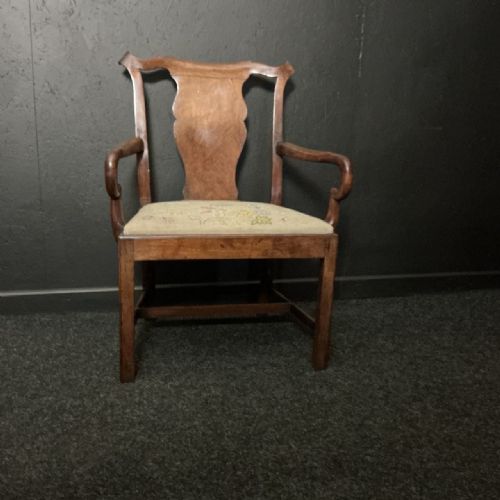
- An armchair with low arms designed to fit beneath a writing table or desk. These pieces offer side support while permitting close positioning to a desk surface.
- Carver
- A sturdy armchair, often larger than a standard side chair, traditionally placed at the head of a table or used as a primary desk seat.
- Sabre leg
- A concave-curved leg that tapers toward the foot, popular during the Regency period. This form adds dynamic line and steady weight distribution to the base.
Needlepoint Desk Chair: Frequently Asked Questions
Are these chairs comfortable for daily desk work?
Most examples provide upright support suited to traditional writing desks rather than deep lounging. Their firm padded seats and supportive arms encourage an upright posture.
Working heights vary because older tables and desks sat lower than modern counterparts. Checking the seat height ensures proper clearance for modern leg room.
How do I care for needlepoint upholstery?
Gentle vacuuming with a low-suction attachment removes surface dust without catching loose wool fibres. Keeping the textile away from direct sunlight preserves the original dyed shades.
Professional textile conservation prevents fibre degradation over decades of regular use. Avoid harsh liquid cleaners on antique wool threads.
How can I tell a Georgian chair from a Victorian one?
Georgian frames often display restrained carving, blind fretwork, and dense mahogany or walnut timbers. Their proportions prioritize structural balance and classical restraint.
Victorian pieces frequently utilise softer woods like beech or birch, sometimes stained to mimic darker timbers. They draw upon earlier revival styles with heavier turning and varied upholstery methods.
What is the difference between a side chair and an elbow chair?
Side chairs lack armrests, allowing them to slide neatly beneath desk surfaces or line a room's perimeter. They function well where floor space is limited.
Elbow chairs feature short armrests that provide upper body support without obstructing the user's movement at a writing table.