

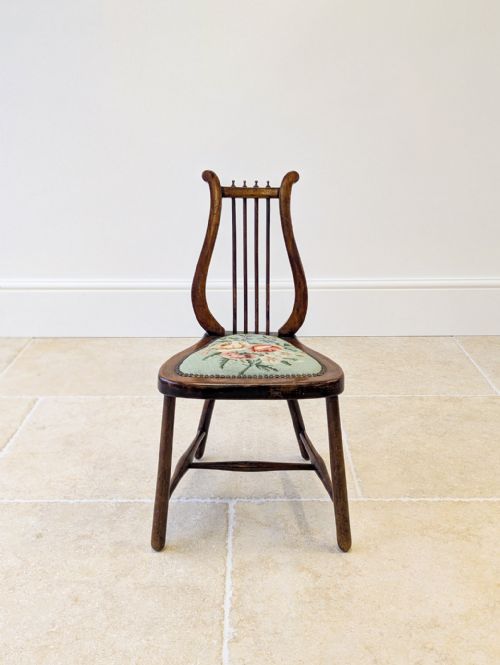
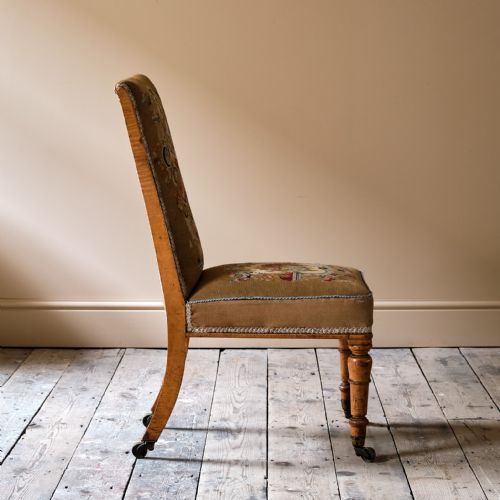
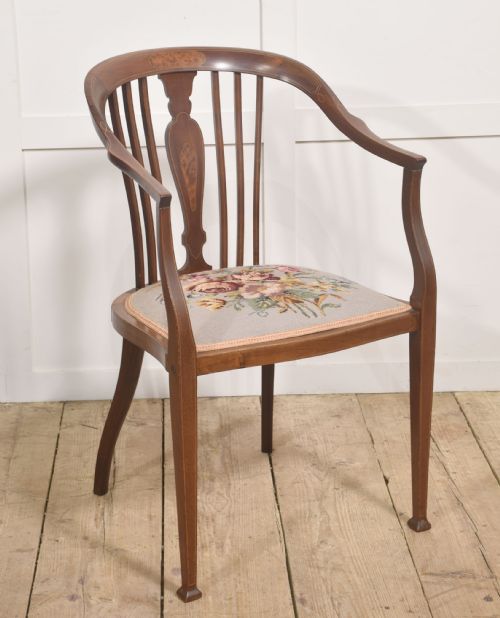


Needlepoint Bedroom Chair
A needlepoint bedroom chair brings hand-worked textile panels and timber frames together to create a practical seat with a decorative presence.
Needlepoint Bedroom Chair
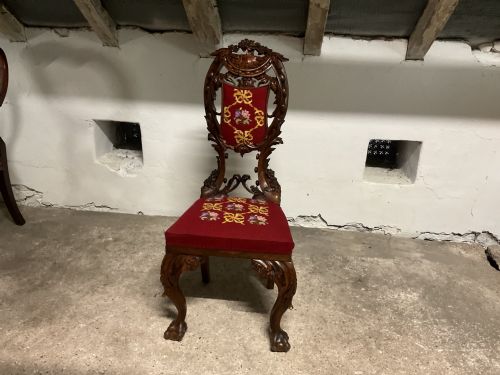
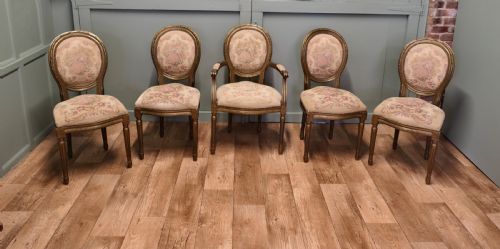
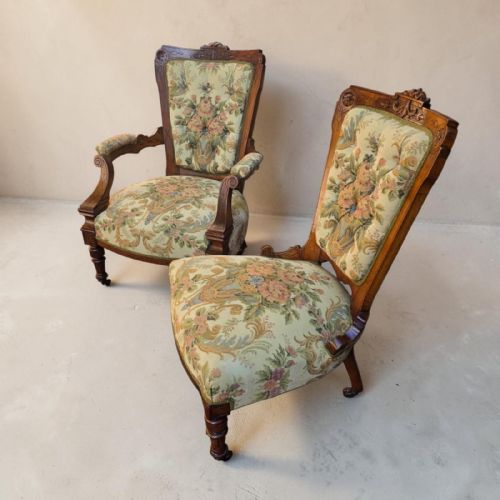
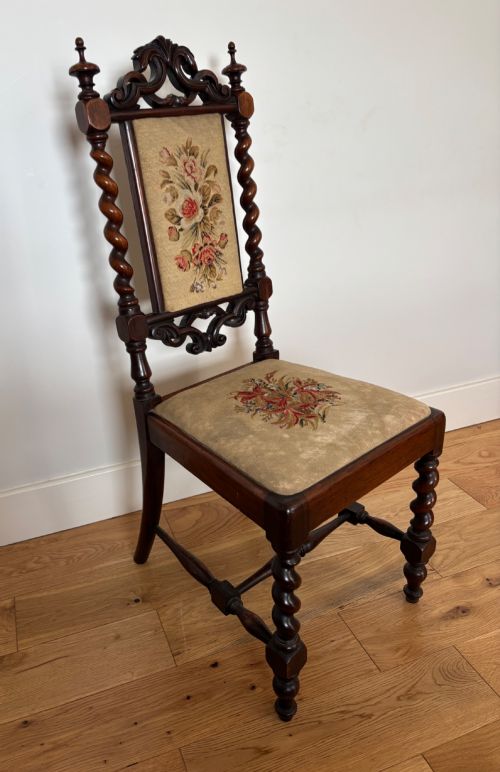
A needlepoint bedroom chair is a low-slung or compact seat designed for private spaces, appearing in forms such as nursing chairs, dressing stools, and small occasional chairs. These pieces date predominantly from the nineteenth century and the Edwardian era, spanning periods from early Victorian work to the twentieth century. The primary version met on this page is the walnut or mahogany framed nursing chair upholstered in wool tapestry or needlepoint fabric.
Makers and manufacturers utilised various styles across these decades, including Victorian Rococo Revival, French Rococo Revival, Queen Anne style, and the Aesthetic Movement. Frames vary from carved walnut and mahogany to rosewood, beech, and painted timbers, often accompanied by original floral or figural tapestry panels. They function as both usable bedroom seating and decorative focal points within an interior.
Materials and Construction
Timber frames form the structural core of these seats, with mahogany, walnut, and rosewood selected for their density and finish, alongside lighter beech and satinwood inlays. Artisans shaped these woods into carved cabriole legs, scroll backs, and open armchairs utilising traditional joinery methods. Metal components such as brass or ormolu mounts appear on select French and English pieces from the mid-nineteenth century onwards.
Upholstery relies on hand-stitched needlepoint or wool tapestry panels stretched over padded foundations. These textile coverings display floral, geometric, or pictorial designs worked in wool and silk threads. The fabric is secured to the wooden frame using traditional tacks, often finished with decorative gimp braid along the borders.
Needlepoint Bedroom Chair Retail Price Guide 2026
Typical asking prices for needlepoint bedroom chair among the pieces listed under this phrase on Sellingantiques today, from the lower quarter to the upper quarter. They describe what is for sale here now, not the wider market.
Current listings feature frames in mahogany, walnut, rosewood, and beech, upholstered in wool tapestry and needlepoint.
Quality Variations
The standard of a needlepoint bedroom chair depends on the depth and definition of the timber carving and the tightness of the frame's construction. Pieces featuring richly figured walnut or mahogany with crisp, hand-carved details sit at the higher end of the range compared to simpler turned or plain-framed examples. The integration of parquetry, inlays, or ormolu mounts similarly elevates the sophistication of the work.
The quality of the textile work marks another major distinction between examples. Finely executed needlepoint with dense, detailed stitching and well-preserved wool colours demonstrates superior craftsmanship over coarser, later machine-woven imitations or heavily worn tapestries. The harmony between the original frame design and its textile upholstery dictates the overall integrity of the piece.
Gillows·Wheeler
The Needlepoint Bedroom Chair Glossary
- Nursing chair
- A low-seated chair originally designed in the Victorian period for comfortable nursing or dressing. These pieces often feature an upholstered back and seat without arms to accommodate voluminous skirts.
- Tapestry
- A form of textile art traditionally woven on a loom or worked by hand with needle and thread. In these listings, it refers to the decorative fabric panels covering the seats and backs.
- Ormolu
- Gilded bronze or brass mounts applied to furniture for decorative effect. They appear frequently on mid-nineteenth-century French pieces.
- Cabriole leg
- A furniture leg that curves out and then narrows inward, resembling an animal's leg. This shape is characteristic of Rococo Revival and Queen Anne style designs.
- Parquetry
- Geometric wood inlay patterns forming a mosaic-like surface on tabletops and chair frames. It demonstrates advanced cabinet-making skill.
Needlepoint Bedroom Chair: Frequently Asked Questions
What is a nursing chair?
A nursing chair is a low-seated Victorian chair designed for private rooms, specifically for feeding infants or assisting with Victorian dress.
Their low profile and absence of arms allowed individuals to sit comfortably while managing heavy layers of fabric and skirts.
How do I date a Victorian chair?
Dating these chairs involves examining the timber species, joinery techniques, and prevailing decorative styles of the period. Early Victorian pieces often show heavy mahogany frames with scroll backs, while later decades introduce ebonised finishes and Aesthetic Movement designs.
Stylistic cues like Rococo Revival curves or simpler Edwardian lines help narrow down the decade of manufacture.
Are needlepoint panels original?
Needlepoint panels can be original hand-stitched works contemporary to the frame or later replacements added during restoration. Examining the wear patterns on the wool threads and the method of attachment to the wood helps determine age.
Original textiles display age-appropriate fading and wear that matches the condition of the underlying timber frame.
How should I clean needlepoint upholstery?
Needlepoint upholstery requires gentle care to protect fragile wool threads and aged foundation fabrics. Regular light vacuuming with a low suction attachment and a protective mesh screen prevents dust accumulation without pulling the stitches.
Professional textile conservation is recommended for deeper cleaning to avoid damaging the historical fibres.
Where should I place a salon chair?
A salon chair or occasional chair suits low-traffic reception rooms, bedrooms, or dressing areas as an accent piece. Their compact dimensions allow them to fit into corners or beside dressing tables without dominating the room.
Keeping them away from direct sunlight protects the delicate needlepoint wools from fading.