


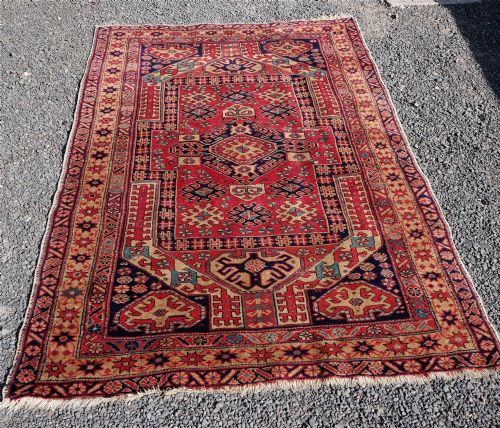
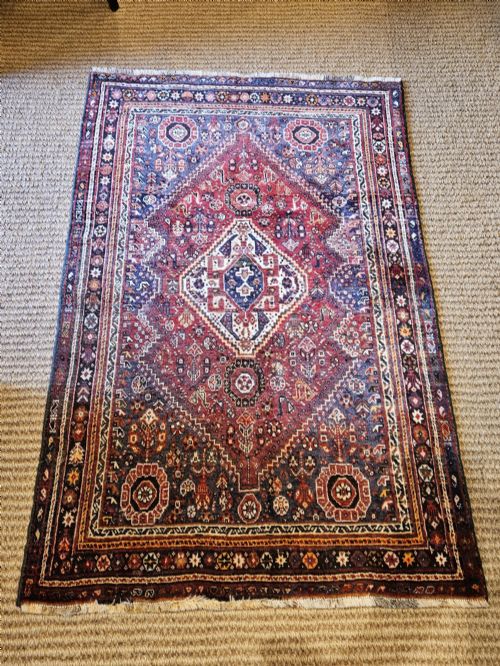
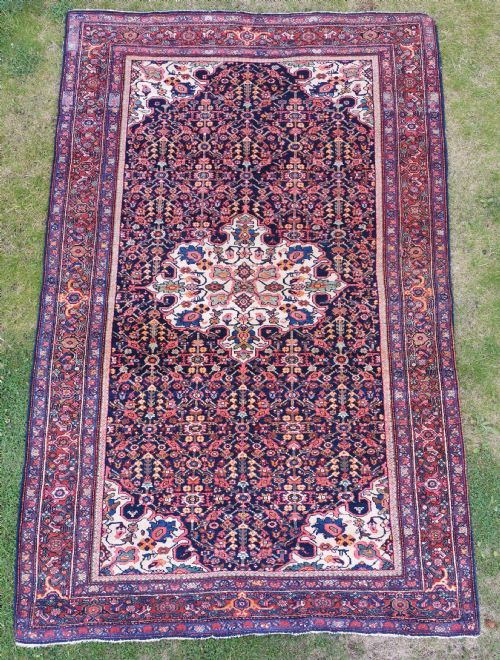
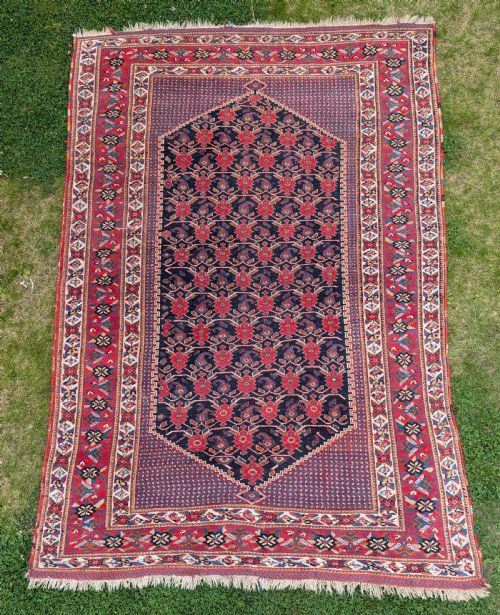
Navy Wool Persian Carpet
These heavy hand-knotted floor coverings offer deep indigo tones and dense pile, delivering warmth and enduring structure to rooms.
Navy Wool Persian Carpet
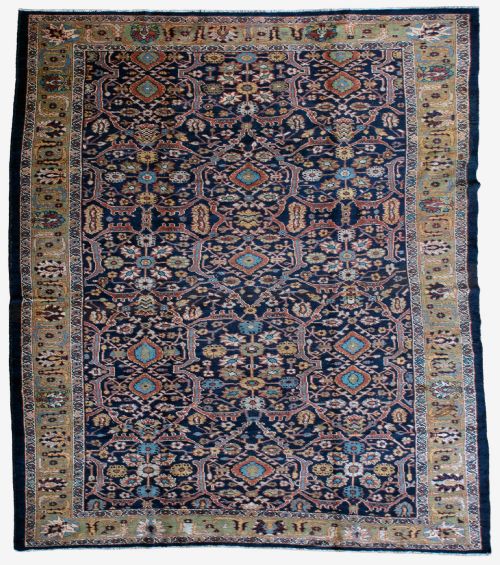
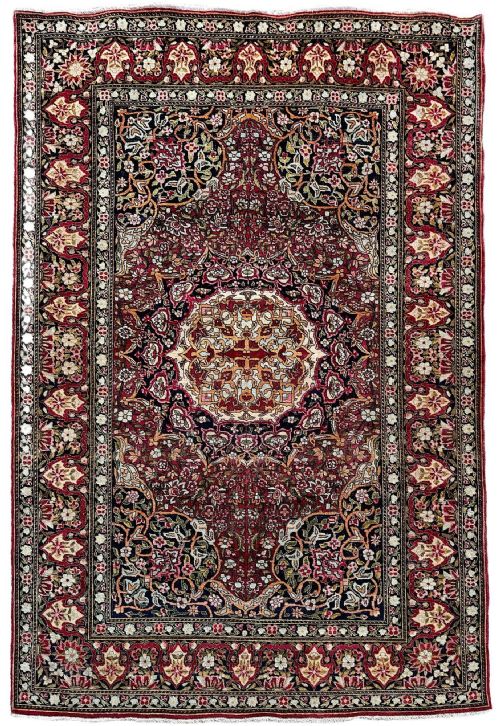
A navy wool persian carpet brings together centuries of regional weaving traditions, appearing here in formats ranging from small village rugs to large hall carpets dating from the nineteenth and early twentieth centuries. Buyers search for these floor coverings to ground a room with deep indigo shades and complex geometric or floral patterns.
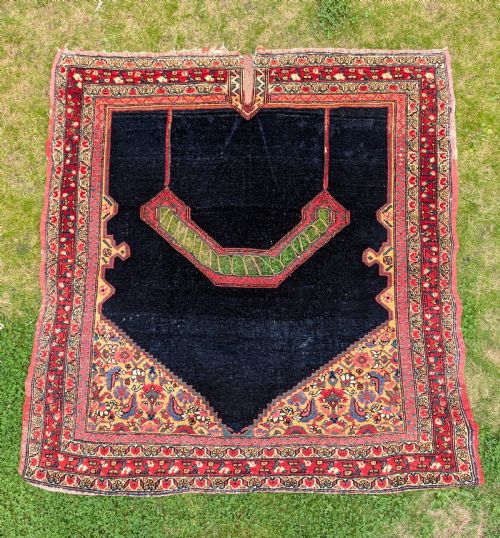
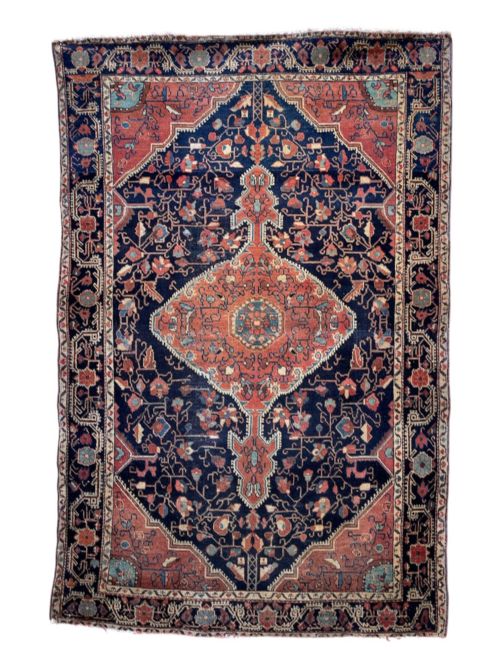
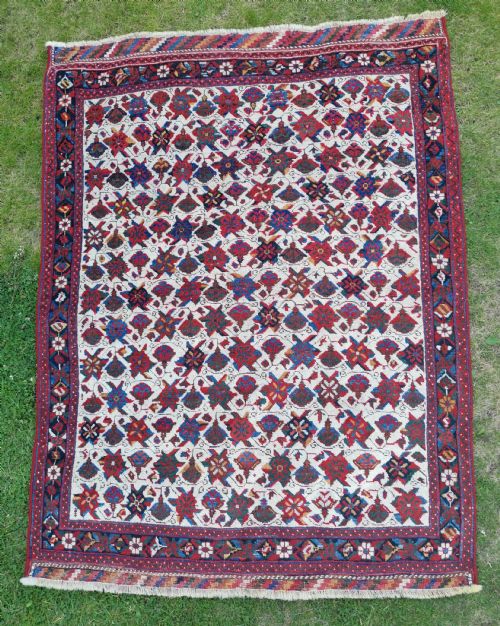
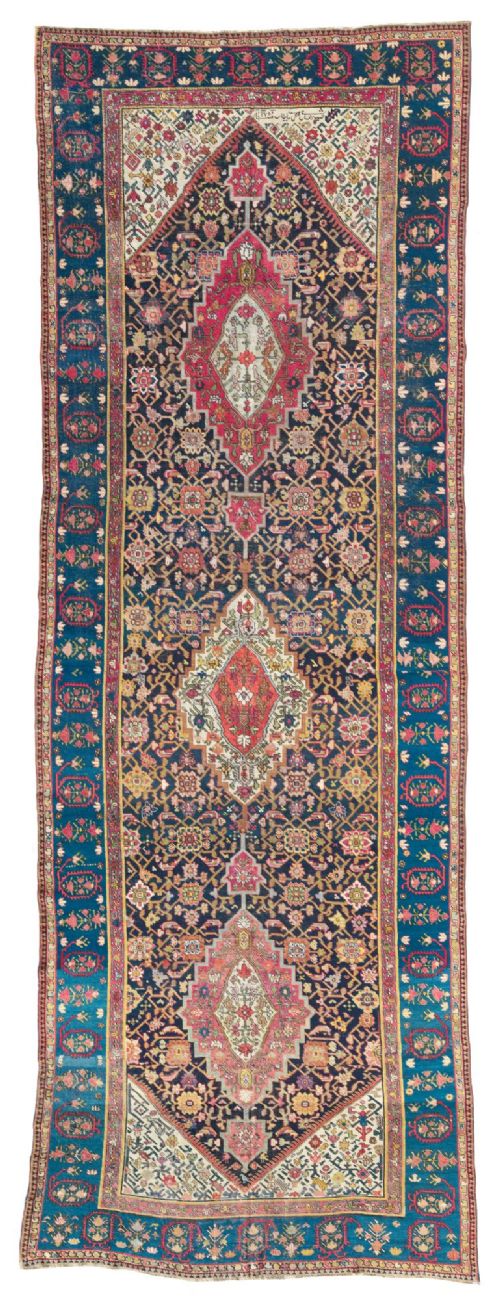
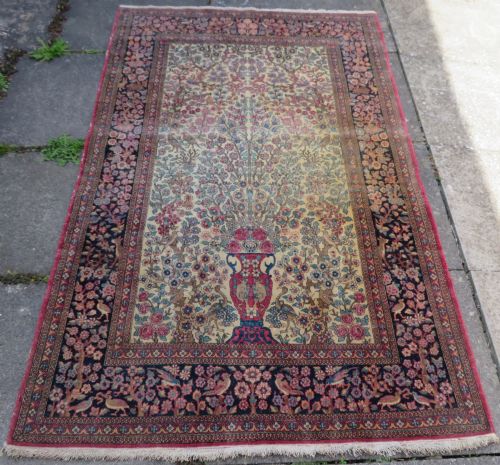
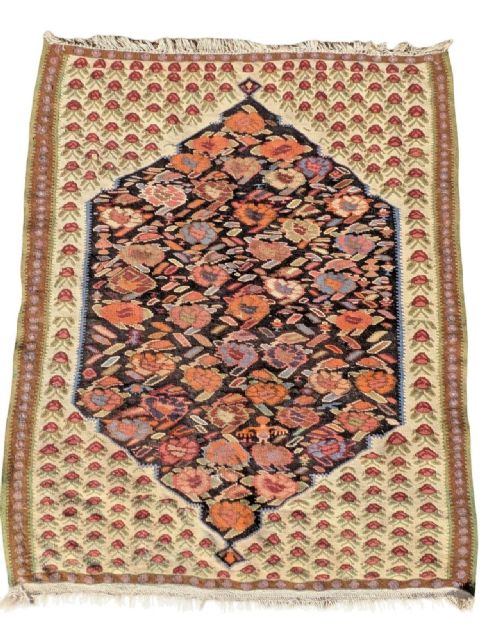
The selection on this page includes named regional types such as Heriz, Mahal, Khamseh, and Afshar alongside pieces woven by tribal groups like the Bakhtiar and Kurdish weavers. Forms vary from long hallway runners and square saddle covers to room-sized carpets and smaller area rugs.
Dating across the evidence spans from the mid nineteenth century through to the 1930s, representing traditional Persian and Caucasian styles. Village and tribal pieces dominate the selection, showing distinct regional medallions, lattice motifs, and animal or tree of life designs.
What Varies in Quality
Knot density and the precision of the design determine the finer examples from simpler village work, with urban workshops often achieving greater symmetry than nomadic pieces. The choice of wool also differs, where hand-spun yarns display more character and lanolin retention than later commercial spins.
The integrity of the foundation and the crispness of the secondary motifs separate standard production from exceptional pieces. Surviving edge bindings and original fringe lengths contribute to the overall preservation of the textile.
Listings feature pieces dated from the mid nineteenth century up to the 1930s, constructed predominantly from wool, cotton, and hand-spun wool.
The Navy Wool Persian Carpet Glossary
- Medallion
- A central ornamental motif placed in the middle of the carpet field. It usually takes a geometric or floral shape that anchors the entire composition.
- Kelleh
- A large, elongated format of carpet traditionally suited for the long sides of a reception room. These pieces offer an extended rectangular field.
- Warp
- The vertical foundation threads stretched lengthwise on the loom before knotting begins. All the pile knots tie directly around these parallel foundation lines.
- Weft
- The horizontal threads passed across the warp threads after each row of knots is completed. They pack down to secure the structure of the weave.
- Pile
- The upright cut ends of the yarn that form the usable surface of the carpet. Its thickness and material determine the tactile feel underfoot.
Navy Wool Persian Carpet: Frequently Asked Questions
How do I clean an old wool rug?
Surface dust settles deep within the foundation threads, so regular gentle vacuuming without a beating brush attachment helps maintain the fibres. Professional hand washing remains necessary for removing embedded soil without disturbing the natural dyes.
Harsh chemical detergents or soaking will cause bleeding in traditional dyes and damage the wool structure. Specialist textile cleaners use controlled water temperatures and gentle drying methods to preserve the integrity of the weave.
Where were these carpets originally woven?
Production centres span across Persia and the Caucasus, incorporating urban workshops, rural villages, and nomadic tribal camps. Different districts developed distinct visual vocabularies, such as the geometric corners of Heriz or the fine floral curves of Isfahan and Saroukh.
Nomadic groups like the Afshar, Khamseh, and Bakhtiar worked independently from fixed workshops, translating memory and local flora into their geometric patterns. This regional diversity means two rugs from adjacent valleys can display entirely different colour palettes and knotting structures.
Can I place these under heavy furniture?
Dense wool pile absorbs the weight of wooden tables and chairs effectively without crushing permanently. Distributing the load across flat glides prevents excessive localized depression in the foundation.
Rotating the rug periodically ensures that foot traffic and furniture placement wear the pile evenly over the years. This simple practice prevents distinct paths from forming in high-use areas of the room.
What underlay should I use?
A breathable mesh underlay prevents the rug from slipping on polished wooden floors or stone tiles. It adds a layer of cushioning that reduces friction between the floorboards and the cotton foundation.
Avoid solid rubber or plastic backings that trap moisture and restrict airflow through the natural wool fibres. Natural felt and rubber composites offer a secure grip while allowing the textile to breathe.