







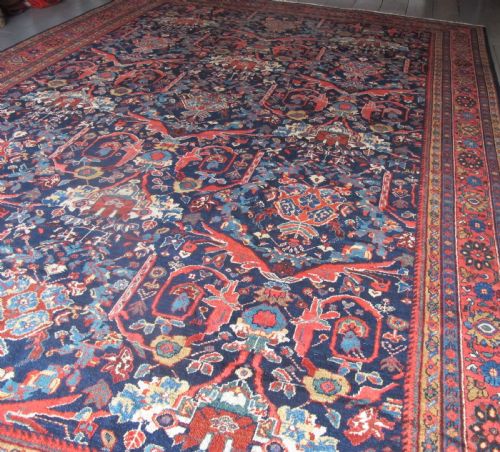
Navy Sultanabad Carpet
A navy sultanabad carpet brings deep Persian artistry into a room, offering grand scale and rich, patterned warmth underfoot.
Navy Sultanabad Carpet
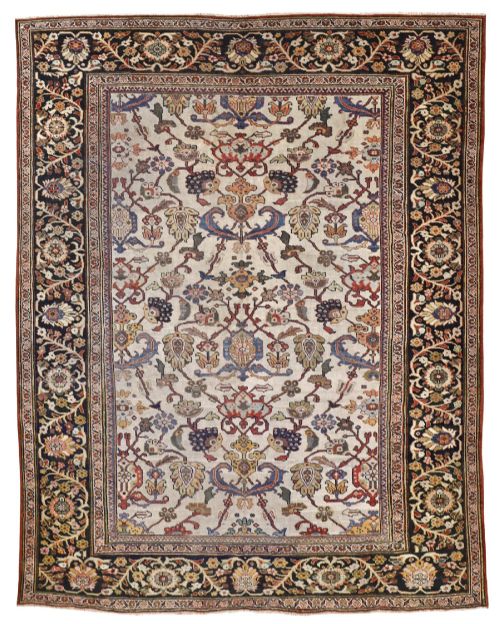
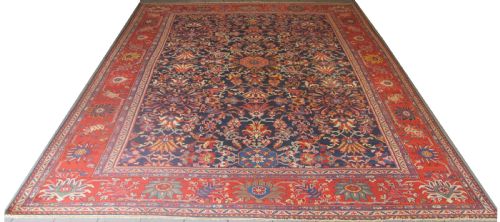
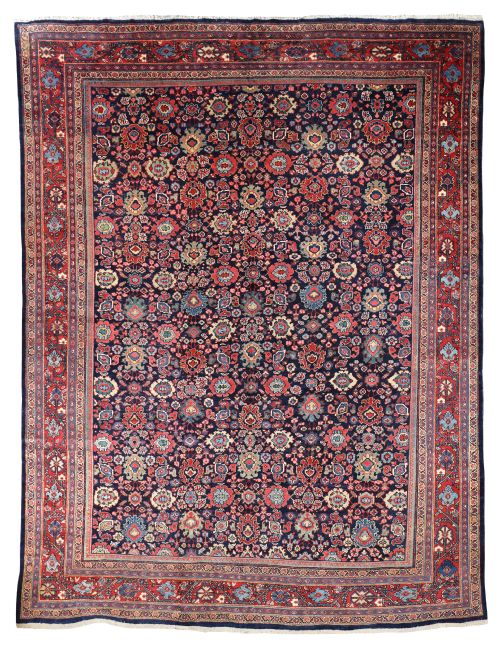
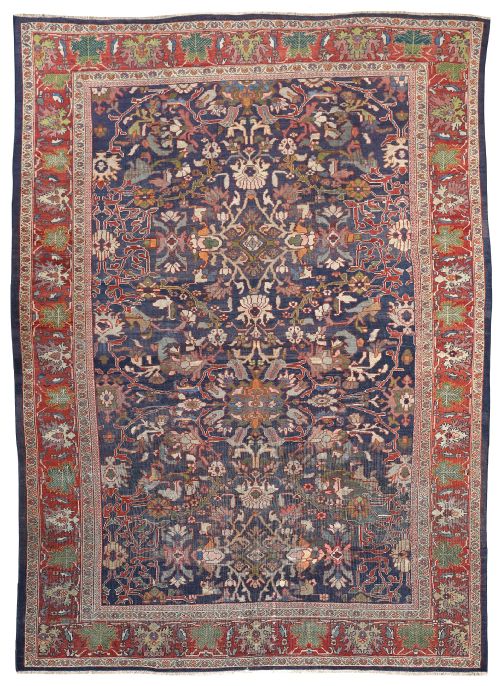
A navy sultanabad carpet represents a distinctive category of Persian floor covering prized for its grand proportions and bold botanical layouts. When exploring a navy sultanabad carpet, buyers encounter nineteenth-century and early twentieth-century examples woven in the Sultanabad region of Persia. These large format pieces and room-sized rugs frequently share design ties with Mahal and Ziegler productions from the same era.
The pieces appearing on this page span from the Victorian period through to the nineteen-twenties, incorporating traditional Persian aesthetic conventions. Buyers will find variations ranging from palace-sized carpets down to more compact area rugs. Each specimen displays the characteristic floral motifs and expansive fields associated with Persian weaving traditions of the late nineteenth century.
How they were made
The construction of these floor coverings relies upon traditional materials, utilising wool pile anchored to cotton foundations. Weavers knotted the wool by hand onto sturdy cotton warp and weft threads to achieve durable surfaces capable of withstanding heavy daily use. This combination of resilient wool and stable cotton allowed workshops to produce expansive room-sized and palace-sized carpets without losing structural integrity.
Makers employed natural dyeing techniques to establish the deep indigo and navy grounds that define these rugs, contrasting with softer tones in the floral motifs. The resulting textiles exhibit the substantial weight and flexible handle characteristic of genuine Persian craftsmanship from the Sultanabad region. Every carpet reflects the collective effort of skilled artisans working within established regional traditions.
Navy Sultanabad Carpet Retail Price Guide 2026
Typical asking prices for navy sultanabad carpet among the pieces listed under this phrase on Sellingantiques today, from the lower quarter to the upper quarter. They describe what is for sale here now, not the wider market.
Some carpets here are large enough to comfortably host a family gathering of Persian goats.
What varies in quality
The caliber of these textiles rests upon the density of the knotting and the precision with which the grand botanical patterns are articulated across the field. Superior examples maintain crisp delineation in the floral motifs and feature well-balanced borders that frame the central navy ground harmoniously. Master weavers achieved a suppleness in the handle that distinguishes finer room-sized carpets from simpler utility grades.
Proportion and scale also dictate the standing of individual pieces, with larger palace formats requiring exceptional skill to maintain symmetry over vast surface areas. The depth and saturation of the navy dye ground play a crucial role, as evenly struck colours elevate the overall visual impact. Condition and structural longevity complete the assessment, reflecting the original quality of the wool and the care taken during production.
The Navy Sultanabad Carpet Glossary
- Sultanabad
- A regional designation for carpets woven in and around the city of Sultanabad in Persia, known for large-scale floral designs. These rugs often feature expansive fields and muted palettes tailored for Western export markets in the nineteenth century.
- Mahal
- A term often used interchangeably or in close association with Sultanabad carpets, denoting woven pieces from the same geographical district. Mahal carpets typically exhibit slightly more rustic charm and varied medallion layouts compared to their urban counterparts.
- Ziegler
- A classification applied to nineteenth-century Persian carpets produced or influenced by the Swiss firm Ziegler and Co., which established commercial workshops in Sultanabad. They are distinguished by subdued colorways and oversized, open floral patterns.
- Warp
- The vertical threads stretched lengthwise on the loom that form the foundational skeleton of the carpet. In these Persian pieces, cotton warp threads provide the tensile strength necessary for large formats.
- Weft
- The horizontal threads passed alternately over and under the warp threads to secure the rows of knots in place. Together with the warp, the cotton weft creates the stable grid supporting the wool pile.
Navy Sultanabad Carpet: Frequently Asked Questions
How do I style a large carpet?
Living with a room-sized carpet involves placing it centrally in a reception room or study to let the navy field ground the surrounding furniture. Keeping surrounding upholstery relatively neutral allows the intricate floral motifs and grand scale of the rug to remain the focal point.
Ensure the piece is laid flat on a suitable underlay to protect the cotton foundation from premature wear. Regular gentle rotation helps distribute foot traffic evenly across the wool pile over the years.
How do I date these carpets?
Dating these textiles relies upon examining structural characteristics, wool quality, and design attributes associated with periods like the Victorian era or the early twentieth century. Pieces from the eighteen-eighties and nineties often display specific natural dye characteristics and regional weaving traits.
Comparing the knotting style and palette with documented examples from workshops in the Sultanabad region helps narrow down the production period. Secondary attribution often references related Mahal and Ziegler production standards from the same decades.
Are these rugs made of wool?
The surface pile of these carpets consists of hand-knotted wool, which provides both softness and remarkable durability underfoot. This natural fibre holds rich indigo and navy dyes effectively, creating the deep grounds characteristic of the type.
The underlying structure relies on cotton for the warp and weft threads, ensuring the heavy textile maintains its shape and stability. This combination of materials was standard practice in Persian workshops of the period.