


Antique Carpet Living Room
An antique carpet living room floor covering anchors a space with hand-knotted wool, bringing enduring pattern and traditional Persian or Turkish origins beneath your feet.
Antique Carpet Living Room
When you search for an antique carpet living room layout, you encounter large floor coverings originating mainly from Persian and Turkish weaving centres. These pieces date predominantly from the late nineteenth century through to the middle of the twentieth century, encompassing periods from eighteen seventy to nineteen forty.
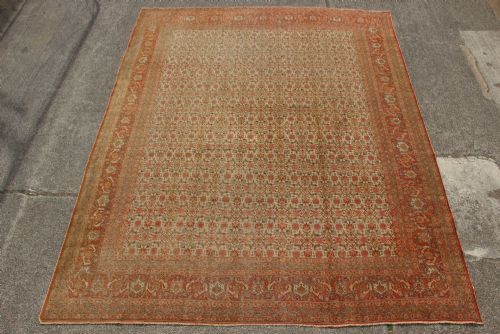
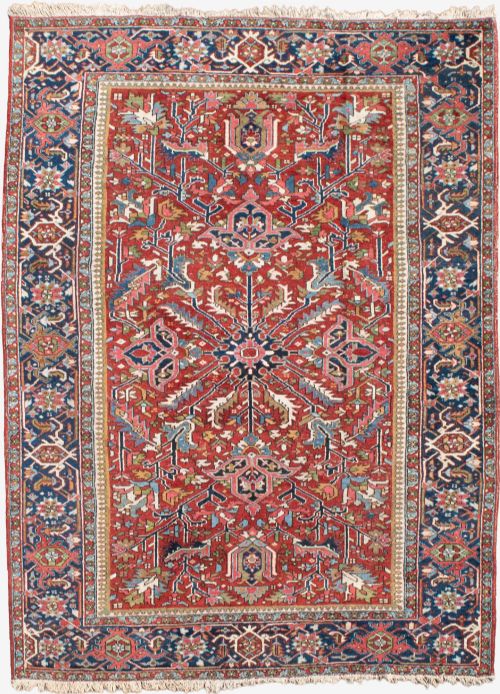
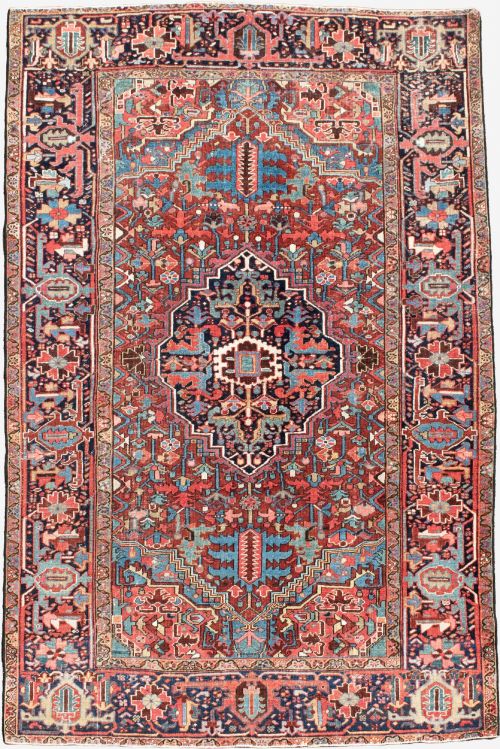
You meet various traditional forms on this page, including large carpets and smaller rugs designated by origins such as Heriz, Tabriz, Oushak, and Sultanabad. These pieces arrive in diverse formats like the grand Heriz carpet or the pale blue Oushak, suited to anchor a sitting room.
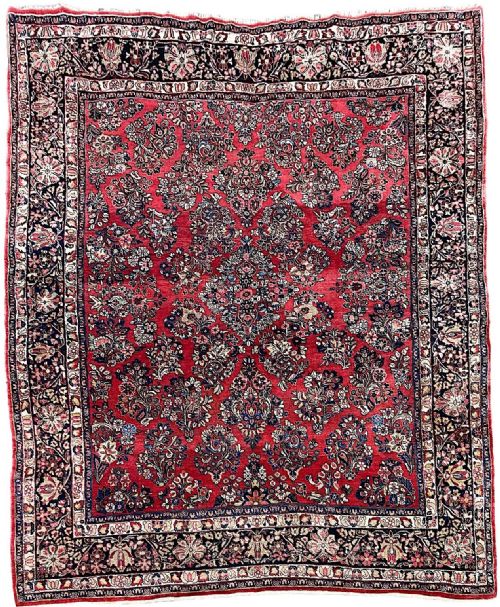
The selection ranges from room-sized carpets measuring over four metres to smaller regional rugs like Hamadan, Malayer, and Qashqai. Each origin brings distinct regional patterns, from bold geometric medallions to delicate floral fields.
How they were made
Makers constructed these floor coverings primarily using hand-knotted wool, occasionally incorporating cotton for foundations and supplementary silk details in specific pieces like Kashan and Qum rugs. Hand-knotting techniques allowed weavers to secure dense piles that yielded resilient surfaces suitable for heavy domestic use.
Dyers utilised natural and traditional colorants to achieve the soft pastel shades, ivory grounds, and pink tones seen in Oushak and Tabriz productions. The integration of wool and cotton provided structural stability across large formats like the Mahal and Ziegler carpets.
Materials recorded across the inventory comprise wool, cotton, silk, and hand-knotted wool constructions.
What varies in quality
Knot density and the precision of the hand-knotted pile dictate the structural integrity and longevity of each piece. Finer examples display meticulous execution in the rendering of traditional Persian and Turkish motifs.
The choice of materials influences the handling and visual depth, with pure wool and partial silk highlights offering distinct tactile qualities. Dye consistency and the preservation of original borders further distinguish the output of master workshops from standard regional weaving.
Benlian Tabriz·Maples Ushak
The Antique Carpet Living Room Glossary
- Hand-knotted wool
- A construction method where individual wool yarns are tied by hand to warp and weft threads, creating a durable pile. This technique defines the primary build of the carpets listed here.
- Medallion
- A central ornamental motif placed in the middle of the carpet field. Many Heriz and Ushak pieces feature this prominent design element.
- Warp
- The vertical foundation threads stretched tightly on the loom before knotting begins. Cotton or wool warp provides the skeletal structure for the rug.
- Weft
- The horizontal threads passed across the warp strands to lock the rows of knots in place. Proper tension in the weft ensures the rug remains flat and stable.
- Pile
- The upright surface layer of yarn formed by the cut ends of knots. Pile depth varies between dense city carpets and coarser tribal weaving.
Antique Carpet Living Room: Frequently Asked Questions
How do I choose the right size?
Measure your seating area to ensure the front legs of furniture rest comfortably upon the wool surface. Allow adequate floor margins around the perimeter of the room to display the surrounding boards.
Larger rooms accommodate grand Tabriz or Sultanabad formats exceeding four metres in length. Compact spaces benefit from regional Hamadan or Malayer rugs that fit neatly beneath a coffee table.
Are these carpets suitable for heavy traffic?
Hand-knotted wool construction provides natural resilience against regular foot traffic in domestic settings. Dense piles withstand daily use while maintaining structural integrity over decades.
Placing a quality underlay beneath the carpet prevents slippage and reduces friction against the floorboards. Regular gentle maintenance preserves the pile and extends the working life of the textile.
How do I tell Heriz and Tabriz apart?
Heriz carpets typically display bold, geometric medallion designs with robust angular lines and rich terracotta or brick tones. They originate from northwestern Persia and emphasise sturdy structural weaving.
Tabriz carpets present finer, more curvilinear floral motifs with sophisticated medallion or all-over field patterns. City workshops in Tabriz utilised higher knot counts and varied pastel or ivory palettes.
What is an Oushak carpet?
Oushak carpets originate from the town of Usak in western Turkey, renowned for large-scale decorative floral patterns and soft pastel colour schemes. Weavers traditionally employed looser knots and lustrous wool to create an open, relaxed aesthetic.
These Turkish pieces often feature ivory or scarce pink grounds adorned with weeping willow or large geometric motifs. Their understated palette integrates smoothly into diverse interior design schemes.