
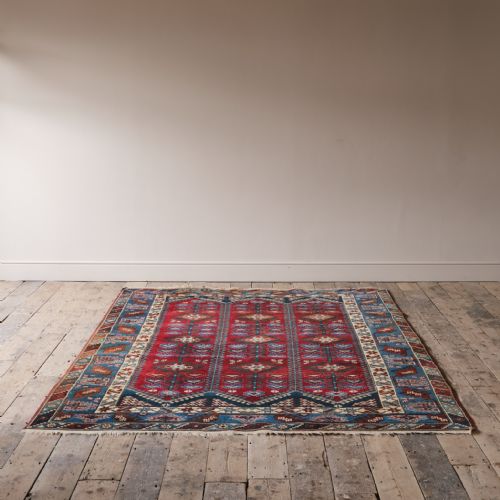
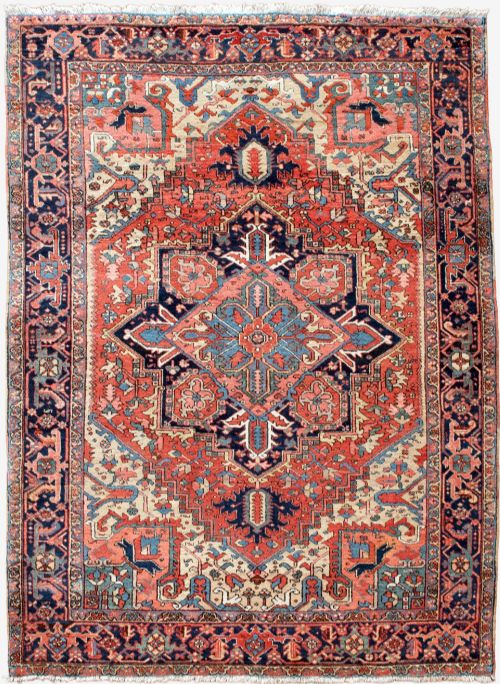
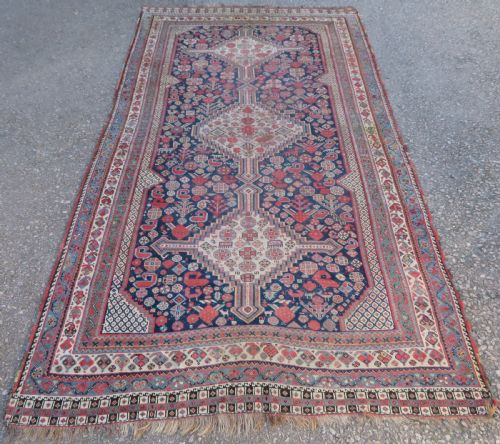


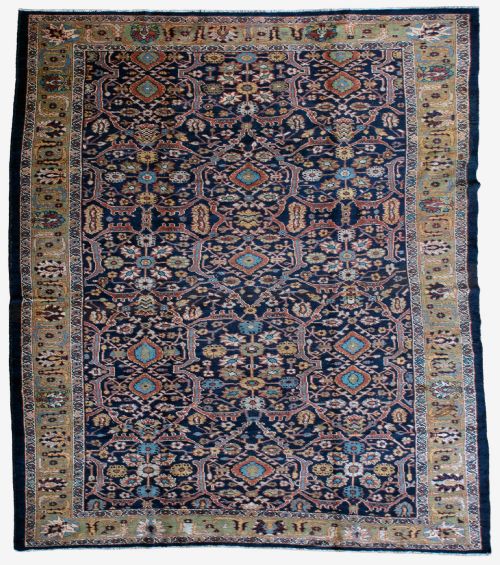
Navy Hand Knotted Carpet
These navy hand knotted carpet pieces are traditional floor coverings shaped by centuries of regional weaving traditions.
Navy Hand Knotted Carpet
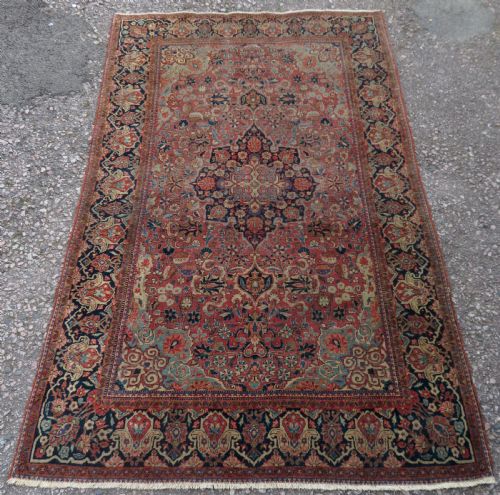
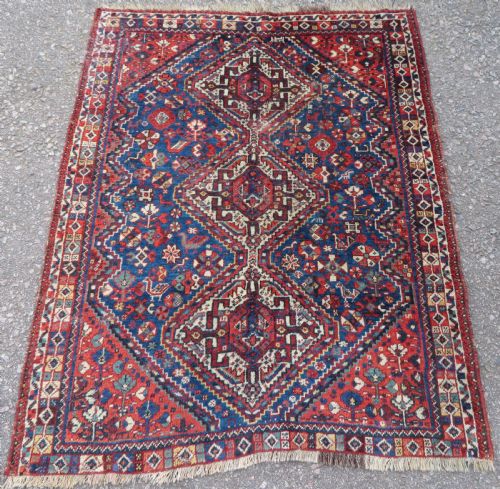
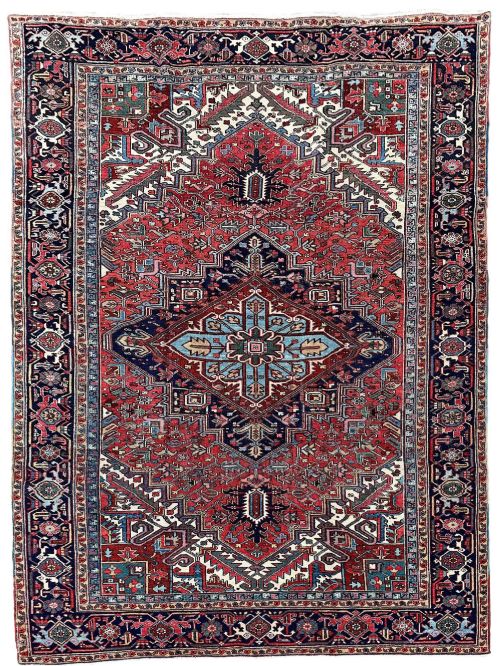
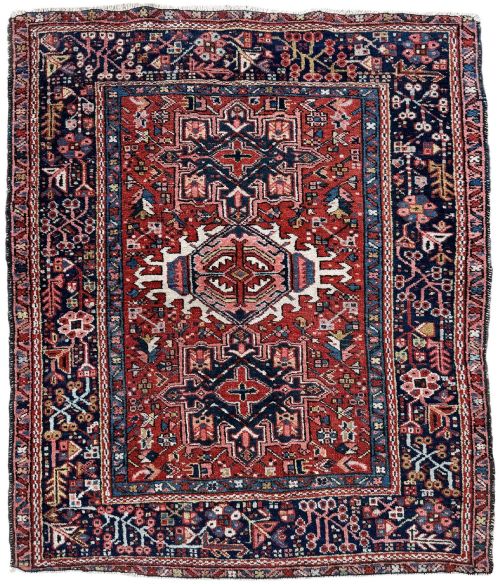
A navy hand knotted carpet brings together traditional Persian and Caucasian styles, often appearing as room-sized carpets or long runners. Buyers seeking a navy hand knotted carpet will find pieces originating from the nineteenth and early twentieth centuries, spanning periods from the eighteen-fifties through the nineteen-thirties.
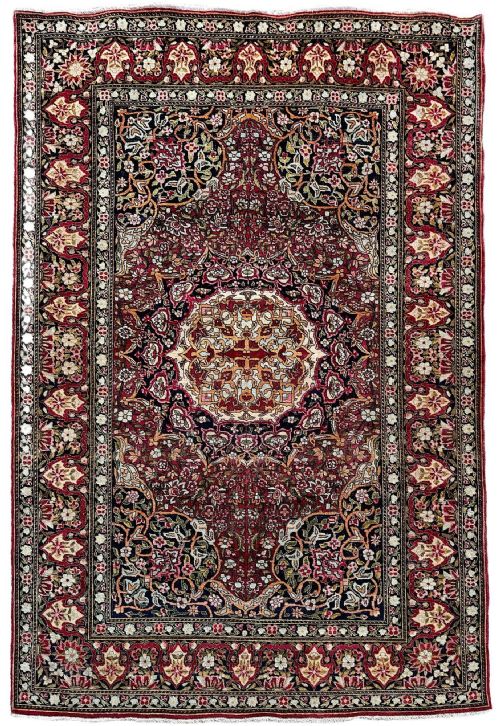
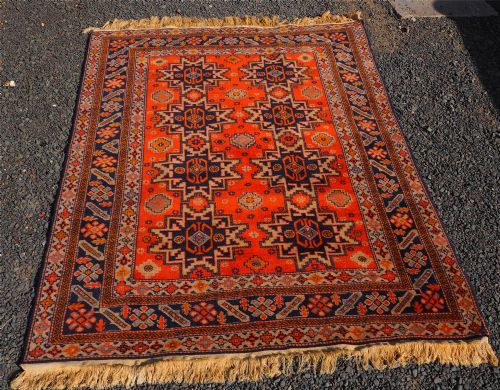
The selection includes specific regional types such as Heriz, Mahal, Khamseh, Afshar, and Isfahan carpets, alongside saddle covers and smaller prayer rugs. Most examples rely on wool construction, featuring geometric medallions, tribal motifs, or detailed tree of life patterns across various formats.
How they were made
Weavers constructed these pieces predominantly from wool, cotton, and occasionally silk, utilising hand-spun wool in traditional regional workshops and nomadic camps. Artisans tied individual knots by hand onto foundational warps and wefts to build durable floor coverings.
Natural dyeing techniques produced the characteristic deep navy grounds and secondary tones seen across Persian and Caucasian tribal examples. The structural integrity depends on the density of the hand-knotting and the quality of the wool employed in the pile.
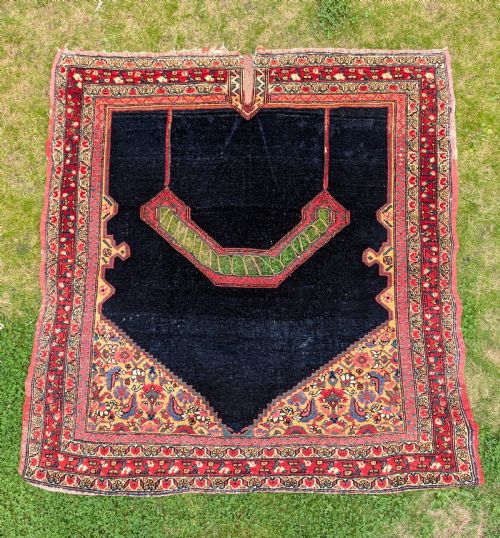
Saddle covers offer a glimpse into nomadic life, having traded horse transport for quiet spots on living room floors.
What varies in quality
Knot density and precision of execution distinguish the finest examples from simpler tribal pieces, influencing the crispness of geometric medallions and floral motifs. The fineness of the spun wool and the complexity of the design layout dictate the overall refinement of the weaving.
Proportion and scale play significant roles, particularly in large carpets and elongated runners where maintaining symmetrical borders requires considerable skill. Even among distressed or older tribal rugs, structural resilience in the foundation determines lasting integrity.
The Navy Hand Knotted Carpet Glossary
- Medallion
- A central ornamental motif placed in the middle of the carpet field. This design element frequently anchors the geometric or floral composition.
- Warp
- The vertical threads stretched across the loom that form the structural foundation of the textile. Weavers tie individual knots around these stationary threads.
- Weft
- The horizontal threads passed across the warp threads after each row of knots is completed. This process secures the pile in place.
- Kelleh
- A large, oblong format carpet traditionally proportioned for narrower rooms or specific spaces. These pieces share stylistic traits with main carpets but possess distinct dimensions.
- Saddle cover
- A smaller textile designed originally for animal transport use, featuring compact motifs adapted to tight dimensions. These specialised pieces are collected as portable examples of tribal weaving.
Navy Hand Knotted Carpet: Frequently Asked Questions
How do I care for an antique rug?
Vacuum gently without using a rotating brush roll to protect the hand-knotted pile and delicate foundation threads.
Keep the textile out of direct sunlight to preserve the natural navy and accent dyes over decades of use.
Where were these carpets made?
Production centres span traditional Persian regions and Caucasian tribal areas, including workshops and nomadic camps.
Specific origins range from Heriz and Isfahan to Afshar and Baluch territories, each contributing distinct aesthetic traditions.
How are different regional styles identified?
Distinction relies on characteristic medallion layouts, border motifs, and specific colour palettes associated with particular weaving groups.
Caucasian pieces often display sharper geometric forms, while Persian carpets frequently incorporate curvilinear floral schemes.
Can these runners be used in hallways?
Many long runners and Kelleh formats are suited for high-traffic corridors when paired with a quality underlay.
The durable wool pile provides natural resilience against regular foot traffic in domestic settings.