
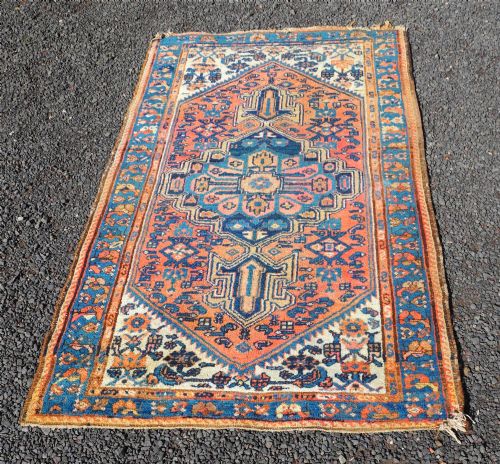
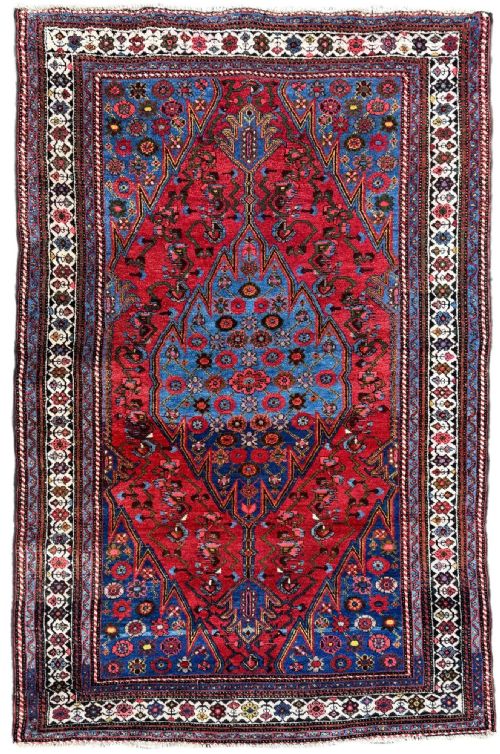
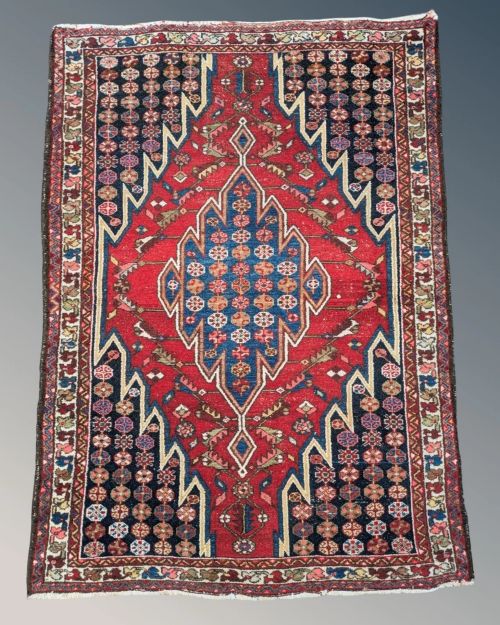
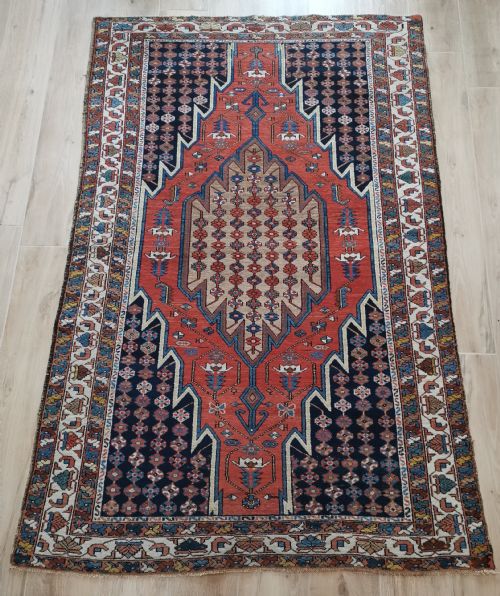


Vintage Persian Hamadan Carpet
A vintage Persian Hamadan carpet brings durable village wool and geometric tradition directly from West Persia to your floor.
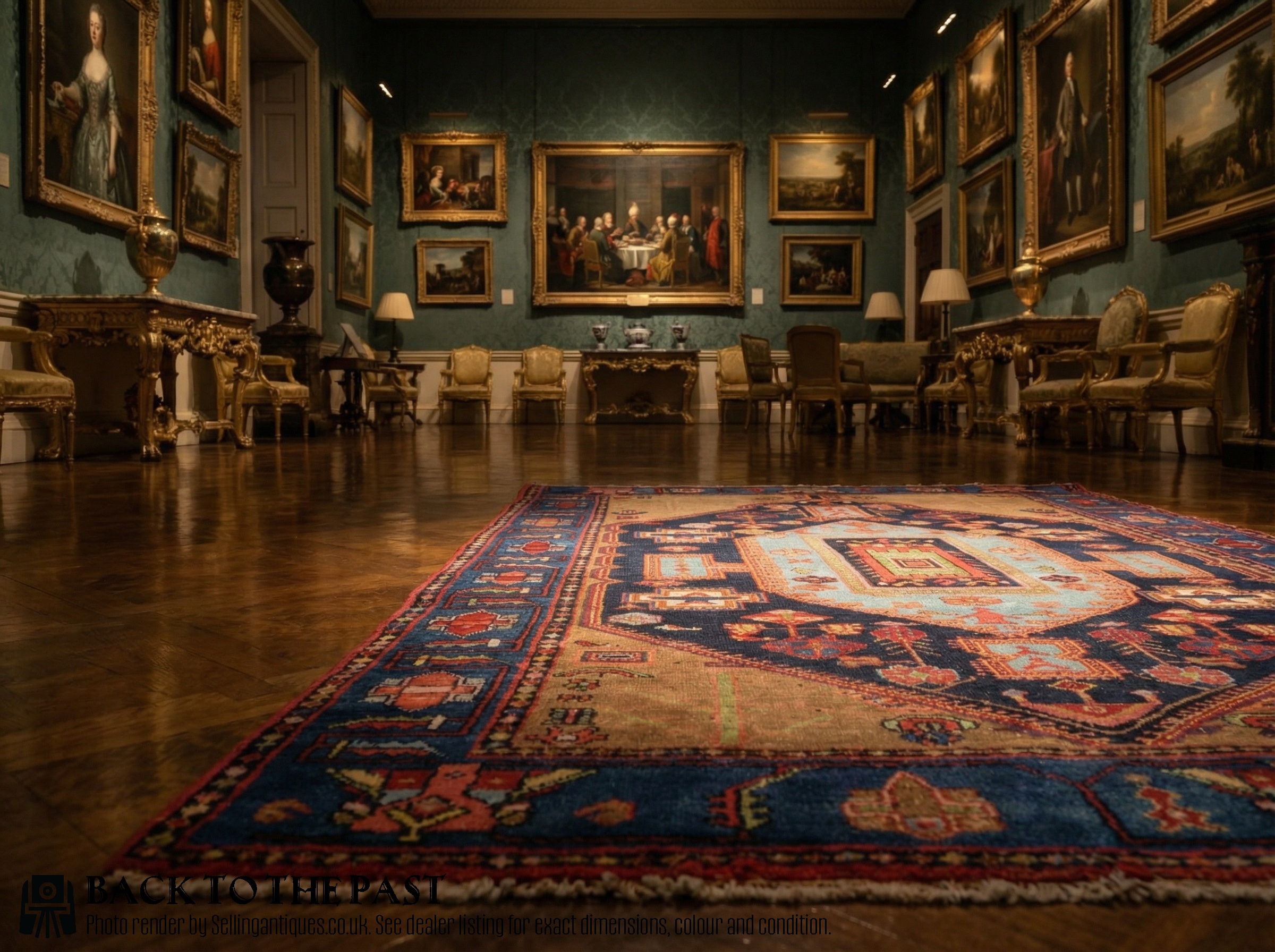
Vintage Persian Hamadan Carpet
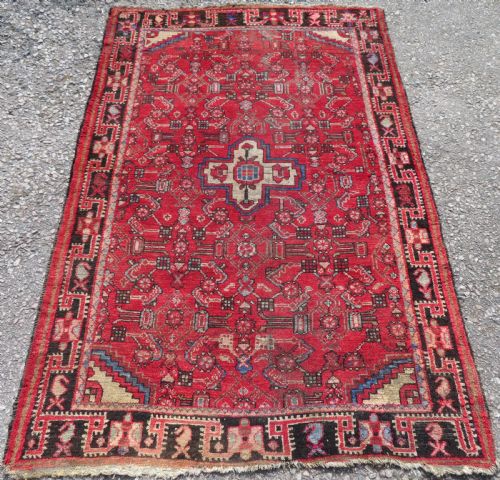
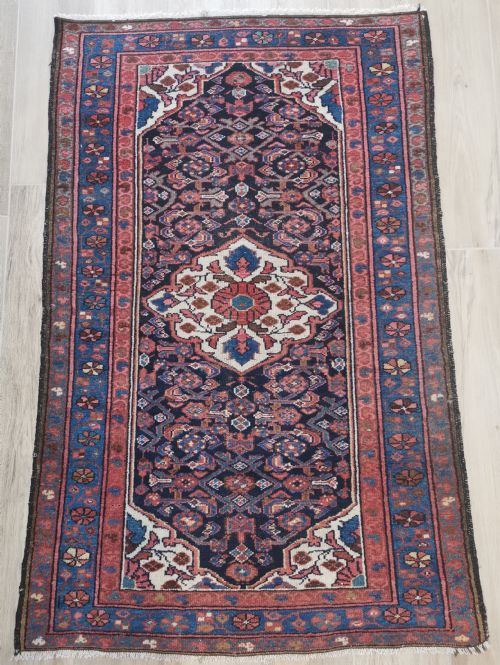
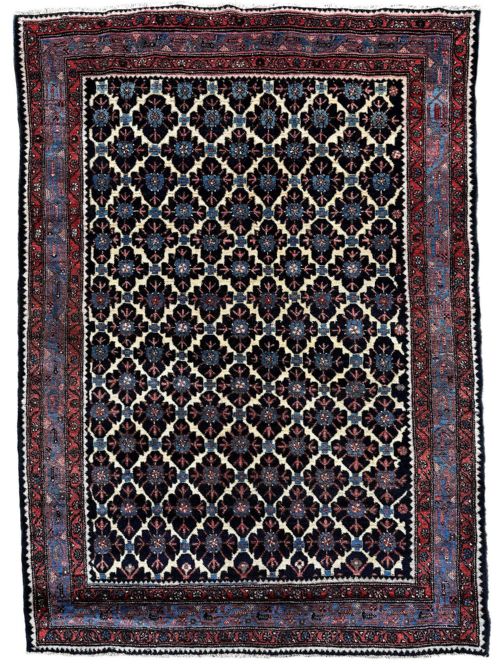
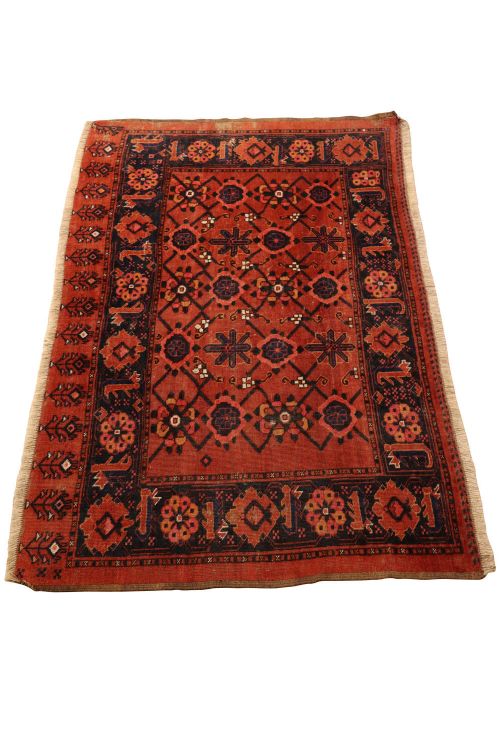
When you search for a vintage persian hamadan carpet, you examine hand-knotted village floor coverings originating from the wider Hamadan region in West Persia. These pieces date across several decades, with examples recorded from the late nineteenth century through to the mid-twentieth century.
The selection on this page centres primarily on scatter rugs, area rugs, and long hallway runners. Alongside pieces designated strictly as Hamadan, you will encounter related West Persian village styles such as Mazlaghan, Malayer, and Kurdish tribal weaves.
Makers in these village workshops utilise traditional formats ranging from compact mats to large kelleh carpets and narrow runners. The compositions typically show robust geometric motifs, medallion formats, and regional village patterns woven by domestic artisans.
How They Were Made
These carpets are hand-knotted utilising durable wool piles set upon sturdy cotton foundations. The natural animal fibres provide resilience for high-traffic areas while holding deep, saturated dye colours.
Weavers in the Hamadan region employ traditional upright village looms, tying dense knots that result in a thick, supportive pile. The structural integrity relies on tightly packed cotton warps and wefts that keep the dense wool stable over decades of use.
Listings span production dates from 1870 through to 1940, utilising wool piles on cotton foundations across all regional village styles.
What Varies in Quality
The standard of a piece depends heavily on knot density and the precision of the village design. Finer knotting allows intricate geometric lines and crisp floral lattices to emerge clearly from the wool pile.
Material selection and dye depth also separate standard examples from superior works. Early village pieces with rich, saturated wool and intact structural edges represent the higher end of the regional output.
The Vintage Persian Hamadan Carpet Glossary
- Hamadan
- A major trading hub and weaving region in West Persia encompassing hundreds of surrounding villages. Carpets grouped under this name share robust wool structures and varied geometric designs.
- Runner
- A long, narrow carpet format designed specifically for corridors, hallways, and staircases. These pieces balance length with restricted widths.
- Kelleh
- A large-sized rectangular carpet format traditional to Persian weaving. These pieces offer substantial floor coverage compared to standard scatter rugs.
- Warp
- The vertical foundation threads stretched lengthwise on the loom. Cotton warps form the rigid skeleton that holds the hand-knotted wool pile.
- Weft
- The horizontal threads passed across the warps after each row of knots. This technique locks the wool tufts firmly into place.
Vintage Persian Hamadan Carpet: Frequently Asked Questions
How do I clean a vintage Persian rug?
Regular gentle vacuuming without a rotating power brush removes surface dirt safely from the wool pile. Professional specialist cleaning remains essential for deep washing to protect the natural dyes and cotton foundations.
Avoid household chemical detergents or soaking the piece at home. Professional handlers understand how to dry village wool correctly to prevent shrinkage or dye bleed.
Are these carpets suitable for hallways?
Many examples on this page are produced as narrow runners specifically sized for corridors and heavy traffic paths. The dense wool pile handles constant footsteps while maintaining its structural form.
Placing a suitable underlay beneath the runner prevents slipping and cushions the foundation against hard flooring surfaces.
How can I date an old Hamadan rug?
Dating relies upon stylistic markers, structural wear patterns, and the character of the wool and natural dye palette. Pieces from the nineteenth and early twentieth centuries often display softer colour transitions and organic wool textures.
Archive records and comparative village weaves help narrow down the period of production within conservative decades rather than precise single years.
What is the difference between a Hamadan and a Malayer rug?
Malayer carpets originate from a specific district within the broader Hamadan sphere and frequently exhibit finer floral lattices or boteh motifs. They are often associated with refined village and town workshop traditions.
Standard Hamadan rugs tend to lean towards bolder geometric medallions and heavier tribal wool construction produced by surrounding Kurdish and village weavers.