

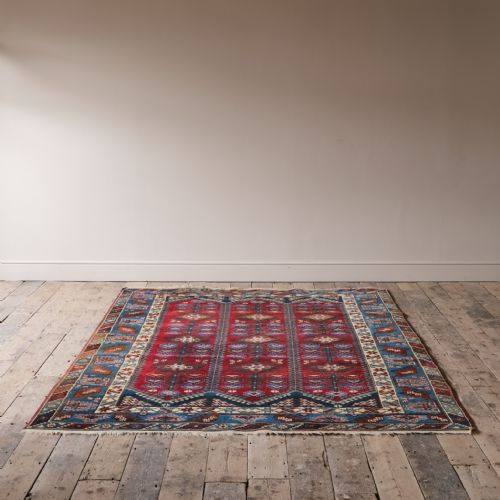
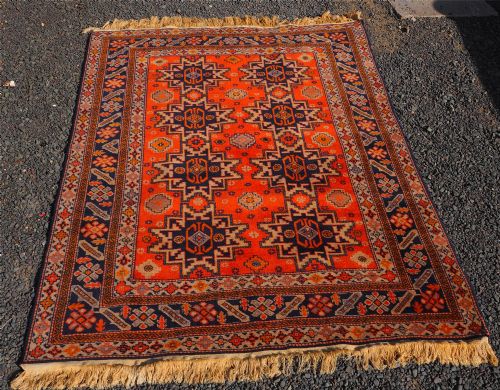
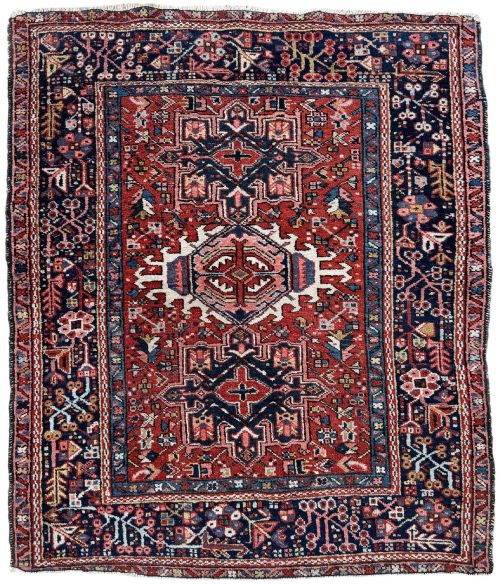
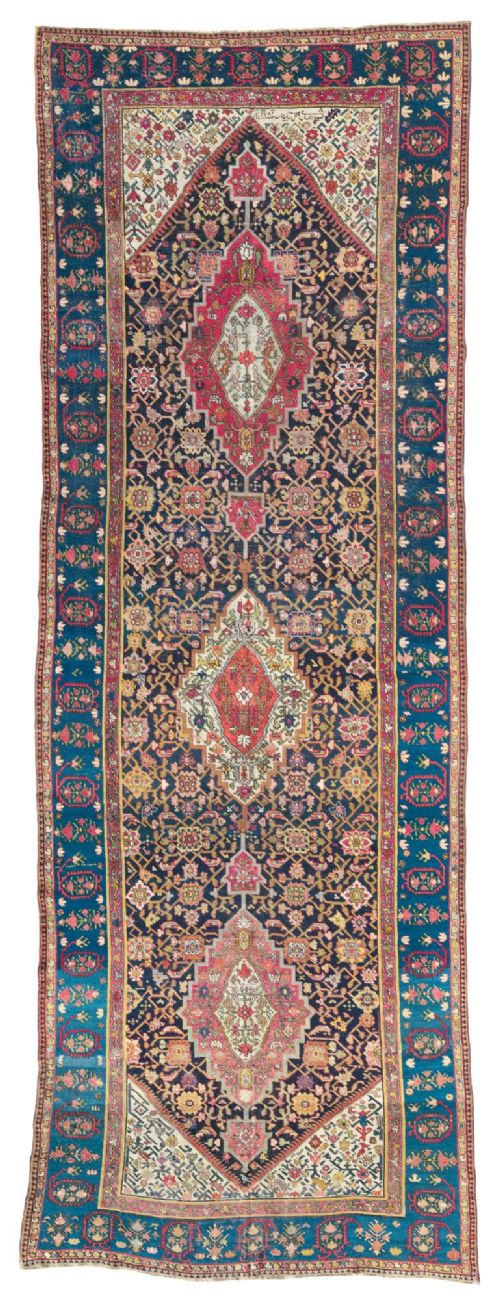


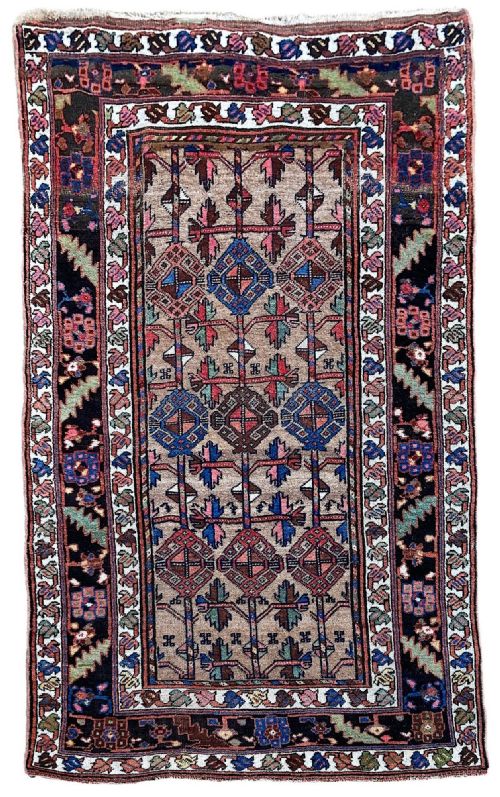
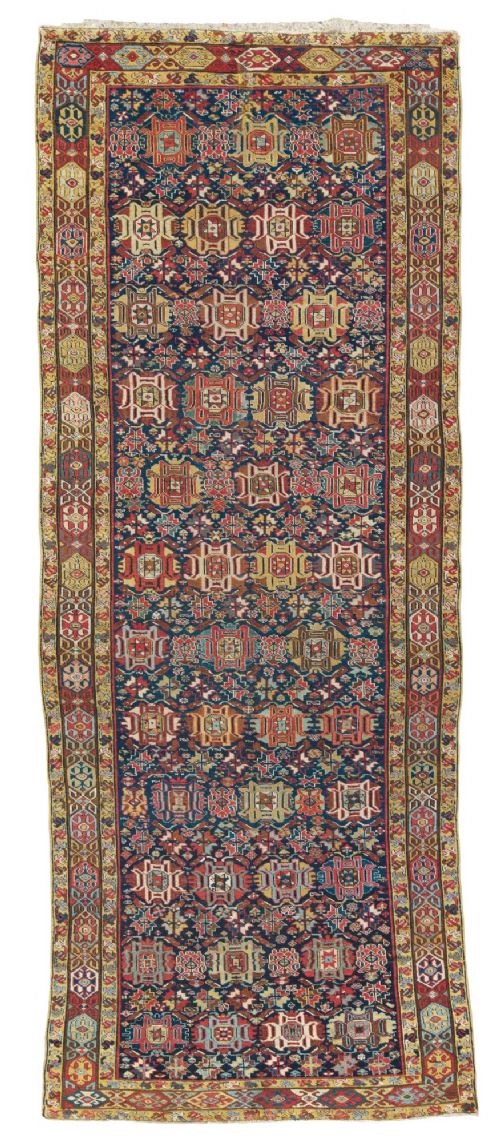


Navy Caucasian Runner
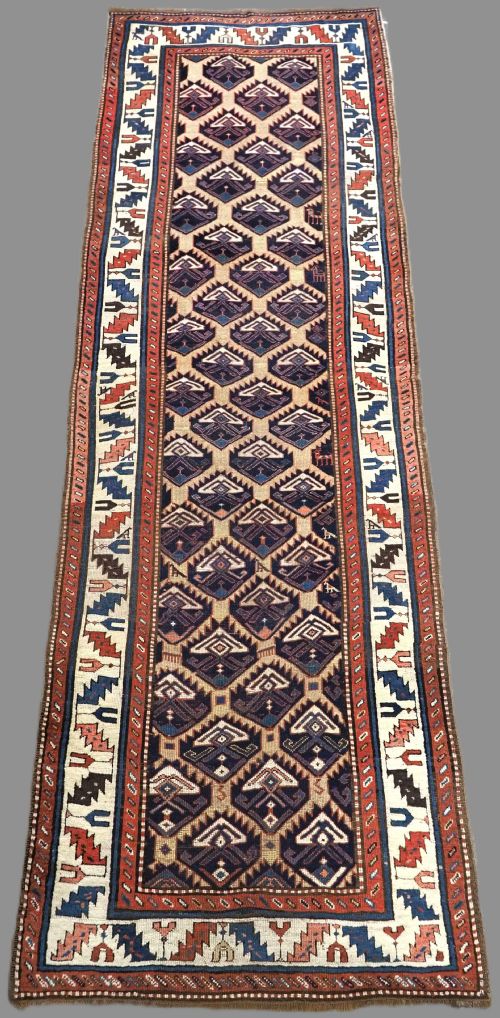
A navy caucasian runner delivers tribal wool geometry from the nineteenth and early twentieth centuries straight to a long hallway.
Navy Caucasian Runner
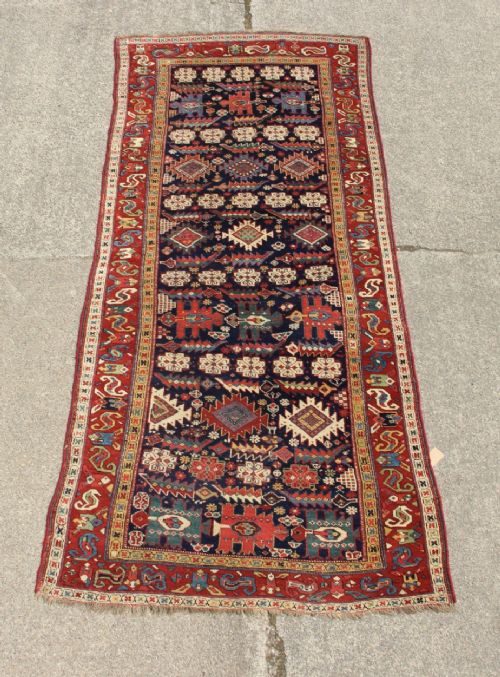
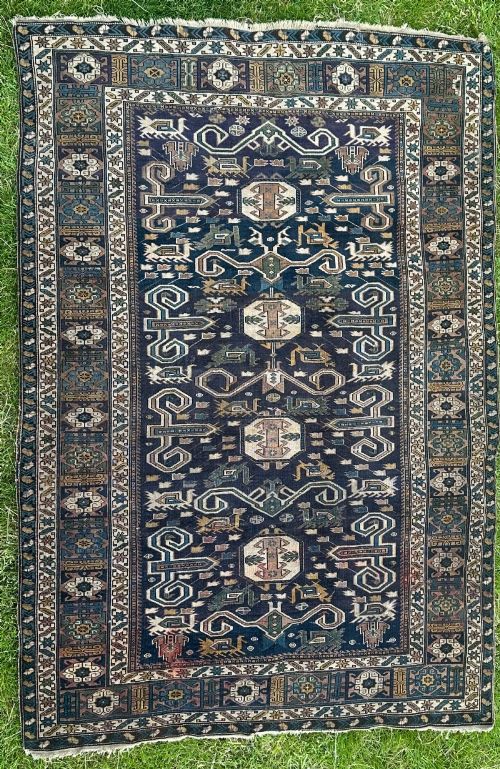
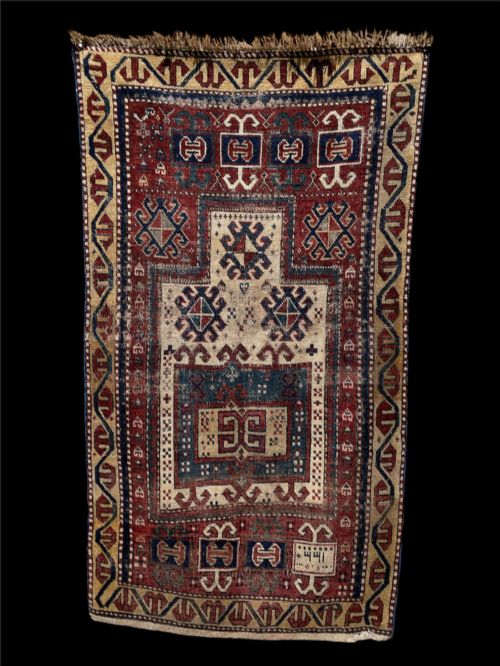
When you search for a navy caucasian runner, you encounter hand-knotted floor coverings originating from the Caucasus region and surrounding tribal territories. These textiles emerge from periods spanning the middle of the nineteenth century through the early decades of the twentieth century.
The selection includes specific regional identifications such as Gendje, Shahsavan, Kuba, and Kazak, alongside broader Caucasian and Kurdish tribal weaves. While many pieces take the form of long runners suited for hallways, the listings also encompass area rugs, kellegs, and prayer formats featuring geometric medallions, lattice patterns, and boteh motifs.
How they were made
These floor coverings are constructed using hand-knotted wool and hand-spun wool knotted onto cotton or wool foundations. Artisans utilise natural dyes to achieve the deep indigo and navy grounds characteristic of the region.
The construction relies on traditional village and nomadic weaving techniques, resulting in dense piles and sturdy structures designed for practical daily use. Hand-knotting ensures each textile develops distinct character through slight irregularities in alignment and pattern execution.
Navy Caucasian Runner Retail Price Guide 2026
Typical asking prices for navy caucasian runner among the pieces listed under this phrase on Sellingantiques today, from the lower quarter to the upper quarter. They describe what is for sale here now, not the wider market.
Some weavers cleverly hid tiny geometric birds inside the borders, daring you to spot the flock.
What varies in quality
The standard of an individual piece rests upon the crispness of its geometric drawing and the saturation of its natural dyes. Finer knots per square inch allow for sharper rendering of complex motifs such as Lesghi stars, Memlinc guls, and intricate lattice work.
Preservation of the original wool pile and intact foundational selvedges distinguish superior examples from heavily worn or restored pieces. The depth and clarity of the navy ground colour relative to secondary shades heavily influence the visual impact of the composition.
The Navy Caucasian Runner Glossary
- Boteh
- A stylised almond or pear-shaped motif representing a floral shoot or cypress tree. This ancient design appears frequently across Caucasian and Persian tribal weavings.
- Kazak
- A designation for rugs woven in the southwestern region of the Caucasus by various tribal groups. These pieces are recognised for bold geometric layouts and primary colour palettes.
- Kelleh
- A large format rectangular carpet, typically longer than a standard rug but wider than a corridor runner. They often occupy grander spaces within traditional interiors.
- Gendje
- A town and surrounding district in the Caucasus known for producing distinctive flatweaves and pile rugs. Pieces from this area frequently display diagonal stripes and stylised bird or flower motifs.
- Natural Dyes
- Colourants derived from plant, insect, and mineral sources prior to the widespread adoption of synthetic aniline dyes. They yield rich, complex tones that age with subtle patination.
Navy Caucasian Runner: Frequently Asked Questions
Where should I place a runner?
These narrow floor coverings suit high-traffic transitional spaces such as hallways, corridors, and landings. Their linear proportions draw the eye down a passage while protecting wooden or tiled flooring.
Positioning them away from direct, continuous moisture helps preserve the fragile historical wool fibres. Using a quality underlay prevents slipping and cushions the foundation against hard subfloors.
How do I clean an antique rug?
Gentle surface vacuuming without a rotating brush roll removes embedded dust and grit safely. Professional specialist cleaning remains essential for addressing deeper soil accumulation.
Avoiding harsh chemical detergents prevents natural dye bleeding and fibre degradation. Professional intervention ensures the historical wool structure is handled with appropriate care.
How do I identify a Kazak rug?
Kazak weavings typically exhibit bold, large-scale geometric medallions executed in saturated primary colours. The wool pile is generally longer and softer compared to finer Persian counterparts.
Structural examination often reveals heavy wool foundations and distinctive side cord finishes. These visual and tactile traits separate southwestern Caucasian work from neighbouring regional styles.
What causes colour variation in natural dyes?
Natural dye batches fluctuate due to seasonal plant growth, mineral content in water, and variations in mordant preparation. These factors create subtle tonal shifts known as abrash across the wool field.
Such shifts demonstrate authentic traditional dyeing methods rather than industrial uniformity. Collectors often prize these organic irregularities for the visual depth they impart.