


Navy Blue Long Runner
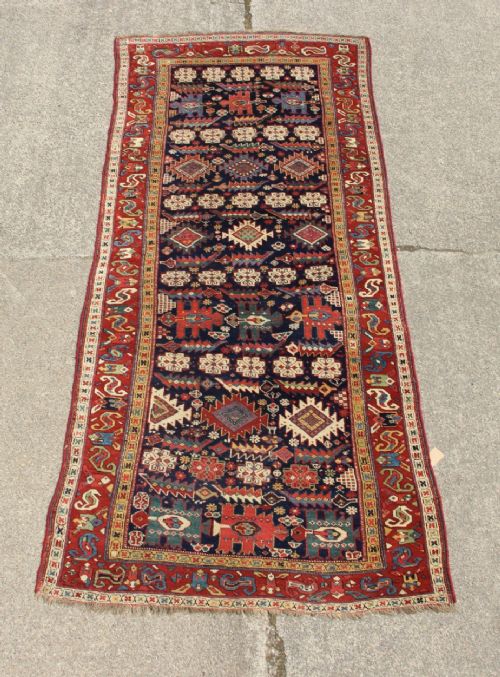
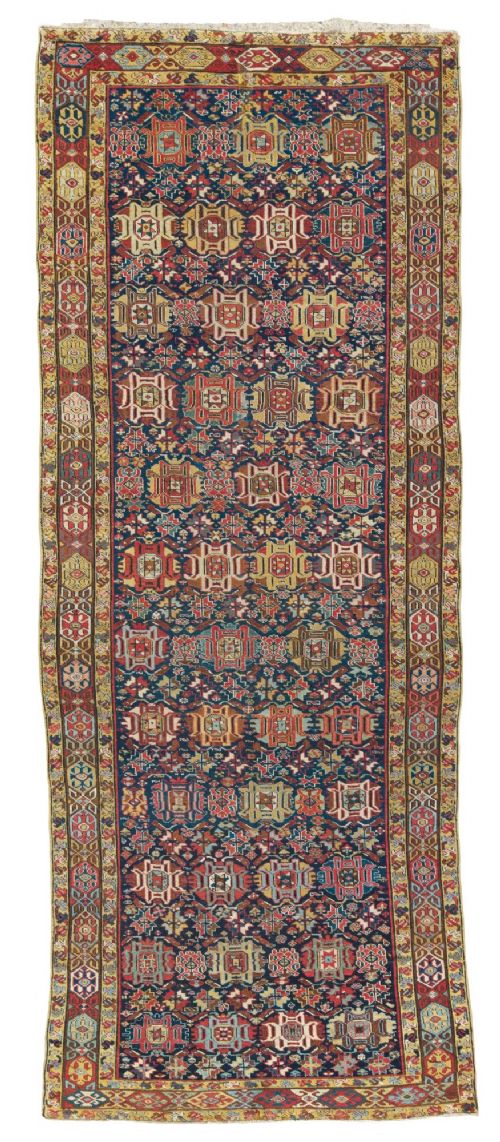
When choosing a navy blue long runner, you select a substantial floor covering designed for corridors, halls and galleries from nineteenth and early twentieth century workshops.
Navy Blue Long Runner
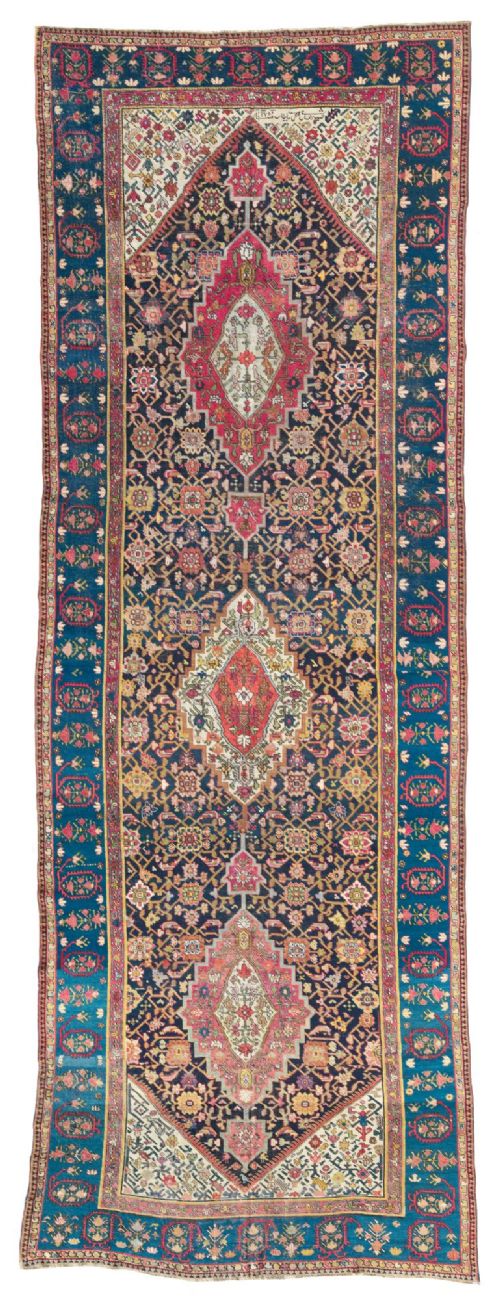
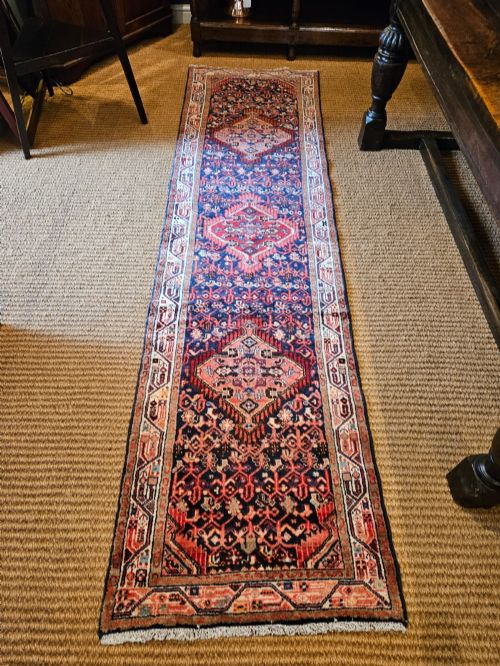
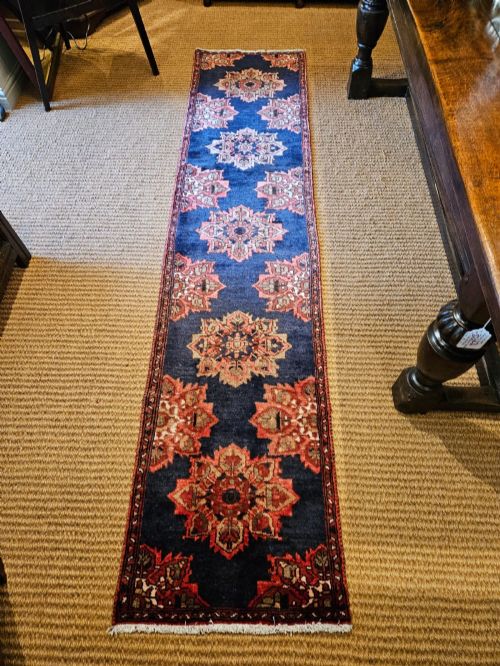
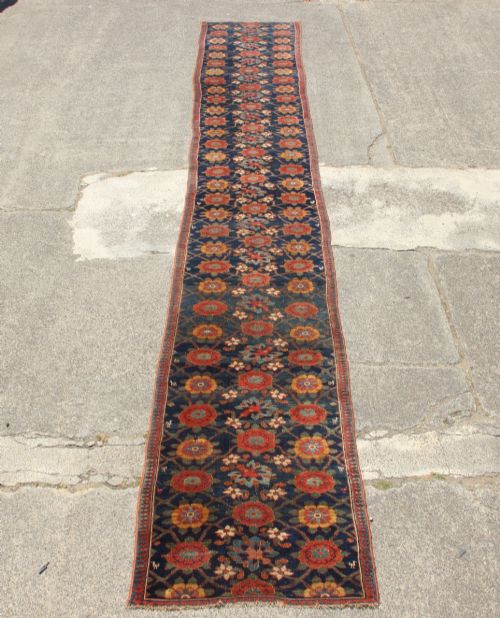
A navy blue long runner brings extended proportions to narrow spaces such as hallways, corridors and galleries, offering practical floor coverage with considerable history. These woven pieces originate primarily from Persian and Caucasian weaving traditions, spanning periods from the mid nineteenth century through to the early decades of the twentieth century. Buyers encounter formats catalogued as runner rugs, carpet runners and narrow gallery carpets, often featuring geometric medallions or traditional tribal motifs.
The specimens available represent diverse regional weaving centres, including Heriz, Kurdish, Bakhtiar, Sarouk and various Caucasian districts. Forms range from narrow corridor lengths to broader kelleh formats, providing options for different spatial dimensions within historic and contemporary interiors. Each woven example displays the distinct design vocabulary of its origin, executed in elongated dimensions suited to linear spaces.
Evaluating the standard of execution
Quality in a runner rests upon the precision of the tribal or geometric design, the consistency of the wool spinning and the integrity of the foundational structure. Finer specimens display crisp drawing within medallions, boteh patterns or tree of life motifs, maintaining balanced proportions along their extended length.
The depth and variation of the dye work also differentiate examples, with skilled coloration providing subtle tonal shifts across the dark ground. Wear must be assessed in relation to the original density of the pile and the overall preservation of the selvedges and ends.
Certain nineteenth century runners manage to smuggle sprawling botanical vines and nesting peacocks into surprisingly narrow hallways.
Karabagh weaving·Malayer workshops·Bakhtiar district·Heriz production·Fereghan weavers·Sarouk factories·Yagcibedir village·Senneh Bijar·Hastrud production·Dagestan weaving·Gendje Kazak·Kirman workshops
The Navy Blue Long Runner Glossary
- Kelleh
- A large format rug, typically longer and broader than a standard runner but narrower than a full carpet. These pieces serve similar spatial roles in extended rooms and halls.
- Boteh
- A traditional decorative motif resembling an almond, seed or paisley shape. This symbol appears frequently in Persian and Caucasian tribal weaving.
- Selvedge
- The reinforced edge binding running parallel to the length of the rug. This finishing protects the foundational warps from fraying.
- Mina Khani
- An all-over repeating pattern composed of daisy-like flowers linked by curving vines. This classical Persian design appears in various regional weaving traditions.
- Warp
- The vertical foundation threads stretched tightly on the loom before knotting begins. The exposed fringe at either end of a runner consists of these extended warp threads.
Navy Blue Long Runner: Frequently Asked Questions
Where should a long runner be placed?
These extended pieces suit narrow domestic spaces such as hallways, entrance corridors and gallery landings where linear floor coverage is required.
Their elongated proportions bridge rooms while protecting high traffic wooden or tiled flooring from daily wear.
How do I care for an antique wool runner?
Regular gentle vacuuming without a rotating brush roll prevents dust accumulation within the wool pile.
Professional specialist cleaning ensures the natural dyes and hand-spun fibres remain preserved over time.
What is the difference between a runner and a kelleh?
Runners feature narrow, extended proportions specifically suited to corridors and hallways.
Kelleh formats provide greater width alongside long dimensions, functioning well in larger reception spaces.
How are regional styles identified?
Distinctive design motifs, border arrangements and palette choices point toward specific origins such as Heriz, Kurdish or Caucasian workshops.
Structural characteristics including foundation materials and knotting density further confirm the geographic provenance of each piece.