


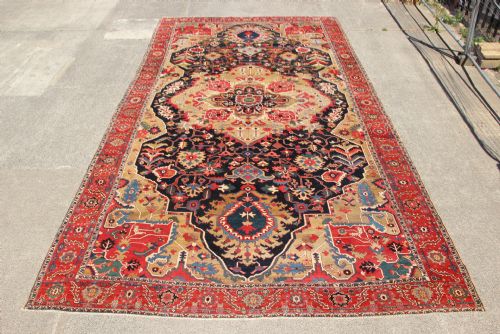
Navy Blue Area Rug
A navy blue area rug grounds a room with deep indigo and midnight tones, offering lasting warmth and classic floor covering.
Navy Blue Area Rug
A navy blue area rug brings deep indigo and dark blue ground tones to interior floors, functioning as a substantial floor covering. These pieces are chosen for their commanding presence and ability to anchor large furniture arrangements in traditional spaces.
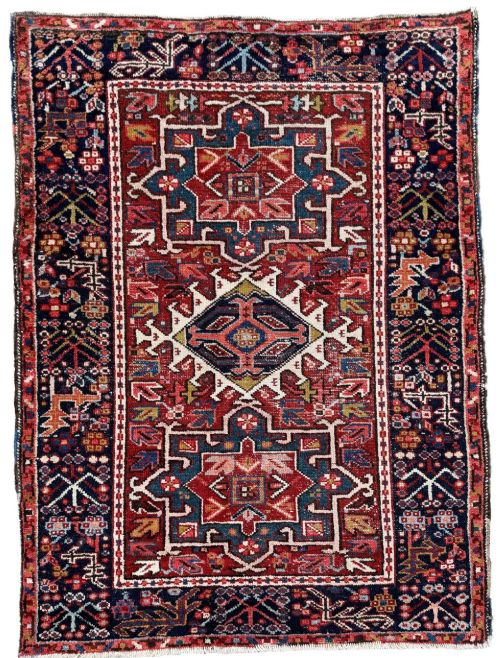
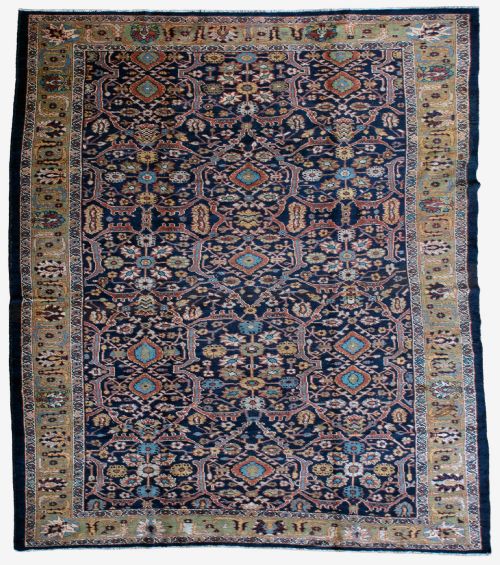
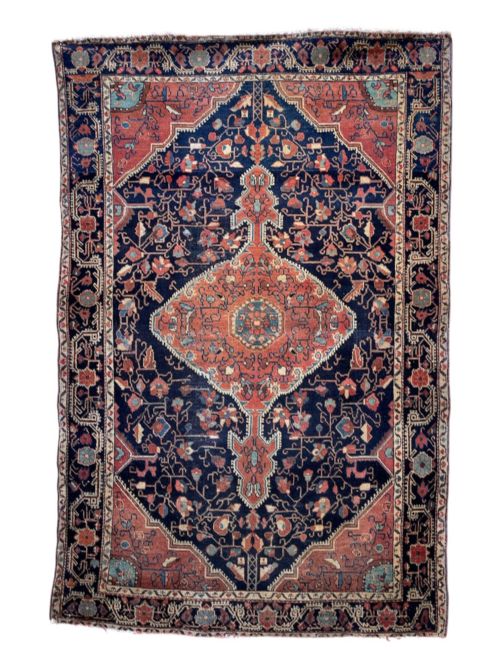
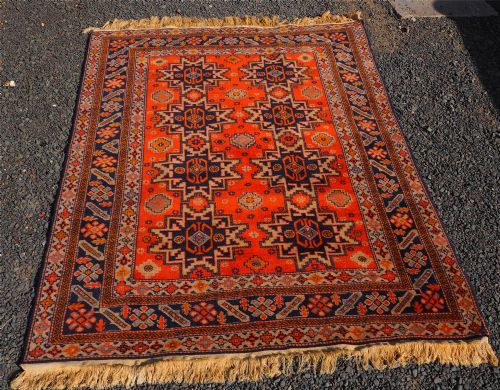
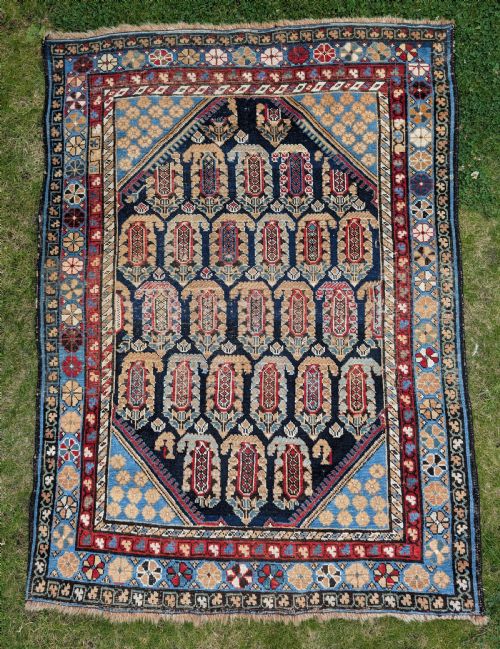
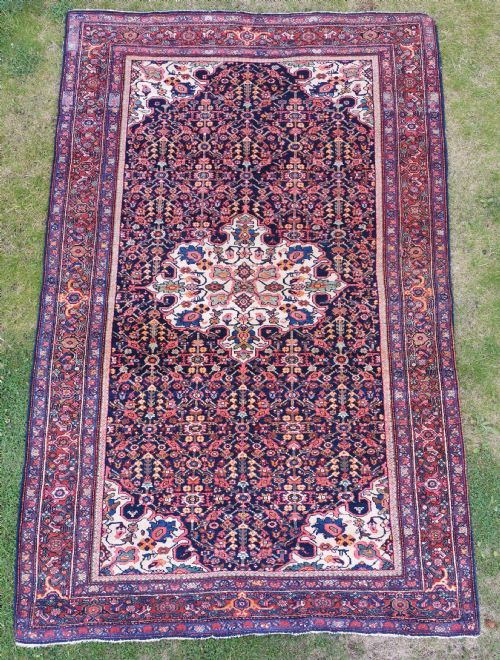
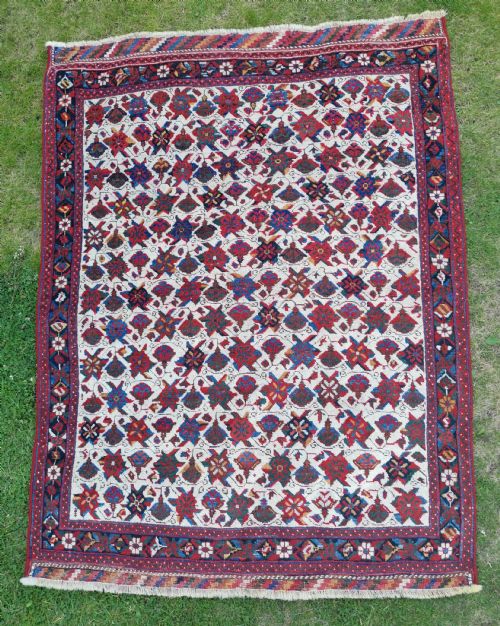
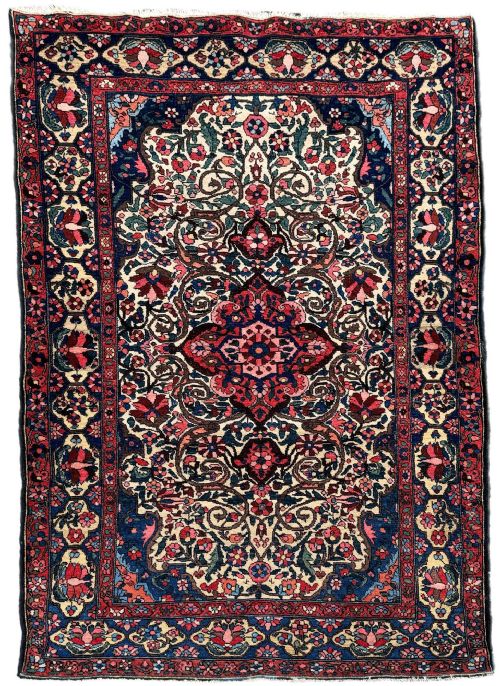
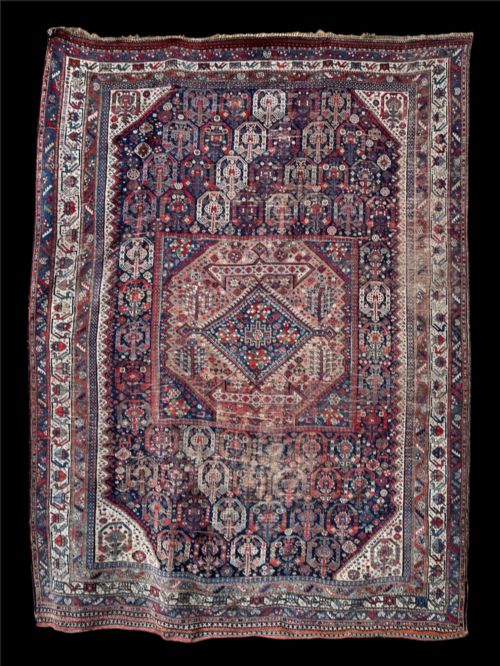
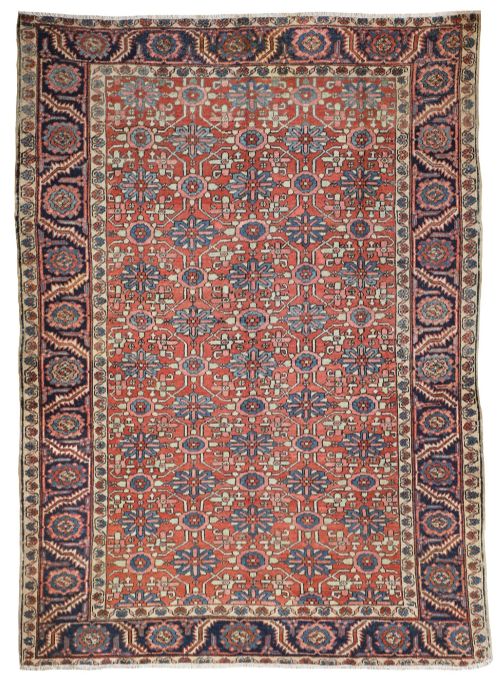
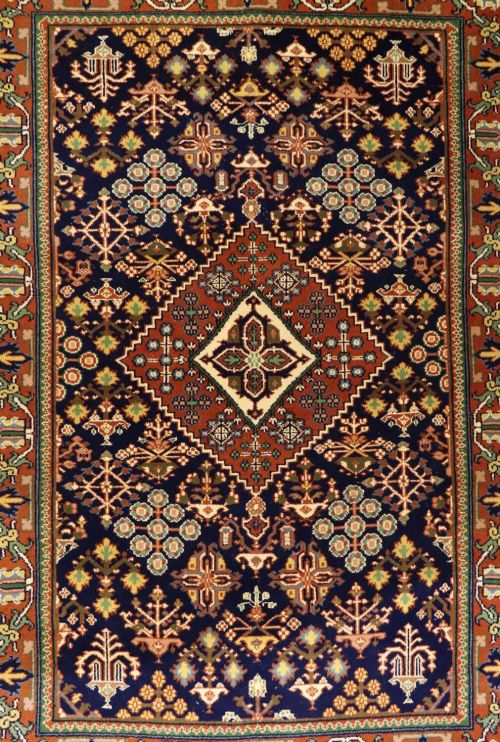
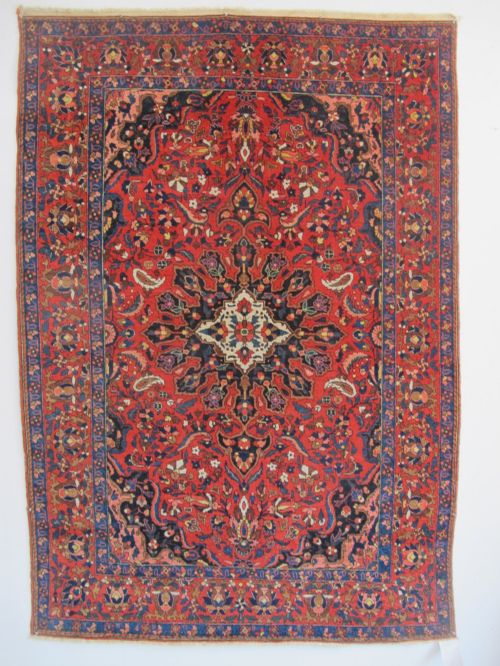
The pieces available on this page encompass antique Persian styles, including Heriz and Tabriz carpets alongside Senneh and Farahan formats. Each rug utilises rich dark colouration to contrast against ivory or madder red geometric and floral motifs.
Dating primarily from the early twentieth century and the late nineteenth century, these carpets display regional weaving traditions from across Persia. Buyers encounter room-sized carpets alongside smaller scatter formats, all sharing a foundation of deep blue dye work.
Materials and construction
These floor coverings are constructed using wool pile knotted onto cotton foundations, providing structural stability and dense surface texture. The natural resilience of wool allows the dense pile to withstand decades of foot traffic while retaining rich saturation.
Weavers employed traditional hand-knotting techniques to execute intricate Persian Heriz, Tabriz, Senneh, and Farahan designs. Vegetable and early aniline dyes created the enduring navy blue fields that define the visual impact of these carpets.
Navy Blue Area Rug Retail Price Guide 2026
Typical asking prices for navy blue area rug among the pieces listed under this phrase on Sellingantiques today, from the lower quarter to the upper quarter. They describe what is for sale here now, not the wider market.
Current site listings feature antique Persian carpets and rugs dating from eighteen ninety to nineteen twenty, utilising wool and cotton materials.
Distinctions in quality
Quality in these carpets rests upon the precision of the knotting and the complexity of the drawn design within the navy blue field. Finer knot counts permit sharper delineation of medallion and floral motifs, separating provincial village pieces from urban workshop masterpieces.
The depth and secondary tones of the navy dye also dictate excellence, as superior pieces exhibit subtle tonal shifts known as abrash. These natural variations in the blue wool prevent the dark field from appearing flat, adding considerable visual movement to the surface.
The Navy Blue Area Rug Glossary
- Pile
- The upright loops or cut ends of yarn that form the usable surface of the carpet. This dense layer of wool absorbs wear and displays the woven pattern.
- Foundation
- The underlying structure of warp and weft threads, typically cotton in these examples, that holds the wool knots in place. A sound foundation ensures the rug lies flat and maintains structural integrity.
- Abrash
- Natural variations in colour shading caused by changes in batches of dyed wool or multiple dye baths. This characteristic adds depth to the navy blue ground.
- Medallion
- A large central ornamental design motif placed in the middle of the rug field. It typically anchors the symmetrical composition of traditional Persian carpets.
- Warp
- The vertical threads stretched tightly on the loom before knotting begins. The exposed ends of these threads often form the fringe at either end of the rug.
Navy Blue Area Rug: Frequently Asked Questions
What is a navy blue area rug?
A navy blue area rug is a traditional floor covering featuring a dark indigo or midnight blue ground colour. These antique pieces originate from Persian weaving centres such as Heriz, Tabriz, Senneh, and Farahan.
They provide substantial warmth and structured design to interiors, utilising durable wool pile on cotton foundations. The dark blue field serves to anchor surrounding furniture and interior colour schemes.
How do I care for my rug?
Regular gentle vacuuming without a rotating brush roll keeps wool pile free from damaging grit and dust. Professional cleaning by specialists in antique textiles ensures the natural dyes remain stable.
Positioning the rug away from direct, harsh sunlight prevents uneven fading of the dark navy blue tones. Using a quality underlay protects the cotton foundation and prevents slipping on hard floors.
How old are these rugs?
The pieces available date from the late nineteenth century around eighteen ninety through to the early twentieth century around nineteen twenty. This period encompasses traditional Persian carpet production.
Age is determined through examining the wool quality, dye composition, and structural characteristics typical of nineteenth and twentieth-century Persian weaving.
Where were these rugs made?
These carpets and rugs were produced in Persia, encompassing specific weaving regions and cities such as Heriz, Tabriz, Senneh, and Farahan. Each location developed distinct stylistic conventions.
Village and workshop weavers utilised local materials including wool and cotton to create these durable floor coverings. The regional origin dictates the specific geometric or floral layout set against the navy blue field.